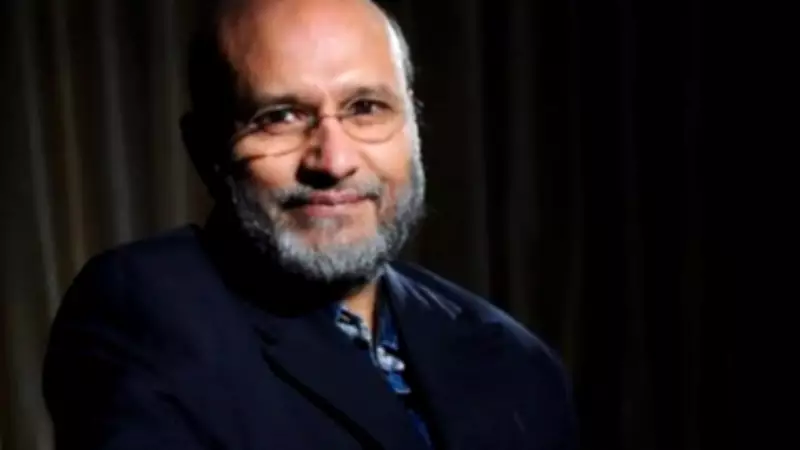
A new book, 'India Out of Work,' co-authored by development economist Santosh Mehrotra and Jajati Parida, serves as a reckoning for India's growth narrative. With 121 million young Indians not in education, employment, or training (NEETs), 80 million people moving back into agriculture between 2020 and 2024, and youth unemployment tripling since 2012, the book challenges the government's optimistic economic story.
A Lost Decade for Jobs
Mehrotra, a visiting professor at the University of Bath's Centre for Development Studies, and Parida, a professor at the University of Hyderabad, argue that India has experienced a 'lost decade' by failing to generate sufficient non-farm jobs. The book warns that the demographic dividend window is narrowing, with only until roughly 2040 to act. 'We lost the last decade — yes, it is a 'lost decade' — by not generating sufficient jobs for three groups needing non-farm work,' Mehrotra said in an interview.
Structural Retrogression in Agriculture
One of the book's startling claims is that nearly 80 million people moved back into agriculture between 2020 and 2024, an unprecedented reversal for a developing economy. Meanwhile, headline GDP growth remained relatively strong. Mehrotra explains that high-end services and capital-intensive infrastructure benefit only the top deciles, leaving 80% of the population behind. 'Never in human history had 80 million workers been added to an already labour-surplus farm sector in just four years,' he said. The economic recovery was K-shaped, with consumption among the bottom 50% not rising.

Critique of Industrial Policy
The book is sharply critical of the Production Linked Incentive (PLI) scheme and the lack of a horizontal industrial policy. Manufacturing's share of gross value added (GVA) has stagnated at 16-17% for 25 years after 1991, then fell below that since 2016. Manufacturing employment dropped from 60 million in 2012 to 55 million by 2019, a decline unprecedented since independence. 'Without manufacturing growth supported by an employment policy, there cannot be non-farm job growth with rising wages,' Mehrotra said. Real wages have stagnated for a decade.
Women's Employment Crisis
The book notes that 96% of discouraged workers are women, yet women's participation in manufacturing is a strong driver of per capita income growth. Mehrotra argues that policymakers treat women's employment as a welfare issue rather than a development priority. Tamil Nadu, with 5-6% of India's population, employs over 40% of India's women factory workers. The rise in female labour force participation since 2020 is driven by women returning to agriculture and unpaid family labour, not positive trends for autonomy or earnings.
Political Consequences and Credibility Crisis
Mehrotra warns that 121 million NEETs are 'fertile ground for inevitable social conflict.' Worker riots in Gurgaon, Faridabad, and Noida, along with exam paper leaks, signal growing desperation. 'The young will not take this worsening situation lying down,' he said. The book also questions the credibility of GDP data, noting that the IMF downgraded India's national accounts statistics to a 'C' rating in 2025. The government has since announced a statistical overhaul.
Education and Unemployment
Graduate and postgraduate unemployment is now higher than among the illiterate, a developing-country phenomenon. Mehrotra attributes this to falling non-farm job creation and declining learning quality due to massification in education. 'The bigger problem is that graduate unemployment has at least doubled since 2012,' he said.
Policy Prescription
Mehrotra calls for a manufacturing strategy with eight components to create jobs and enable inclusive growth. 'The difference between India and East Asian success stories — including Vietnam — is a manufacturing strategy,' he said. Without it, the window of opportunity for the demographic dividend is narrowing. 'Our only hope for slightly extending the window of opportunity is that women obtain non-farm work — for which there is still no evidence.'