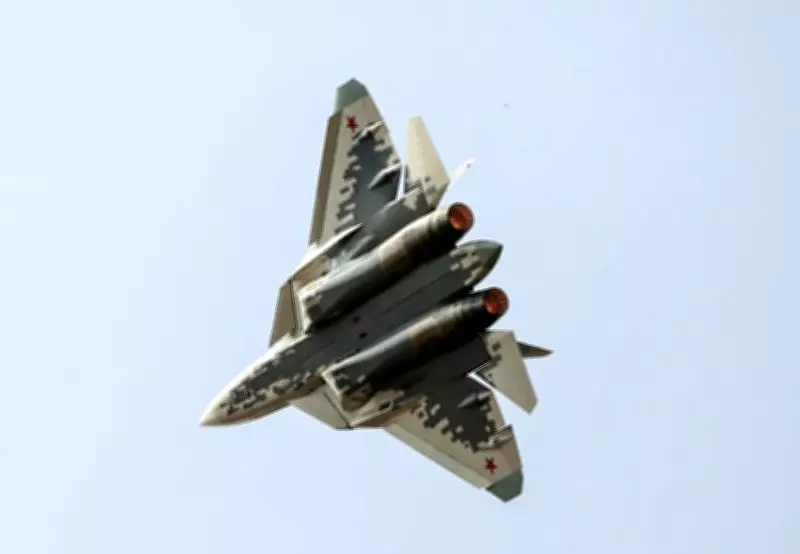
The Indian government is preparing to invite bids for a fifth-generation fighter aircraft program, marking a significant step towards strengthening the country's air defense capabilities. This initiative aligns with the government's push for indigenous manufacturing under the 'Make in India' campaign.
Program Details
The Ministry of Defence is expected to issue a request for proposals (RFP) for the Advanced Medium Combat Aircraft (AMCA) program. The AMCA is a twin-engine, stealth fighter jet designed to meet the Indian Air Force's future requirements. The program aims to produce over 100 aircraft, with initial operational capability targeted by the mid-2030s.
Indigenous Development
The AMCA program emphasizes indigenous design and development, with the Aeronautical Development Agency (ADA) leading the project. Key technologies such as stealth coating, advanced avionics, and engine integration will be developed locally. The government is also exploring partnerships with private sector firms to accelerate production.

Strategic Significance
This move is part of India's broader strategy to reduce dependence on foreign defense imports. Currently, the Indian Air Force operates a mix of Russian, French, and domestically produced aircraft. The fifth-generation fighter will provide a technological edge over regional adversaries, ensuring air superiority in contested environments.
Challenges and Roadmap
While the program is ambitious, it faces challenges including high development costs and technological complexities. The government has allocated significant funding for research and development. A phased approach is planned, with prototypes expected to fly by 2028. The final production version will incorporate advanced features like supercruise, reduced radar cross-section, and network-centric warfare capabilities.
Industry Response
Major Indian defense contractors, including Hindustan Aeronautics Limited (HAL) and private players, are expected to bid for the project. The program is likely to create thousands of jobs and boost the domestic aerospace ecosystem. International collaborations may be considered for specific subsystems, but the overall design and integration will remain indigenous.
The government's decision to invite bids reflects a commitment to self-reliance in defense manufacturing. The fifth-generation fighter program is poised to enhance India's strategic autonomy and technological prowess in the aerospace sector.