India Asserts Global AI Leadership with Inaugural Global South Summit
Once a futuristic concept confined to demos and niche applications, artificial intelligence has rapidly evolved into a core driver of job creation, service delivery, scientific advancement, and governance worldwide. As nations navigate the dual promises and perils of this transformative technology, India is carving out a pivotal new role, transitioning from a major user to a key global agenda-setter. In a historic move, India has become the first developing nation and the first from the Global South to host a global AI summit, signaling a shift in the international dialogue.
Shifting the Debate from Elites to Everyday Impact
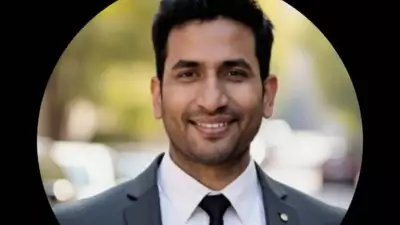
In an exclusive interview, Abhishek Singh, CEO of the India AI Mission and AI Impact Summit, emphasized that this summit represents India's strategic effort to redirect the global AI conversation away from exclusive corporate and academic circles. The goal is to ground discussions in human-centric values, inclusivity, and tangible real-world outcomes. "This is the first summit of its kind and scale being hosted in the Global South," Singh stated. "AI today is largely controlled by a few countries and a few companies. India wants to bring the perspective of the Global South and ensure that AI is more inclusive and democratized."
Leveraging Proven Digital Expertise at Scale
Singh highlighted that India's credentials for hosting this landmark event are built on practical experience rather than mere theory. Over the past decade, the country has successfully deployed large-scale digital platforms such as Aadhaar, UPI, DigiLocker, and telemedicine, demonstrating an unparalleled ability to deliver services to hundreds of millions of citizens. "India has shown its ability to adopt technology for public services," he noted. "We want to showcase India's strength in building AI applications at population scale and also be the voice of the Global South."

Addressing Global Challenges: From Deepfakes to Democratization
The summit convenes at a critical juncture, with governments worldwide struggling to balance rapid AI innovation against escalating concerns over deepfakes, misinformation, algorithmic bias, and potential misuse. While there is broad consensus that AI should foster economic growth and social good, Singh pointed out that translating these principles into consistent practice remains a global challenge. "Every country agrees on two things: AI must be used for larger social good; and harm from AI must be restricted," he explained. "But countries are at very different levels of technological development. That is where regulatory capacity and shared frameworks become important."
India's proposed solution is a 'techno-legal framework' that integrates legal safeguards with technological tools. This approach includes:
- Legal mandates for the timely removal of harmful content.
- Requirements for labeling AI-generated content, especially when it poses risks to individuals, public order, or national security.
- Development of tools to detect deepfakes, mitigate bias, and establish ethical AI certification systems.
Focus on Human Capital and Inclusive Access
A major theme of the summit is human capital development, particularly as automation reshapes the workforce and threatens traditional livelihoods. The event aims to foster global cooperation on reskilling and workforce transitions, with a special emphasis on supporting developing economies that face resource constraints. "AI should not grow only in tech hubs," Singh asserted. "We are setting up data labs across the country, centres of excellence in states and smaller cities, and running large-scale skilling and training programmes so that AI reaches tier-2 and tier-3 cities."
Inclusion is another cornerstone, with India highlighting the importance of Indian-language and voice-based AI systems to expand accessibility. Platforms leveraging natural language processing and generative AI enable users to access services in their native languages, bridging gaps for those less comfortable with English.

Broad Agenda: From Scientific Research to Open Standards
The summit's agenda extends to AI-enabled scientific research in critical sectors such as healthcare, agriculture, and climate change. It also advocates for greater openness, reproducibility, and the establishment of shared international standards to ensure equitable progress.
Notable Absence: Nvidia CEO Unable to Attend
In a related development, Nvidia CEO Jensen Huang, who was slated to be a prominent figure at the India AI Impact Summit, will not attend due to unforeseen circumstances. Nvidia, the world's most valuable company with a market capitalization of $4.4 trillion, is a key player in AI through its essential processors for training AI models. Sources indicated that Huang is unwell. The company confirmed that a senior delegation led by executive vice-president Jay Puri will represent Nvidia at the event, aiming to celebrate India's AI researchers, startups, developers, and partners contributing to the nation's AI infrastructure.