IIT Roorkee Researchers Pioneer Shark Antibody Platform for Medical Breakthroughs
In a significant scientific advancement, researchers at the Indian Institute of Technology Roorkee (IIT Roorkee) have developed a novel high-diversity antibody discovery platform utilizing antibodies derived from sharks. This innovative breakthrough holds immense potential for accelerating the development of advanced diagnostics and therapeutics targeting cancer, infectious diseases, and various other medical conditions.
Collaborative Research Effort Yields Promising Results
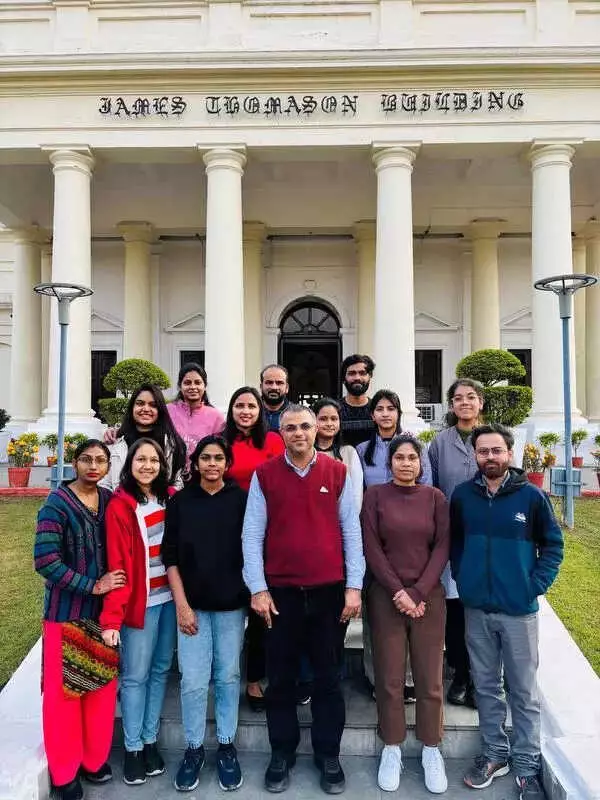
The groundbreaking research was conducted by a dedicated 20-member team comprising experts from IIT Roorkee, the Central Marine Fisheries Research Institute (CMFRI), Ashoka University, and AIIMS Delhi. Their comprehensive study has been published in the prestigious December edition of the Journal of Biological Chemistry, marking a notable contribution to the field of biological sciences.
Harnessing the Unique Properties of Shark Antibodies
The scientific team focused on a rare class of antibodies produced by sharks, known as Variable New Antigen Receptors (vNARs). These antibodies possess remarkable characteristics that distinguish them from conventional human antibodies.

- Compact Size: Shark vNARs are significantly smaller, typically ranging from 12 to 15 kDa, compared to larger human antibodies.
- Enhanced Stability: They demonstrate exceptional stability, maintaining functionality under extreme conditions such as high temperatures and low pH levels.
- Superior Binding Capability: Their reduced size allows them to bind to molecular targets and access protein clefts that are often inaccessible to larger antibodies, making them highly attractive for diverse biomedical applications.
Creation of a Universal Antibody Discovery Library
For this research, scientists meticulously created an extensive library containing nearly 300 billion distinct single-domain vNAR antibody variants. These were derived from the white-spotted bamboo shark. A key advantage of this library is that the source shark had not been previously exposed to specific pathogens. This characteristic allows the library to be screened against a wide array of disease-related targets, effectively functioning as a universal antibody discovery system.
To validate the platform's utility, the library was rigorously screened against nine different targets, including:
- Viral proteins
- Cancer-associated molecules
- Snake venom toxins
In each screening instance, researchers successfully isolated antibodies exhibiting strong and specific binding properties. Selected antibodies underwent further in-depth analysis to assess their structural integrity, stability profiles, and detailed molecular interactions.
Expert Insights on the Technological Advantages
Prof. Rajesh Kumar from IIT Roorkee's Department of Biosciences and Bioengineering, who served as the study's principal researcher, elaborated on the benefits. "These shark-derived vNARs are exceptionally small, enabling superior tissue penetration and the ability to bind to inaccessible protein clefts and functional sites. Their robustness under harsh physiological conditions provides distinct advantages over conventional antibodies, paving the way for more effective therapeutic interventions."
Path to Commercialization and National Impact
IIT Roorkee has proactively filed a patent for this pioneering technology and has entered into a strategic collaboration with IMGENEX India Pvt Ltd. This partnership aims to explore and develop the platform's diagnostic and therapeutic applications further.
Prof. K K Pant, Director of IIT Roorkee, emphasized the broader implications. "By developing a universal, high-diversity antibody discovery system, we are significantly strengthening the country's capacity for a faster and more effective disease response. This initiative accelerates the development of affordable diagnostics and therapeutics, ultimately benefiting those who need them the most."

This research represents a major stride in India's biotechnology sector, showcasing the potential of indigenous innovation to address global health challenges through novel biological tools and collaborative science.