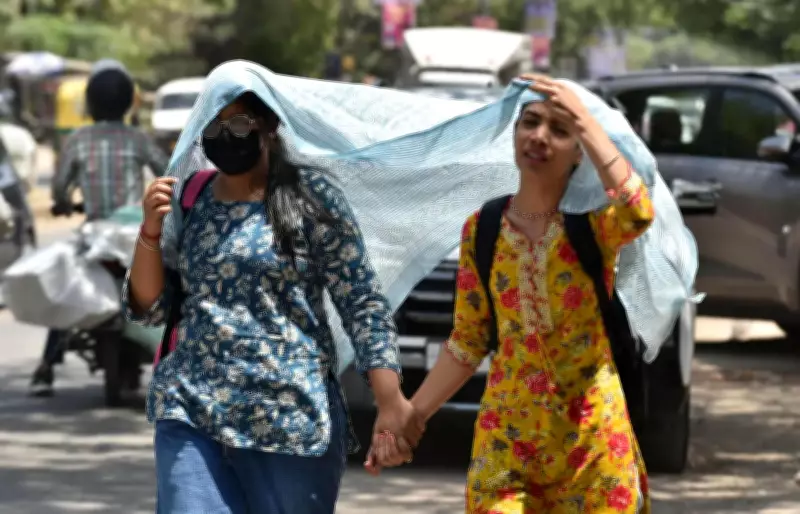
Gurgaon: After Monday's searing heat drove the city's temperature to the season's highest, residents woke up to unusually warm conditions on Tuesday. The India Meteorological Department (IMD) has forecast fresh dust storms and thunderstorms across the state over the next two days.
Temperature Records
IMD data showed the city recorded a maximum temperature of 38 degrees Celsius on Tuesday, while the Gurgaon KVK station was hotter at 38.4 degrees Celsius and the NorthCap University station touched 39.3 degrees Celsius. Across Haryana, Rohtak was the hottest at 41.3 degrees Celsius, followed by Bopani in Faridabad at 41 degrees Celsius, Narnaul at 40 degrees Celsius, Hisar at 39.6 degrees Celsius, and Mahendragarh and Nuh at 39.7 degrees Celsius each, reflecting widespread heat stress despite a marginal dip from previous highs.
The city recorded a minimum temperature of 26.1 degrees Celsius. IMD noted Haryana's average minimum temperature was significantly above normal, signaling persistent heat retention even after sunset, a factor experts say can sharply raise health risks.

Weather Forecast
According to the IMD Chandigarh latest forecast, the state is likely to witness thunderstorms, lightning, and gusty winds of 50 to 60 kmph at some places on April 29, followed by similar storm activity with winds of 40 to 50 kmph on April 30. Light rain is also likely in some places, with a likely fall in maximum temperatures by around 3 to 4 degrees Celsius over the next four days.
Health Advisory
Dr. Rajiva Gupta, senior consultant at CK Birla Hospital, said, "This evolving weather pattern marked by intense daytime heat, unusually warm nights, and sudden thunderstorms is placing significant stress on the body. The key issue is that the body doesn't get a chance to cool down at night, leading to fatigue, dehydration, and strain on the heart."
He warned that sudden shifts from extreme heat to dust storms and lightning could also trigger respiratory distress in vulnerable groups and increase the risk of accidents. "We are already seeing rising cases of fatigue, dehydration, headaches, poor sleep, and worsening diabetes and blood pressure control, accounting for nearly 20 percent of daily visits," Gupta said.
He advised residents to avoid stepping out between 11 am and 4 pm, drink water regularly, reduce tea, coffee, and alcohol intake, wear light cotton clothing, cover the head outdoors, and keep ORS handy. During thunderstorms, people should stay away from open spaces, tall trees, and metal structures.
Vulnerable Groups
The elderly, especially those living alone, patients with heart disease, diabetes or hypertension, and outdoor workers remain among the most vulnerable.
NCR Outlook
For the city and NCR, the forecast suggests hot and exhausting daytime conditions may rapidly transition into dust storms, gusty winds, lightning, and patchy showers over the next 48 hours, making both heat and storm precautions equally critical.