Google India has rolled out a significant new initiative called the 'Google Market Access Programme'. This programme specifically targets Indian artificial intelligence startups. Its primary goal is to assist these startups in scaling their products for enterprise adoption.
Leveraging Google's Global Network
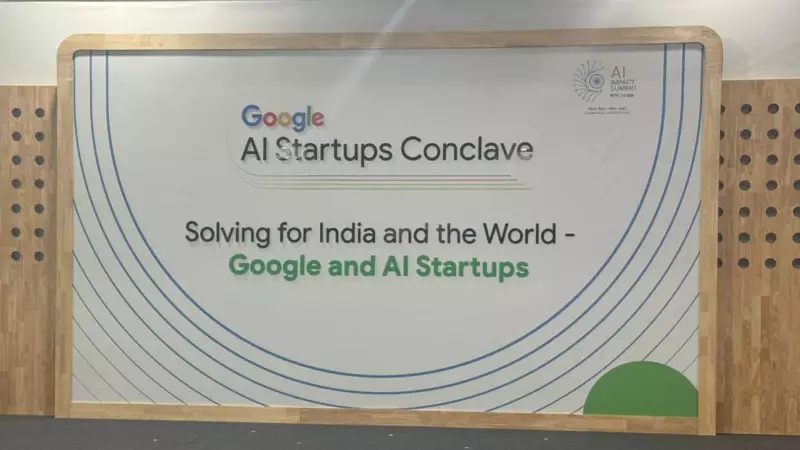
The tech giant will leverage its extensive distribution network and access to key international markets. This move aims to provide Indian AI startups with a powerful platform for global expansion. Preeti Lobana, Country Manager of Google India, announced this at the Google AI Startups Conclave in New Delhi on January 15, 2026.
"India's AI startup story has entered a decisive new phase," Lobana stated. "We are moving from prototypes to products, and from early traction to sustainable businesses." She emphasized that the focus now shifts to accelerating how quickly these startups can scale and reach global markets.

Access to Advanced AI Models
Participating startups will gain access to Google's latest and most capable AI models. This includes the Gemini models for complex reasoning tasks. It also covers the Gemma family of models designed for open research purposes.
Google's full-stack support extends beyond just software. Startups will also have access to Google's AI infrastructure and global data centre capacity. This comprehensive support aims to cover the entire startup lifecycle.
India's Booming AI Market
A joint report by Google and Inc42 projects India's AI market to hit $126 billion by 2030. The report, titled 'Bharat AI Startups Report 2026', reveals encouraging data. Over 47 percent of enterprises are already moving their AI pilots into full production.
The report highlights several key advantages for Indian startups. Public rails for accessing compute power allow founders to spend less on infrastructure. This frees up resources for more product innovation and development.
India's Unique Strengths
Google pointed out India's significant assets in the global AI race. Indic language models represent one of the country's biggest strengths. "If an AI agent works reliably for a rural user in India, it is robust enough for the world," the company noted.
This perspective underscores the rigorous testing environment that Indian conditions provide. Solutions developed here often prove adaptable and resilient for global applications.
Infrastructure and Safety Measures
Google announced plans for a Global AI Hub in Visakhapatnam. This upcoming facility will serve as a future-ready, 1-gigawatt anchor for the AI economy. It will further strengthen the foundation for AI development in India.
Regarding AI safety, Google addressed important concerns. Startup founders can rely on Google's private AI compute offering. This ensures on-device security that keeps sensitive data accessible only to the user.
Healthcare Applications
Google also spotlighted its health-focused AI model called MedGemma 1.5. This four-billion parameter model is already seeing practical applications. The All India Institute of Medical Sciences (AIIMS) is utilizing it to analyse complex medical imaging.
The model handles high-dimensional medical imaging and 3D volume representations. This includes CT scans, MRIs, and histopathology slides. Such applications demonstrate the real-world impact of AI technology in critical sectors.
Accessibility for Developers
MedGemma and other open-weight models developed by Google remain accessible to developers. They can be accessed through platforms like HuggingFace and Vertex AI. This openness encourages broader innovation and collaboration within the AI community.
Google's initiative represents a significant boost for India's AI ecosystem. By providing resources, infrastructure, and market access, the programme aims to transform promising startups into sustainable global businesses. The timing aligns perfectly with India's projected AI market growth and increasing enterprise adoption.