Google Executives Confirm 'Preferred Cloud Partner' Status with Apple for Next-Gen Siri
In a significant development that could reshape the artificial intelligence landscape, senior Google executives have officially confirmed during the company's earnings call that Apple has selected Google as its 'preferred cloud partner' for developing the next generation of Apple Foundation Models. This announcement suggests that the upcoming iteration of Siri, Apple's virtual assistant, may potentially run on Google's servers rather than Apple's Private Cloud Compute infrastructure.
Clarifying the Apple-Google Collaboration
The technology world has been abuzz with speculation ever since Apple and Google announced their partnership to integrate Gemini models into Apple's ecosystem. While Apple CEO Tim Cook emphasized during an analyst call that "We'll continue to run on the device, and run in Private Cloud Compute, and maintain our industry-leading privacy standards in doing so," Google's recent statements appear to present a different perspective on the technical implementation.
Alphabet CEO Sundar Pichai stated clearly during the earnings discussion: "We are collaborating with Apple as their preferred cloud provider and to develop the next generation of Apple Foundation Models, based on Gemini technology." This sentiment was echoed by Alphabet Chief Business Officer Philipp Schindler, who reinforced Google's role in this groundbreaking partnership.

Unraveling the Technical Implementation
The central question that emerges from these conflicting statements revolves around where exactly the next-generation Siri will be processed. Given Apple's longstanding commitment to user privacy and data security, many industry observers had assumed that any custom Gemini model integration would operate within Apple's Private Cloud Compute framework, similar to how OpenAI's ChatGPT arrangement functions.
However, Bloomberg's Mark Gurman has previously suggested that Apple is developing an even more powerful chatbot version of Siri designed to compete directly with ChatGPT, which could potentially be unveiled at WWDC 2026. According to Gurman's reporting, this enhanced version of Siri might run directly on Google's own servers, leveraging the company's specialized tensor processing units (TPUs) for optimal performance.
Potential Resolution to Conflicting Statements
A plausible explanation for the apparent contradiction between Apple and Google's statements could involve different implementation timelines. When Tim Cook referenced Apple Intelligence running "on the device, and run in Private Cloud Compute," he might have been specifically addressing the more immediate Siri update that has already been announced to users.
Conversely, Google executives may be discussing their cloud partnership for a future, more advanced version of Siri that hasn't been officially unveiled yet. This distinction would help reconcile the seemingly conflicting information from both technology giants while maintaining Apple's privacy commitments for current implementations.
Industry Implications and Future Developments
This partnership represents one of the most significant collaborations between two of the world's largest technology companies. The integration of Google's Gemini technology with Apple's ecosystem through Siri could potentially create a more powerful and capable virtual assistant experience for millions of users worldwide.
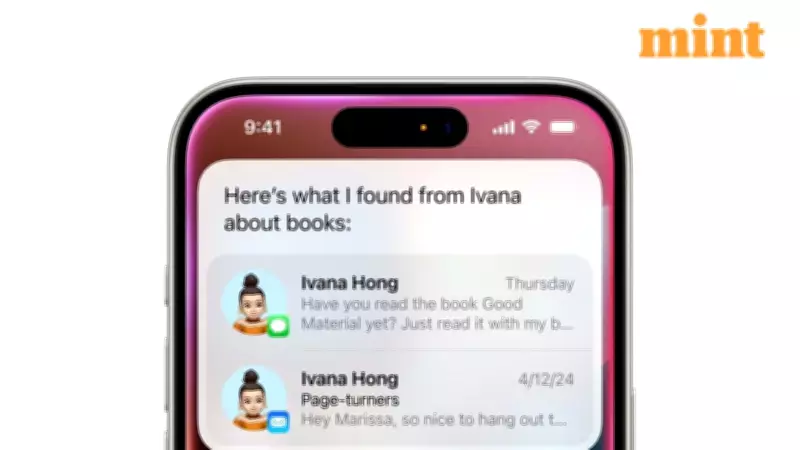
Neither Apple nor Google has provided definitive clarification regarding whether the upcoming revamped version of Siri, expected to arrive with the iOS 26.4 update, will operate on Apple's servers or Google's infrastructure. As both companies continue to develop their artificial intelligence capabilities, the technology community will be watching closely to see how this partnership evolves and what it means for the future of AI-powered assistants.
The confirmation of Google's 'preferred cloud partner' status with Apple marks a pivotal moment in the ongoing evolution of artificial intelligence implementation across major technology platforms, potentially setting new standards for cross-company collaboration in the AI space.