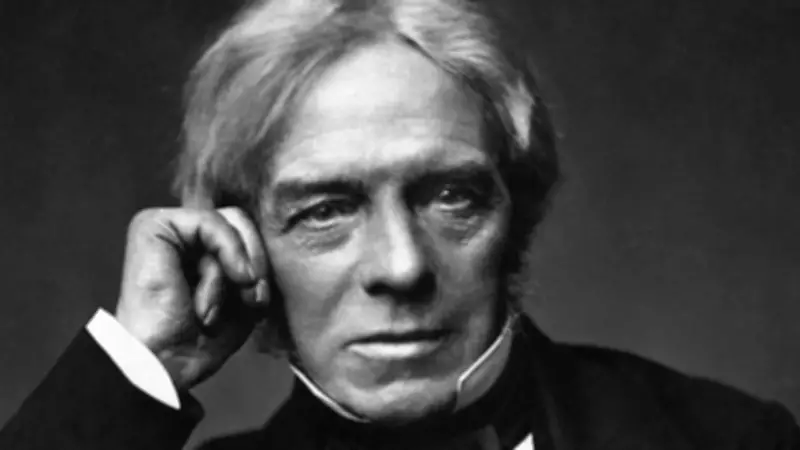
In science, it is rare to find lines that sound both simple and profound simultaneously. This is one example from Michael Faraday. It speaks about curiosity, discovery, and staying grounded in reality. This statement seems especially relevant today when science is advancing rapidly and new ideas emerge almost daily. It tells readers not to dismiss something immediately just because it sounds strange or hard to believe. At the same time, it draws a clear line: every idea must align with the laws of nature. For centuries, this balance between imagination and evidence has driven scientific discoveries. Many breakthroughs, such as electricity, space travel, and medical research, initially seemed impossible but were later proven correct through careful study and observation.
Quote of the Day by Michael Faraday
"Nothing is too wonderful to be true, if it be consistent with the laws of nature."
What the Quote by Michael Faraday Means in Everyday Language
The quote essentially encourages people to be open to new ideas. At first, something might appear strange or even impossible, but that does not mean it is not true. The phrase "Nothing is too wonderful to be true" highlights the importance of curiosity. It advises against rejecting ideas solely because they seem unusual. The second part, "if it be consistent with the laws of nature," adds a necessary condition. It means that any idea or claim must be checked against well-established scientific rules. If it fits these rules, it deserves consideration. Together, the quote offers a balanced mindset: it encourages creativity but demands proof.

The Scientific Mindset Behind the Quote
Michael Faraday was known for his practical application of science. He valued evidence, observation, and experimentation. Unlike many scientists of his time, Faraday lacked extensive formal education, yet his work laid the foundation for modern electrical science. His contributions to electromagnetism and electrochemistry transformed how people think about energy. He explored the principles behind electric motors and generators. This quote reflects his approach: Faraday did not dismiss new ideas; instead, he tested them rigorously. He trusted experiments more than speculation.
Why Wonder Plays an Important Role in Discovery
A sense of wonder is often the first step toward scientific progress. Many discoveries begin with basic questions about how things work. For instance, early scientists were curious about magnetism and electricity. These questions led to experiments that ultimately changed technology. Wonder drives the desire to learn more. It pushes people beyond existing knowledge. Without this curiosity, progress would slow. However, curiosity alone is insufficient; it must be paired with testing and careful observation.
The Role of Natural Laws in Validating Ideas
The quote clarifies that ideas must align with the laws of nature. These laws are based on extensive testing and observation. Natural laws provide a framework for science, helping scientists determine what is possible. For example, the law of conservation of energy states that energy cannot be created or destroyed, only transformed. This principle applies to any new idea. When an idea appears to contradict a natural law, scientists investigate further. This process can lead to discoveries and sometimes expand our understanding.
How This Thinking Applies to Modern Science
Faraday's quote remains relevant to contemporary scientific research. Ideas that seem unusual often pave the way for new technologies. In fields like artificial intelligence, space exploration, and renewable energy, novel concepts emerge rapidly. Many of these ideas once seemed impossible. However, they were realized after extensive research and testing. Scientists ensured every step adhered to natural laws. This approach helps distinguish genuine discoveries from unsupported claims.
Everyday Relevance Beyond Science
The quote's significance extends beyond laboratories and research institutions. It can be applied in daily life. People frequently encounter new ideas or suggestions. It is helpful to consider them carefully before rejecting them. It is also important to base decisions on facts rather than assumptions. This balanced thinking can improve problem-solving and decision-making in everyday situations.

Common Misunderstandings About Extraordinary Ideas
Some people assume that anything surprising is false. This mindset can hinder learning and growth. Conversely, there is also a risk of accepting ideas without sufficient evidence, leading to confusion or misinformation. The quote addresses both extremes. It encourages openness but emphasizes the need for proof. Understanding this balance is crucial in an era of abundant, often unchecked information.
The Connection Between Imagination and Evidence
Imagination is vital for generating new ideas. Many scientific theories begin as creative concepts. But imagination requires evidence for validation. Experiments and data help determine the truth of an idea. Faraday's quote illustrates this connection. It shows that logic and creativity are not opposites; they work together to advance knowledge.
Why the Quote Remains Relevant Today
This quote continues to be widely shared because its message resonates universally. It applies to science, education, and everyday thinking. In a world where new information constantly emerges, the ability to evaluate ideas is essential. The quote provides a simple guideline: stay curious but grounded in reality. This balance is valuable in both personal and professional life.
A Simple Takeaway from Faraday's Words
Michael Faraday's quote offers a clear and practical approach to considering ideas. It encourages curiosity and open-mindedness while trusting established knowledge and observation. This combination facilitates learning and discovery. By using this approach, people can explore new possibilities while remaining anchored in reality.