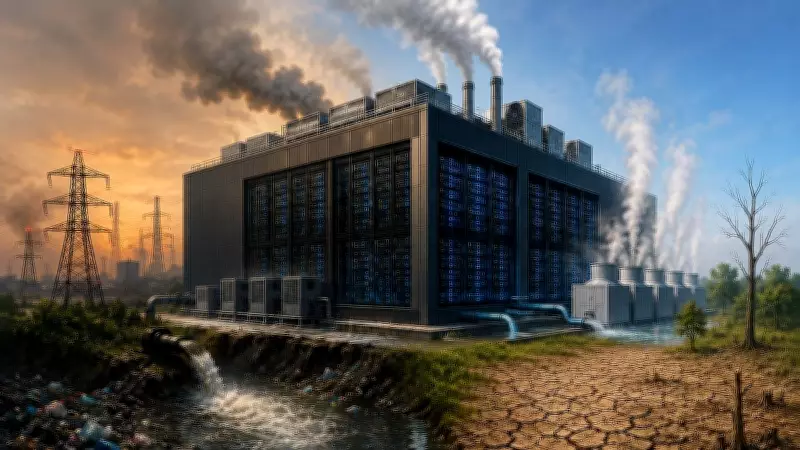
Artificial intelligence (AI) is transforming industries, but its environmental footprint is raising concerns. The energy and water required to power AI systems are substantial, prompting experts to call for greater transparency and sustainable practices.
Energy Consumption of AI
Training large AI models consumes vast amounts of electricity. For instance, training a single model can emit as much carbon as five cars over their lifetimes. Data centers, which house AI servers, already account for about 1% of global electricity demand, and this figure is expected to rise.
Water Usage
Data centers also require significant water for cooling. A typical data center can use millions of gallons of water annually. In water-scarce regions, this exacerbates local water stress. The water footprint of AI is often overlooked but is a critical part of its environmental cost.

Call for Sustainability
Researchers and environmentalists urge tech companies to adopt renewable energy, improve efficiency, and disclose environmental data. Some companies are already investing in carbon offsets and water-saving technologies, but more action is needed.
Future Outlook
As AI adoption grows, its environmental impact will intensify. Without intervention, the sector's carbon footprint could rival that of the aviation industry. Sustainable AI development is not just an option but a necessity.
The environmental cost of AI is a complex challenge that requires collaboration between technologists, policymakers, and society. By prioritizing transparency and sustainability, we can harness AI's benefits while minimizing its ecological harm.