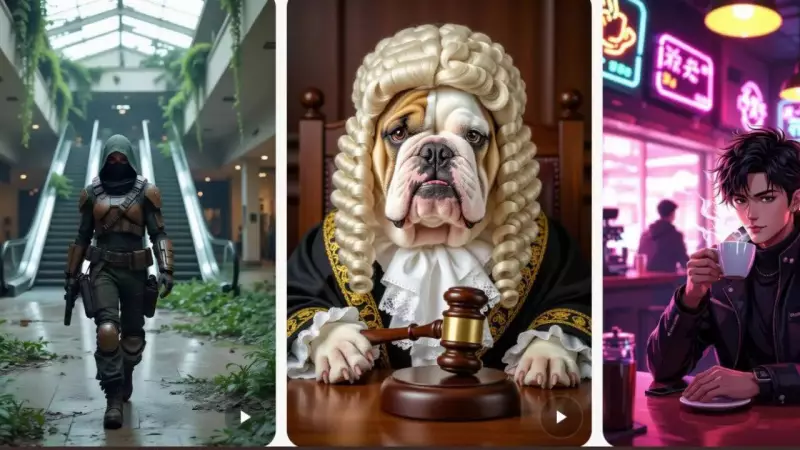
Elon Musk has turned the spotlight onto the artistic potential of artificial intelligence, specifically through xAI's image and video generation tool, Grok Imagine. He recently amplified a detailed guide by AI enthusiast @karatademada, which shifts the focus from simple object description to cinematic storytelling for dramatically improved results.
Think Like a Film Director, Not a Typist
The core lesson for Grok Imagine users is to abandon basic, descriptive prompts. Instead of instructing the AI with something like "A woman on a street," the guide recommends adopting a director's mindset. A far more effective prompt would be: "Cinematic shot of a woman walking alone on a rainy Paris street at night, reflections of neon lights on wet pavement, filmed in 4K, directed by Christopher Nolan, atmospheric and moody." This approach sets the mood, style, and visual tone, allowing the AI to interpret the story behind the scene.
Emotional context is another powerful lever. Rather than "A happy girl under the sun," prompting with "Close-up of a carefree young woman laughing under golden sunlight, wind blowing through her hair, summer energy, cinematic lens flare, warm tone" gives Grok Imagine the emotional depth needed to generate lifelike and engaging visuals.

The Structured Formula for Stunning AI Art
For consistent, high-quality output, the guide advises breaking down prompts into five key cinematic elements. Using the example of a samurai scene:
- Scene: A samurai on a foggy mountain ridge.
- Style: Realistic film style, inspired by Ridley Scott.
- Mood: Stoic and powerful.
- Lighting: Early morning dawn with soft mist.
- Camera: Wide shot, 50mm lens, depth of field.
This structured method ensures the AI comprehends the full vision, from atmosphere to technical execution.
Mastering Camera Angles and Iterative Editing
Leveraging cinematography terminology is crucial for dramatic impact. Users can specify wide establishing shots, low-angle shots, or close-ups to define perspective. For instance, "Low-angle cinematic shot of a hero standing on a rooftop, coat flapping, sun behind silhouette" instantly creates a powerful visual frame.
Grok Imagine also supports iterative refinement. Users can start with an image and then add details: "Same picture, but include soft morning sunlight filtering through the window, a cup of cappuccino on the table." More radically, entire scenes can be transformed: "Change the same scene into a cyber café in the future, with holographic menus and digital rain."
The process is inherently experimental. The guide encourages starting with a basic idea like "Portrait of a woman holding flowers" and evolving it to "Cinematic portrait of a woman holding yellow tulips; soft focus; 85mm lens; soft morning light." Key quick tips include focusing on atmosphere, specifying lighting details like golden hour or neon glow, and mixing genres for unique scenes.
By sharing this guide, Elon Musk underscores that the future of AI-generated media lies not in mere replication, but in evocative, director-led storytelling that leverages emotion, technique, and iterative creativity.