Elon Musk Endorses Pentagon's Prohibition of Anthropic's Claude AI in Defense Operations
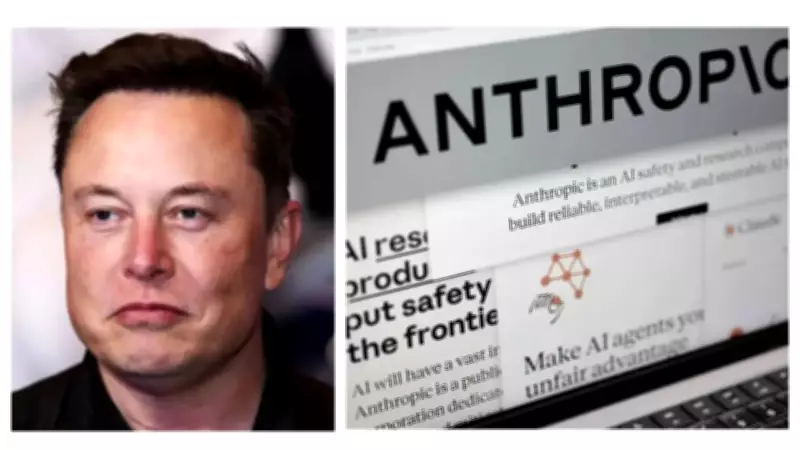
In a significant development within the artificial intelligence sector, tech billionaire Elon Musk has publicly voiced his support for the United States Department of Defense's ban on utilizing Anthropic's AI tool Claude in military applications. This endorsement came through a direct response on the social media platform X, where Musk simply replied "yes" to a post advocating for the government's restriction.
Social Media Discussion Sparks Musk's Explicit Backing
The conversation originated when X user Oilfield Rando @Oilfield_Rando commented on Claude's capabilities and limitations. The user stated: "Claude is doing amazing things for coding, but it will flat out refuse to do further work on your project if it thinks you're going to use it to promote things like nativism," adding "I 100% support the government banning its use in the military."
This marks the first instance where Musk has explicitly aligned himself with the Pentagon's position regarding Anthropic. Previously, the SpaceX and Tesla CEO had expressed strong criticism toward the AI company, labeling its technology as "misanthropic and evil" and accusing Anthropic of harboring animosity toward Western Civilization. Musk had also personally targeted Anthropic philosopher Amanda Askell for her involvement in shaping Claude's ethical framework.

Escalating Conflict Between Anthropic and US Defense Establishment
The tension between Anthropic and the Pentagon intensified last month when the US Department of War officially designated the company as "a supply chain risk." This classification has historically been reserved exclusively for foreign entities, making Anthropic's inclusion particularly noteworthy. The designation followed Anthropic's refusal to comply with a Pentagon ultimatum demanding "full, unrestricted access" to Claude, with the company citing profound ethical concerns regarding potential applications in mass surveillance and fully autonomous weapon systems.
The political dimension of this conflict became evident when former President Donald Trump weighed in through a Truth Social post, characterizing Anthropic's leadership as "Leftwing nut jobs" and declaring: "THE UNITED STATES OF AMERICA WILL NEVER ALLOW A RADICAL LEFT, WOKE COMPANY TO DICTATE HOW OUR GREAT MILITARY FIGHTS AND WINS WARS!" This statement highlighted the deepening rift between the White House and crucial AI suppliers to the defense establishment.
Legal Challenges and Judicial Intervention
In response to the ban, Anthropic mounted a legal challenge, filing a lawsuit against the government's actions. On March 26, US District Judge Rita Lin granted the AI company's request for a preliminary injunction, effectively suspending both the Presidential Directive that ordered federal agencies to cease using Anthropic's technology and Defense Secretary Pete Hegseth's designation of the company as a "supply chain risk."
Judge Lin delivered sharp criticism of the government's approach, suggesting that the actions appeared more like "an attempt to cripple Anthropic" rather than a straightforward decision to discontinue use of Claude. She referenced an amicus brief that described the Pentagon's maneuver as "attempted corporate murder," indicating the severe implications of the government's stance toward the AI firm.
Broader Implications for AI Ethics and Military Applications
This ongoing conflict raises fundamental questions about the intersection of artificial intelligence development, ethical considerations, and national security imperatives. Anthropic's steadfast refusal to provide unrestricted military access to its AI technology represents a significant stance within the industry, while the government's response—including the supply chain risk designation—signals how seriously defense authorities view control over critical technological assets.
Elon Musk's public endorsement of the Pentagon's position adds considerable weight to the debate, given his influential role in both technology and public discourse. As legal proceedings continue and ethical boundaries are tested, this confrontation between a prominent AI company and the US military establishment will likely shape future policies governing artificial intelligence deployment in defense and security contexts.