Cardiologist Demonstrates Rapid AI App Development Without Traditional Coding
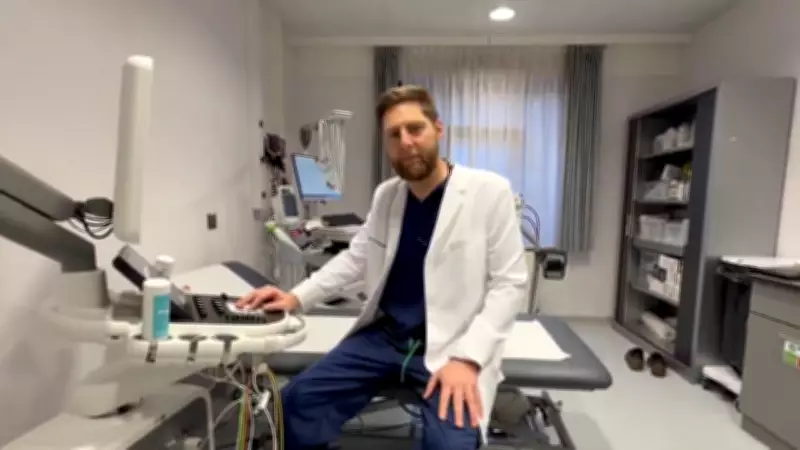
A practicing cardiologist has vividly illustrated how swiftly concepts can now be transformed into operational software applications. Dr. Michał Nedoszytko successfully constructed an artificial intelligence-powered medical tool in merely seven days, completely bypassing conventional coding practices, and achieved a remarkable top-three placement at a significant hackathon organized by Anthropic.
Global Competition and Barrier Reduction
The prestigious competition attracted an impressive volume of approximately 13,000 submissions from participants worldwide. Dr. Nedoszytko's accomplishment serves as a compelling case study demonstrating how AI-assisted development methodologies are dramatically lowering entry barriers to software creation. This evolution enables domain specialists, including medical professionals, to develop and launch tangible products without requiring extensive engineering backgrounds.
Introducing the Postvisit.ai Clinical Tool
The innovative application, named postvisit.ai, is specifically engineered to assist physicians in generating structured post-consultation summaries following patient visits. The platform can process various inputs including:

- Comprehensive patient medical histories
- Detailed clinical examination notes
- Laboratory test results and diagnostic data
Following analysis, the AI system drafts customized follow-up care plans and medical assessments. The primary objective is to substantially reduce administrative burdens on healthcare providers, allowing clinicians to dedicate more time to direct patient care rather than documentation tasks.
The application is positioned strictly as a clinical support tool, with final medical review and professional judgment remaining the responsibility of the treating physician. This design philosophy ensures alignment with current medical standards and regulatory expectations.
Revolutionary Development Methodology
Dr. Nedoszytko deliberately avoided traditional programming approaches during development. Instead, he leveraged advanced AI-assisted development tools that convert natural-language instructions directly into functional software. This innovative technique, often described as "vibe coding", enables creators to concentrate on workflow design, logical structures, and desired outcomes rather than programming syntax and technical details.
As a cardiology specialist, Dr. Nedoszytko contributed crucial clinical expertise to the project. He defined optimal parameters for post-visit documentation, identified critical clinical details requiring emphasis, and pinpointed common documentation errors. The artificial intelligence system managed substantial portions of technical implementation, resulting in dramatically accelerated development timelines.
Inside the Anthropic Hackathon Environment
Anthropic's hackathon event was exceptionally large-scale and competitive. From thousands of applications, organizers selected only several hundred participants. During the approximately six-day development period, participants produced hundreds of functional products, with many created by individuals lacking formal software engineering training.
Anthropic has highlighted this event as evidence that artificial intelligence is fundamentally transforming who can create software, empowering professionals from diverse fields including medicine, education, and legal sectors to prototype tools directly relevant to their industries.
Postvisit.ai distinguished itself by addressing a clearly defined, real-world healthcare challenge. Medical documentation represents a significant contributor to clinician burnout, and this application provided a focused technological solution to this widely acknowledged problem. The powerful combination of deep domain expertise and rapid AI-assisted development enabled the project to outperform more technically complex but less practical entries.

Future Implications for Software Development
The success of postvisit.ai indicates a broader transformation in software creation paradigms. For decades, converting conceptual ideas into functional products required engineers to translate abstract concepts into programming code. AI-assisted development tools are now substantially narrowing this translation gap, permitting subject-matter experts to build technological solutions directly.
This evolution does not eliminate the need for software engineers but rather redefines their professional roles while expanding participation in technology creation. Within healthcare specifically, this development opens new possibilities for clinicians to design tools that accurately reflect authentic clinical workflows and practical needs.
Despite receiving significant attention, postvisit.ai remains an early-stage prototype. Any potential real-world clinical implementation would necessitate additional testing, validation procedures, and compliance with medical data protection and privacy regulations. The hackathon recognition signals promising potential rather than immediate deployment readiness.
A Compact Project with Substantial Significance
By developing a functional AI application within one week and securing a top-three position in a global competition, Dr. Michał Nedoszytko has demonstrated how rapidly technological development paradigms are evolving. As artificial intelligence continues to reduce technical barriers, professionals who possess deep understanding of specific problems may increasingly become the primary architects of technological solutions.