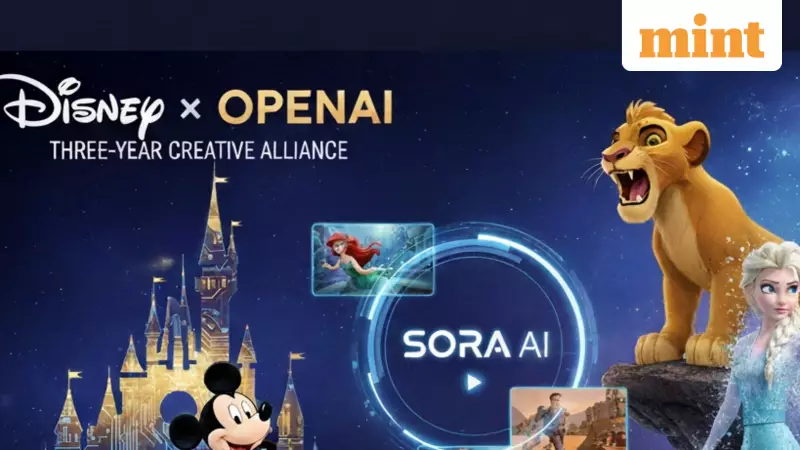
The landscape of digital content in India is poised for a significant shift following a landmark agreement between entertainment giant The Walt Disney Company and artificial intelligence leader OpenAI. This partnership, announced on 11 December, grants OpenAI's advanced text-to-video model, Sora, the license to create short, user-generated videos and images featuring over 200 iconic characters from Disney, Marvel, Pixar, and Star Wars franchises.
India: A Prime Market for AI-Generated Franchise Content
Industry analysts believe India, with its massive, young, and mobile-first audience already deeply engaged with short-form video platforms, could see rapid adoption of this new form of AI-powered entertainment. The strong cultural resonance of global IP like Marvel and Disney makes these AI-generated micro-videos a seemingly perfect fit for the country's dynamic content economy, primarily targeting Gen Z viewers.
Vikrant Rana, Managing Partner at SS Rana & Co., highlights the upside, stating that "AI-enabled co-creation lowers creative barriers, deepens fan engagement, and opens new monetisation channels for IP owners in growth markets like India." He also notes that such a high-profile deal legitimizes generative video as a scalable category, potentially accelerating investment into Indian startups focused on AI video generation, gaming, and synthetic media tools.

Legal Grey Areas and Market Disruption
However, the excitement is tempered by substantial legal and creative uncertainties. A primary concern is the ambiguity within Indian copyright law regarding ownership and liability for AI-generated derivative works. Legal experts point to a fascinating regulatory tension.
Lalu John Philip, Founder of Boolean Legal, references a DPIIT working paper proposing a 'Hybrid Model' with a 'Mandatory Blanket License,' which could compel rights holders to allow AI training for statutory remuneration. "This could take the steam out of exclusive high-value deals, as competitors could legally train models to generate 'inspired' content without needing a formal partnership," Philip explains.
Furthermore, Ameet Datta of ADP Law Offices points out that while voluntary deals like Disney-OpenAI are welcome, they leave AI platforms exposed to legal risks from other unlicensed rights holders, increasing pressure for broader licensing.
The Impact on Indian Creators and the Road Ahead
The arrival of studio-approved, easy-to-create AI content within a controlled framework is set to disrupt several player groups. Prashant Puri, Co-founder and CEO of AdLift, identifies the most impacted parties as independent fan creators and meme pages who rely on manual editing, mid-tier animation studios, and VFX freelancers working on short social formats, as client expectations for speed and polish rise.
On the other hand, this development transforms passive viewing into active participation, opening a new engagement layer for major franchises in a market where fandom is already intense. Anirban Mohapatra, Partner at Cyril Amarchand Mangaldas, observes that the deal grants "'big studio' recognition to creation of content by artificial creators," moving it from a niche to a mainstream source and signaling that the future of animation will be at least partly AI-generated.
In conclusion, the Disney-OpenAI collaboration marks a transformative moment for India's digital content sphere. It promises new creative and monetization avenues but also brings to the fore critical questions about copyright, the future of creative jobs, and the space for local stories amidst the dominance of global AI-powered IP.