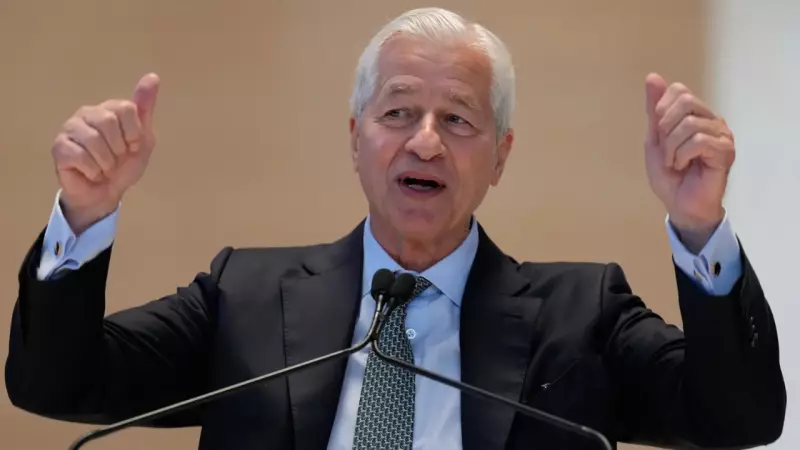
In a world increasingly shaped by artificial intelligence, one of the world's most prominent banking leaders has offered crucial advice for professionals and job seekers. Jamie Dimon, the Chairman and CEO of JPMorgan Chase, has directly addressed growing anxieties about AI-driven job displacement, emphasising that the path to career security lies not in competing with machines on technical tasks, but in mastering uniquely human capabilities.
The Human Edge in an AI-Driven Workplace
During a recent interview with Fox News, Dimon acknowledged the inevitable impact of AI on employment. He stated clearly that AI technology will "eliminate jobs," particularly those involving routine analytical or procedural work. However, he presented this not just as a threat, but as a catalyst for a fundamental shift in what the market values in an employee. According to Dimon, as machines take over more "grunt work," the premium on human-centric skills will skyrocket.
"My advice to people would be critical thinking, learn skills, learn your EQ [emotional quotient], learn how to be good in a meeting, how to communicate, how to write," Dimon advised. He assured that those who cultivate these abilities will have "plenty of jobs." His core message is a strategic pivot: workers must shift their focus from pure 'IQ' and technical knowledge to mastering 'EQ'—the emotional intelligence required to navigate complex human interactions and environments.

Industry Leaders Echo the Skills-First Mantra
Dimon's perspective is part of a broader trend among top executives in the technology and business sectors, who are increasingly prioritising demonstrable skills over formal credentials. This shift is particularly pronounced in the epicentres of AI innovation.
Dr. Fei-Fei Li, a Stanford professor often called the "Godmother of AI" and CEO of AI startup World Labs, has observed that traditional college degrees are losing their primacy in Silicon Valley. Companies are now actively seeking candidates with practical, hands-on experience and a proven ability to work with AI tools.
Similarly, Meta CEO Mark Zuckerberg stated last October that specific skills often carry more weight than a traditional university degree during Meta's hiring process. Adding to this, Microsoft AI CEO Mustafa Suleyman recently highlighted the importance of cultural fit and teamwork, seeking employees who are collaborative and can adapt seamlessly to a company's environment.
Building a Future-Proof Career
So, what does this mean for professionals in India and globally? The consensus from these leaders points to a clear action plan. The future of work will reward those who complement technical understanding with strong soft skills. Dimon encourages a proactive approach to learning, suggesting that the "next job may be a better job," but it requires continuous skill development.
"You can earn quite a bit of money with skills," he added, underscoring the tangible economic value of this shift. The essential toolkit for the AI era now includes:
- Emotional Intelligence (EQ): Understanding, managing, and effectively responding to emotions in oneself and others.
- Advanced Communication: The ability to articulate ideas clearly, write persuasively, and contribute meaningfully in meetings.
- Critical Thinking: Analysing situations logically, solving unstructured problems, and making sound judgments.
- Adaptability & Collaboration: Being a team player and adjusting to evolving company cultures and projects.
The message is unambiguous. While AI will redefine the landscape of many industries, it cannot replicate the nuanced human skills of empathy, creativity, and complex communication. For those looking to secure their place in the future job market, investing in these irreplaceable human attributes is no longer just an option—it is the most critical career strategy.