NASA's Curiosity Rover Uncovers Largest Organic Molecules on Mars in Historic Discovery
In a groundbreaking development that has sent shockwaves through the scientific community, NASA's Curiosity rover has reportedly discovered the largest organic molecules ever identified on the surface of Mars. This monumental find occurred along the lower slopes of Mount Sharp within the expansive Gale Crater, a region that has been the focus of intense planetary exploration for over a decade.
Ancient Mudstone Reveals Mid-Sized Hydrocarbons
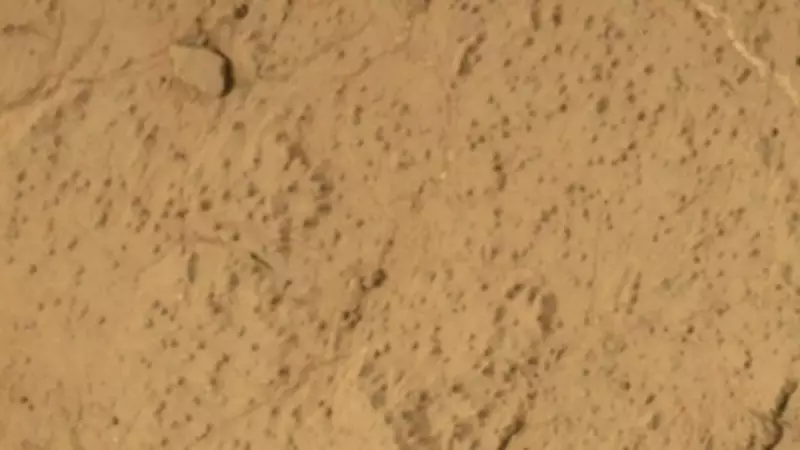
The rover's sophisticated instruments detected the presence of decane, undecane, and dodecane—mid-sized hydrocarbons that bear a striking resemblance to fragments of fatty acids. These molecules were preserved within mudstone that is an astonishing 3.7 billion years old, offering a rare glimpse into the planet's distant past. Scientists emphasize that while these organic compounds can form through both natural geological processes and biological activity, their discovery has reignited intense speculation that Mars may have once hosted microbial life forms.
According to NASA, the findings were formally published in March 2025, detailing how prebiotic chemistry on Mars has advanced far beyond previous observations. The mudstone samples collected by Curiosity are now being viewed as potential evidence that life could have existed on the Red Planet, marking a significant leap in our understanding of Martian history.

Scientific Analysis and Implications for Astrobiology
On Earth, fatty acids serve as key building blocks for cellular structures, making their Martian counterparts particularly intriguing. However, the harsh environment of Mars, characterized by intense cosmic radiation, typically destroys such delicate molecules over billions of years. To overcome this, researchers employed advanced lab tests and complex modeling techniques to rewind approximately 80 million years of surface exposure, allowing them to analyze the molecules in their more pristine state.
The data gathered from these analyses has made a biological explanation increasingly credible, with lead scientists stressing the urgent need for further experiments that simulate Martian conditions. This discovery adds a crucial new layer to the ongoing puzzle of Mars' potential habitability, building upon previous findings of methane plumes and other complex organics in Gale Crater.
Curiosity's Decade-Long Mission and Future Prospects
Launched in 2012, the Curiosity rover has been tirelessly exploring the Martian landscape for over a decade, traversing ancient lakebeds, rocky outcrops, and now sulfate-rich layers. The rover's journey up Mount Sharp, which features distinct geological layers akin to a giant cake, has been instrumental in uncovering these secrets. This latest achievement underscores the rover's enduring value in the quest to understand Mars' past.
The findings also set a compelling stage for future sample-return missions, with NASA's Perseverance rover poised to help refine the narrative by collecting additional samples for eventual return to Earth. As the scientific community continues to analyze these organic molecules, the possibility of confirming ancient life on Mars remains a tantalizing prospect, driving further exploration and research.