China's Spring Festival Gala Becomes Stage for Humanoid Robot Ambitions
China's annual CCTV Spring Festival Gala, a cultural event often compared to the US Super Bowl, took a futuristic turn this week by showcasing humanoid robots from four domestic startups during the Lunar New Year celebrations. This high-profile demonstration underscores China's aggressive push to establish leadership in robotics and advanced manufacturing, positioning itself as a formidable competitor in the global market.
Elon Musk Identifies China as Key Competitor in Humanoid Robotics
The gala's robot showcase gains significance following comments from Tesla CEO Elon Musk, who has repeatedly highlighted China as a primary rival in the humanoid robot sector. During Tesla's earnings call last year, Musk stated, "I think China will be by far the biggest competitor in the humanoid robot market. China is extremely good at scaling and manufacturing and is also strong in AI—the models being released there are already quite good and are improving rapidly." This acknowledgment from a leading industry figure validates China's strategic focus on robotics.
Robotic Performances and Industrial Showcase
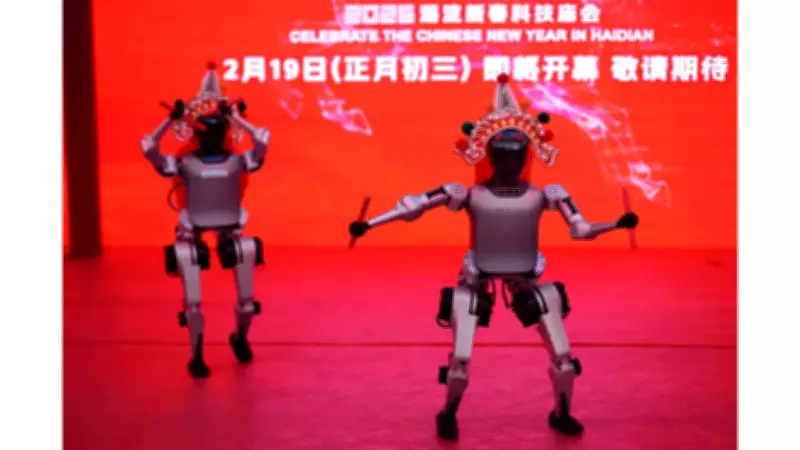
During the gala, robots from Unitree Robotics, Galbot, Noetix, and MagicLab performed intricate martial arts and fight sequences with traditional weapons like swords, poles, and nunchucks, alongside human child performers. The event served as a powerful platform to display China's industrial policy and its ambitious goals in humanoid robotics, blending cultural tradition with cutting-edge technology.

China already holds the title of the world's largest manufacturer and user of robots. According to an industry report by Omdia, Chinese robotics firm AgiBot shipped over 5,100 humanoid robots in 2025, capturing a substantial 39% share of the global humanoid robot market. This dominance is fueling increased hype and investment in the sector.
Market Momentum and Political Backing
The attention on China's humanoid robot industry is intensifying as major players like AgiBot and Unitree prepare for initial public offerings this year. Additionally, domestic AI startups have been releasing a range of frontier models during the nine-day Lunar New Year holiday, signaling rapid innovation.
Political support is also evident. Last year's gala featured 16 full-size Unitree humanoids dancing with human performers, drawing widespread attention. Weeks later, Unitree's founder met President Xi Jinping at a significant tech symposium—the first of its kind since 2018. In the past year, Xi has met with five robotics startup founders, a number comparable to meetings with electric vehicle and semiconductor entrepreneurs, granting the emerging sector considerable visibility and state endorsement.
Strategic Focus on Robotics and AI
Beyond the spectacle of robots performing kung fu kicks and backflips, China has strategically positioned robotics and artificial intelligence at the core of its next-generation AI manufacturing strategy. This move aims to achieve productivity gains through automation, helping to offset pressures from an ageing workforce and sustain economic growth.
Tesla's Shift Toward Humanoid Robots
Elon Musk has reiterated that he expects Chinese companies to be Tesla's main competitors as the automaker pivots toward embodied AI and its humanoid robot, Optimus. During Tesla's earnings call this week, Musk outlined plans to shift focus away from vehicles, announcing the discontinuation of the Model S and Model X to prioritize robot production. "We're gonna take the Model S and X production space in our Fremont factory and convert that into an Optimus factory … with the long-term goal of having 1 million units a year of Optimus robots," Musk stated.
Musk acknowledged that Tesla is still in the early stages of Optimus development, describing it as a research and development effort, with significant production volume not expected until the end of this year. In 2024, Musk projected that Optimus could eventually make Tesla a $25 trillion company, compared to its current market value of about $1.4 trillion, and previously suggested that 80% of Tesla's value might come from robots in the future.

The convergence of China's state-backed robotics showcase and Tesla's strategic pivot highlights a burgeoning global race in humanoid robotics, with both technological and economic stakes higher than ever.