In 2008, while the world was adapting to life with smartphones, nine-year-old Matthew Berger made a discovery that would reshape our understanding of human origins. Accompanying his father, renowned paleoanthropologist Lee Berger, on an excursion in Malapa, South Africa, Matthew ran after his dog and stumbled upon a small piece of limestone. Upon closer inspection, he noticed a white bone protruding from the dark rock.
The Accidental Find That Changed History
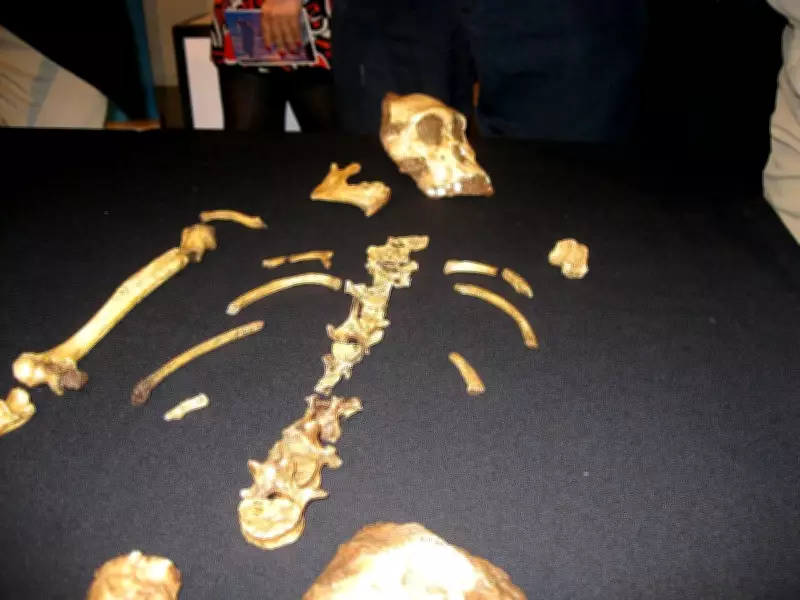
This moment of curiosity sparked excavations that unearthed remarkably well-preserved fossilized remains of a young male and an adult female. These fossils belonged to a species previously unknown to science: Australopithecus sediba, meaning “fountain” or “wellspring” in the Sotho language. The specimens exhibited a unique blend of primitive and modern traits, combining the elongated limbs of arboreal apes with the refined hands and pelvic structure of humans.
A Mosaic of Features That Baffled Scientists
The unveiling of Australopithecus sediba sent shockwaves through the scientific community due to the wealth of anatomical information it provided. Unlike typical discoveries based on fragmentary remains, the Malapa deposits yielded nearly intact skeletons. As detailed in a seminal paper published in Science, the species had a small brain and long limbs suited for climbing, yet also possessed a human-like pelvis and small teeth. This combination of features sparked controversy. Some researchers consider sediba a direct ancestor of the human genus, while others view it as a unique side branch that eventually went extinct. Regardless of its exact place in the evolutionary tree, the discovery demonstrated that the transition from ape-like ancestors to humans was far more complex and “mosaic-like” than previously thought.

Why a Child’s Sharp Eye Changed Science Forever
The Malapa area had been studied by scientists and miners for over a century without yielding such significant finds. As reported in Smithsonian Magazine, the discovery prompted a complete revision of theories regarding ancestral movement and hand use. Australopithecus sediba had feet similar to chimpanzees but walked upright like humans. The preservation at Malapa was so exceptional that scientists even found what they believe to be fossilized skin and organic matter, a rarity for fossils of this age. What began as a quiet afternoon hike evolved into a decade-long scientific mission that continues to generate new data about our deep past. Matthew Berger’s accidental find not only added a new species to textbooks but also provided a window into the life of an ancestor on the cusp of becoming human.
Malapa: A Global Fossil Research Hub
Today, Malapa is recognized as one of the most significant fossil sites worldwide, drawing scientists from across the globe. It stands as a testament to the idea that sometimes it takes a child’s perspective to uncover what adults have overlooked for ages. This story underscores that the past remains incomplete until another missing piece of the puzzle is found.
What else might we be missing right under our feet? The tale of a nine-year-old who contributed more to science in one day than many achieve in a lifetime serves as a powerful reminder of the mysteries still waiting to be discovered.