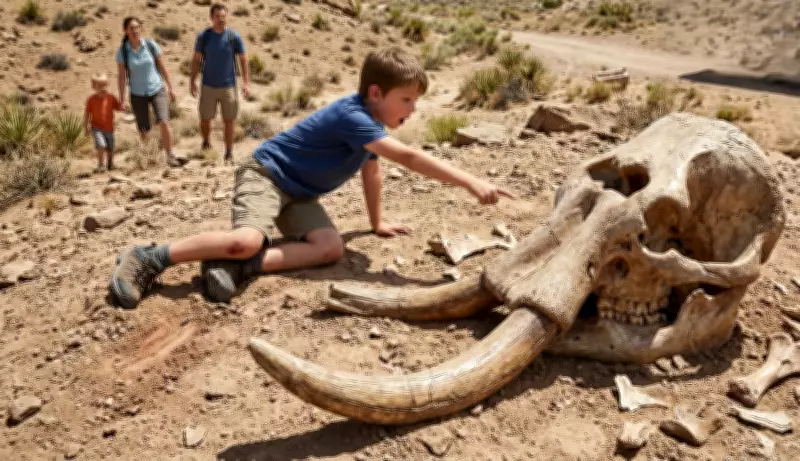
In November 2016, nine-year-old Jude Sparks was running ahead of his family near Las Cruces, New Mexico, when he tripped and fell. What seemed like a clumsy moment turned extraordinary when Jude realized he had landed face-to-face with a fossilized tusk belonging to a stegomastodon, an extinct prehistoric relative of elephants. The near-complete skull, estimated to be 1.2 million years old, was remarkably well-preserved.
Rare Fossil Find
Paleontologists hailed the discovery as significant because stegomastodon fossils are usually found in scattered pieces, but this skull remained almost intact. According to experts from New Mexico State University, the excellent condition of the fossil provides valuable insights into ancient mammals that roamed the American Southwest during the Pleistocene epoch.
How the Discovery Was Made
Instead of attempting to dig up the skull themselves, Jude's parents photographed the find and contacted Professor Peter Houde. This careful approach prevented the fragile bone structure from disintegrating upon exposure to oxygen. The recovery of the skull took months of planning, with the team applying specialized chemicals to harden the bone before lifting it.

Role of Weather and Luck
Paleontologists noted that heavy rainfalls shortly before Jude's fall had uncovered the skull. If the family had come a month earlier, the skull would have remained hidden; a year later, it might have decomposed due to weather conditions. This stroke of luck underscored the importance of timing in archaeological discoveries.
Significance for Science
The stegomastodon skull helps fill gaps in understanding the ecosystem of the ancient American Southwest, which is now a dry, rocky landscape. The find highlights how curiosity and careful handling can preserve history for future generations.