Jeff Bezos Predicts Future Humans Will Prefer Space Over Planets
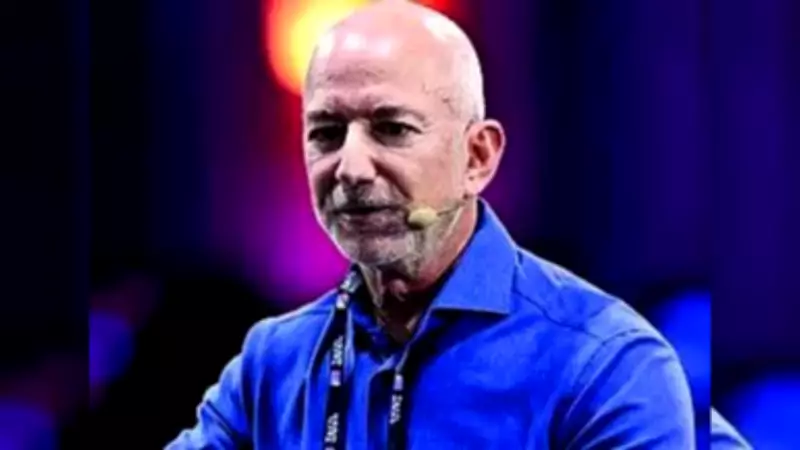
In a revealing interview on the Lex Fridman Podcast in 2023, Amazon founder Jeff Bezos articulated a bold long-term vision for humanity's future beyond Earth. He suggested that most people in the coming years will likely choose to reside in the vicinity of Earth, rather than on its surface or in traditional Earth orbit. This perspective stems from his belief that space holds untapped potential for sustaining a much larger population, free from the constraints imposed by Earth's finite resources.
Space Stations as Self-Contained Worlds
Bezos elaborated that large, artificial space stations could serve as self-contained habitats, capable of supporting entire cities, agricultural systems, and industrial complexes. These structures, he proposed, could be constructed using raw materials harvested from the Moon or asteroids, reducing reliance on Earth. "I think most people are going to want to live near Earth, not necessarily in Earth orbit, but near Earth vicinity," Bezos stated, emphasizing a shift toward preserving Earth while relocating heavy industry and expansion into space.
Trillion Humans and Unleashing Creativity
During the podcast, Bezos expressed his aspiration for a trillion humans inhabiting the solar system. He argued that such a vast population would dramatically increase the pool of talent and innovation. "If we had a trillion humans, we would have, at any given time, 1,000 Mozarts and 1,000 Einsteins," he said, envisioning a future brimming with creativity, intelligence, and energy. This, he believes, could accelerate progress and fill the solar system with vibrant life.

Why Planets Are Not the Solution
Bezos critiqued the idea of colonizing planets as a long-term strategy, describing planetary surfaces as "way too small" to accommodate significant growth. Instead, he championed giant space stations as the only viable path to achieving his vision. He highlighted that space offers abundant energy and materials compared to planets, which could fuel innovation and economic expansion on an unprecedented scale.
Key Steps Toward the Vision
While Bezos did not provide a specific timeline for this transition, he identified two critical steps: reducing the cost of space travel and leveraging space-based resources. By making access to space more affordable and utilizing extraterrestrial materials, humanity could gradually move toward a future where living in space becomes a practical and desirable option for many.
This vision aligns with Bezos's longstanding advocacy for protecting Earth's environment by offloading industrial activities to space. As discussions about space colonization gain traction, his insights offer a provocative glimpse into a possible future where human civilization extends far beyond our home planet.