Apple's New Era: Product-First Veteran John Ternus Takes Helm
Apple is poised to enter a significant new chapter in its storied history. On September 1, current CEO Tim Cook will formally hand over leadership responsibilities to John Ternus, a dedicated 25-year Apple veteran who has quietly but profoundly shaped some of the company's most iconic and successful products. This transition marks a pivotal moment for the technology giant as it navigates an industry increasingly dominated by artificial intelligence hype.
The Strategic Choice: Product Over Platform
The selection of John Ternus speaks volumes about Apple's strategic direction moving forward. While competitors like Microsoft and Google are investing hundreds of billions of dollars to embed artificial intelligence into every conceivable product and service, Ternus has signaled a distinctly different approach in recent interviews. His philosophy is deeply rooted in Apple's foundational principles: using technology to enhance products rather than making technology the product itself.
John Ternus articulated this perspective clearly: "We're always focused on 'how do we make a given product better.' We're always pushing. And we never think like, 'well, what impact if we did something here would have on a product over here?'"

Understanding the Significance of Ternus's Approach
While this statement might appear straightforward, it carries substantial weight given Apple's current position in the technology landscape. As a hardware specialist with a quarter-century at Apple, the 50-year-old executive has worked alongside both co-founder Steve Jobs and current CEO Tim Cook. Rather than discussing expansive AI strategies, platform wars, or massive investment commitments, Ternus focuses on the tangible product before him and the immediate task at hand.
This product-centric mindset represents the core question that Apple engineers have historically asked themselves: How do we improve this product beyond its current capabilities? This is not a novel concept for Apple but rather the fundamental philosophy that built the company from its earliest days.
From the original Macintosh to the revolutionary iPod and groundbreaking iPhone, Apple's most successful products emerged not from participating in technological arms races but from obsessive attention to a single question: What does the user genuinely need from this device?
Who Is John Ternus?
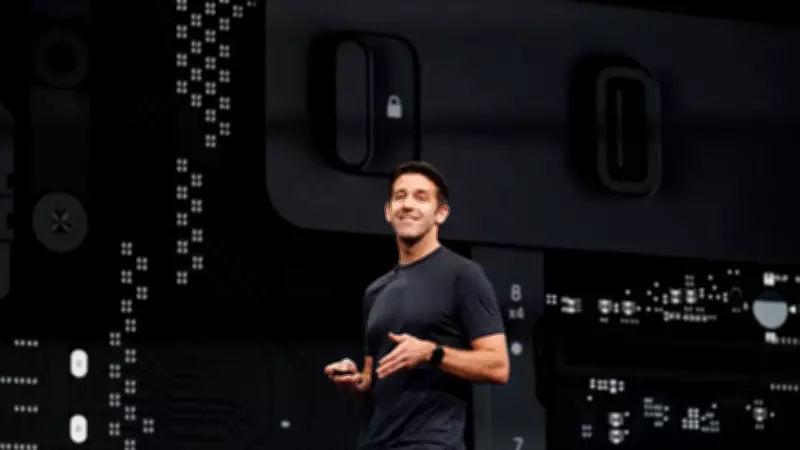
Unlike the household recognition of Tim Cook or Steve Jobs, John Ternus has maintained a relatively low profile throughout his career, embodying the Apple tradition of focusing on product development rather than seeking the spotlight. During his 25-year tenure, he has contributed significantly to multiple generations of iPhone development, overseen the critical transition of Mac computers to Apple Silicon processors, and served as Senior Vice President of Hardware Engineering.
In this latter role, Ternus bore responsibility for the physical devices that generate the overwhelming majority of Apple's substantial revenue. He represents, in the clearest possible terms, a product person through and through. This exact quality makes his appointment particularly meaningful as Apple faces increasing pressure to define its artificial intelligence strategy.
The Unavoidable AI Question
None of this suggests that Apple is ignoring artificial intelligence entirely. The company cannot afford to disregard this technological shift. Apple has faced criticism for delays in rolling out its revamped Siri assistant, and its decision to partner with Google rather than OpenAI for certain AI features has raised questions about whether Apple has fallen behind in the competitive AI landscape.
Furthermore, Apple recently lost its position as the world's most valuable company to Nvidia, a dramatic indicator of how market attention has shifted toward AI infrastructure and development. Apple's approach to artificial intelligence appears to be one of careful integration rather than wholesale reinvention.

The goal, as articulated by Ternus, is to seamlessly fuse AI capabilities into existing hardware experiences rather than pursuing the platform-level AI investments that characterize Microsoft and Google's strategies. Ternus has been explicit about Apple's philosophy: "Just to clear up any ambiguity. There has never been this idea of mashing these two things together."
Apple's Enduring Philosophy: Product Excellence Over Grand Visions
In a technology industry that increasingly rewards sweeping announcements, grand visions, and headline-grabbing investment figures, Ternus's words represent an almost countercultural perspective. He speaks not of changing the world or building the future of intelligence but of making individual products incrementally better.
This disciplined focus has enabled Apple to remain one of history's most profitable companies across multiple decades and numerous technological transitions. It carried the company through shifts from desktop computers to laptops, from laptops to smartphones, and from Intel processors to Apple Silicon chips.
The critical question now is whether this same product-first philosophy will successfully guide Apple through the artificial intelligence transition that is reshaping the entire technology sector. As John Ternus assumes leadership, Apple appears to be doubling down on its core identity while navigating the complex demands of an AI-driven future.