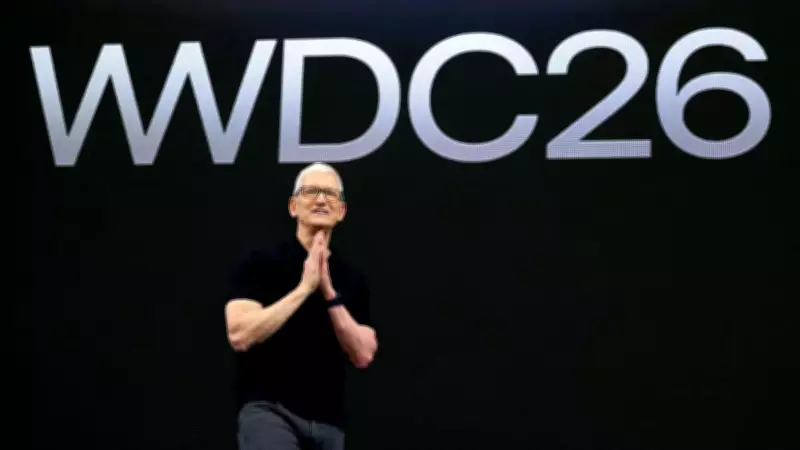
Apple's WWDC 2026, before anything else, was about Siri. Three years of getting outpaced by possibly everyone and anyone. Eighteen months of walking back the rebuild Apple first showed in 2024. On Monday, finally, the company delivered. The new assistant, called Siri AI, runs on an engine co-built with Google, a partnership Apple had been quietly nudging into existence since at least January. Some of the inference, it turns out, runs on Google's own servers. That's not a small concession.
And then there was everything else: new versions of every Apple operating system, a softer take on Liquid Glass, AI features stitched through Safari, Photos, and the Camera app, a serious rebuild of parental controls, and speed gains that pull the iPhone 11 back into the conversation. It was also Tim Cook's last keynote as Apple's CEO. John Ternus takes over on September 1.
Siri AI Arrives, Two Years After Apple Said It Would
Siri AI is the assistant Apple has been trying to ship since 2024. The capabilities, by now, are familiar: holds a conversation, reads your screen, pulls context from across your messages, mail, and photos. There's a standalone Siri app that keeps your chat history and syncs across devices through iCloud. Familiar territory, just from Apple.

The lead demo ran four steps deep. Look up a concert. Find out it's a lottery. Set a reminder. Have Siri queue up the lottery link when registrations open. That's the kind of contextual handoff Apple has been promising, walking back, and promising again since WWDC 2024. It finally works.
On iPhone, Siri lives in the Dynamic Island now. Swipe down, ask, watch the response land in a card. A slider in Settings adjusts the voice's pace and expressiveness. Apple's day-one press images, in case anyone missed the cue, included a Siri AI screen identifying a cricket ball. That tells you who the demo was for.
Apple Intelligence Runs on Google's Gemini Now, Even on Google's Servers
The architecture slide, dry as it sounds, was where Apple buried the biggest change of the day. Apple's next-generation Foundation Models were co-developed with Google, drawing on the Gemini family of models. Lightweight requests run on-device; heavier ones route through Apple's Private Cloud Compute—and some of that compute, Apple confirmed in a closed-door briefing, runs on Google's own servers.
The privacy scaffolding around that admission is real, though. Queries are stripped of personally identifiable information before they reach the Gemini inference layer. No data is retained after a request resolves. Google is contractually barred from using your Siri queries to train future models. Federighi still said it twice on stage—data is only used to execute your request, outside researchers can audit the system—which is exactly what you do when you know that's the line everyone will talk about.
Visual Intelligence Wants to Read Whatever Your Camera Is Pointed At
Point your iPhone at the food on your plate, get the nutrition breakdown. At a bill, get the split. At a landmark in a city you don't know, get the history and directions. That's Visual Intelligence, Apple's camera-based AI feature, now living as a dedicated Siri mode inside the Camera app. On macOS, the screenshot tool is the entry point.
The Vision Pro demo, for once, had someone holding a backpack and asking whether it would fit as carry-on for a booked flight. Siri pulled the airline's dimensions from an email and said yes. It's one of the more useful Vision Pro demos Apple has managed since the headset launched.
Safari Went AI Without Making It Weird
AI browsers have been a thing for a while now. Some stuffed their sidebars with chatbots. Others built entire browsers around the prompt box. Apple's approach is quieter than both—and, honestly, more useful for it.
Tabs now group themselves by topic: open a stack of shoe-shopping pages, and Safari folders them as "shoes." A new Notify Me feature watches a webpage and pings you when something changes: a price drop, a restock, a new ticket release. The Passwords app, working with Safari, scans for compromised credentials and updates them on the actual site with one tap.

Describe an Extension is the more ambitious one. Type out, in plain English, what you want a custom browser extension to do, and Safari builds it for you. Whether that holds up in real use is, of course, what the public beta will start telling us next month.
Spatial Reframe Is the Photos Demo Nobody in the Room Saw Coming
This was the demo the room reacted to. Take a photo of two friends at a viewpoint. Open Spatial Reframe. Drag your finger across the image. Your friends stay roughly where they were, but the background shifts behind them as if you'd taken a small step to the side, and AI fills in whatever the original lens missed. In the demo, granted, the angle change was a subtle nudge rather than a full swing. The implication is bigger.
Photos also gets a better Clean Up tool, a new Extend feature that stretches an image past its frame, and a retooled Image Playground with photorealistic generation and the ability to iterate on previous outputs. Every output carries a SynthID watermark.
Shortcuts Finally Makes Sense for Everyone Else
Shortcuts has always been one of those features that promised a lot and delivered—if you were willing to put in the work. Most people weren't. Building an automation from scratch was a power-user exercise, and Apple knew it.
With Apple Intelligence at play, you just describe what you want. Apple's demo had someone asking Shortcuts to ping their partner with an ETA every time they left work. Location trigger, Maps route, iMessage. Done. No actions to chain, no variables to wrestle with. Not quite the agentic AI everyone's been talking about, but for the person who's never made it past Shortcuts' first screen, it's close enough.
iOS 27 Keeps the iPhone 11 in the Family, but Apple Intelligence Doesn't
iOS 27 runs on every iPhone that runs iOS 26, going back to the 2019 iPhone 11. Apple rewrote the CPU scheduler for the new release, and the gains favour older hardware: apps launching up to 30 percent faster, photos appearing in the camera roll up to 70 percent quicker, AirDrop transfers up to 80 percent faster. Those are Apple's numbers, measured against iOS 26.4.2 on iPhone 11 Pro Max, iPhone 15, and iPhone 16 Plus units.
The AI side, predictably, runs on a shorter list. Siri AI needs an iPhone 16 at minimum, or the iPhone 15 Pro line, with the most capable on-device model reserved for the iPhone 17 Pro and iPhone Air. Older iPhones get the speed and the new interface and, for now, that's where the line is.
macOS 27 Is "Golden Gate," Because Apple's Crack Marketing Team Said So
macOS 27 is called Golden Gate. Federighi introduced it with a San Francisco-themed animation that, by the end, had run a little long. The actual change underneath is that Siri now lives inside Spotlight. Start typing in the search bar and the Mac decides whether you want a file or a Siri response. Drag a file into the query, ask Siri to compare it with another. The screenshot tool, as on iPhone, can hand a slice of your display over for analysis.
The design refresh is incremental. Toolbars are more uniform across apps, sidebars stretch edge-to-edge with their colours back, and window corner radii are finally consistent across apps. That last one drew applause from the developer audience, which tells you something about what's been bothering them. Intel Macs, as everyone already knew, can't run Golden Gate.
Liquid Glass Finally Lets You Turn the Transparency Down
Liquid Glass, the see-through design Apple introduced last year, looked clean in renders and worse on real screens. The fix, twelve months in, is a slider in Settings that takes Liquid Glass from ultra-clear to fully tinted. App icons have been redrawn for clarity. Sidebar icons have their colours back. The default opacity is higher than what shipped with iOS 26. The design stays; the readability, finally, is yours to set.
Apple Rebuilt Parental Controls, Right on Cue
Child accounts are mandatory for kids under 13 now and can run until 18. Ask to Browse lets parents approve every new website their kid wants to visit in Safari. Time Allowances cap daily usage by category: Entertainment, Games, Social Media, with default recommendations sourced from child development experts. Communication safety automatically blurs gore and violent content, on top of nudity. Screen Time has been redesigned with an at-a-glance view of average usage and top apps.
The timing, of course, fits the moment. The Kids Online Safety Act is moving through US Congress, and the UK and Australia are pushing age verification harder. Apple's pitch is that this can be done inside the OS, without making kids upload ID to a third-party verifier. That, on balance, is a better answer than most.
What Cook Left on the Table for Ternus, and What September Might Bring
Cook closed the keynote solo, with a line about the best being still ahead and "so many more still to come." He's not wrong to plant the flag there. iOS 27's beta code, dug into by developers within hours of release, carries new framework strings around app resizability and adaptive layouts—the kind of plumbing beta watchers have been reading as scaffolding for the long-rumoured foldable iPhone. Apple didn't say a word about it. It usually doesn't. But the engineering decisions in iOS 27 don't fully line up with the current iPhone lineup, and the timing of the handoff—Cook out on September 1, Ternus in just as Apple's hardware calendar hits its busiest stretch—feels less like coincidence and more like a relay being run on a schedule.
There was, as expected, no hardware at WWDC. No smart glasses, no AirPods with cameras, none of the rumoured AI wearables. The keynote stayed on software. The next big stage, then, is Ternus's, and the iPhone event in September is where the rest of the year actually gets defined.
Developer betas are out today. Public betas open next month. The new operating systems ship as free updates this fall. Siri AI follows in beta later this year for English-speaking users on supported hardware: iPhone 16 and later, iPhone 15 Pro and Pro Max, M1 Macs and newer, and Apple Watch Series 9 and newer paired with a compatible iPhone.
EU users miss Siri AI at launch, with Apple, predictably, pointing at the Digital Markets Act. China is on hold for regulatory clearance. India, for once, is on neither list. iPhone users here should get the new Siri when the beta lands, and the full feature set when iOS 27 ships this fall.