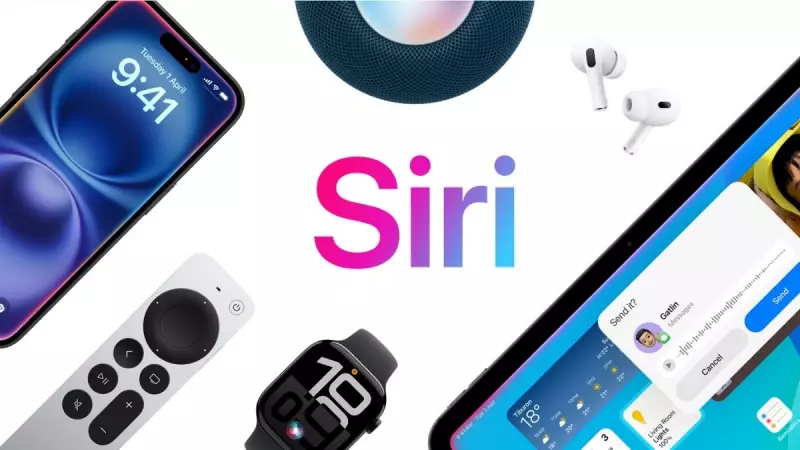
Apple is making a significant move in the artificial intelligence space by integrating Google's Gemini AI into its Siri voice assistant. This collaboration aims to equip Siri with advanced capabilities similar to those offered by ChatGPT, allowing for more sophisticated and context-aware responses.
Enhancing Siri with Advanced AI
The integration of Google's Gemini AI marks a strategic step for Apple to keep pace with competitors in the AI-driven assistant market. By leveraging Gemini's powerful language models, Siri will be able to understand and process complex queries more effectively.
Key Features of the Integration
This partnership will enable Siri to deliver answers that are not only accurate but also more conversational and detailed. Users can expect improvements in areas such as natural language understanding, multi-turn conversations, and personalized responses.

Improved User Experience: With Gemini AI, Siri will offer a more seamless and intuitive interaction, reducing the need for users to rephrase questions or seek additional information from other sources.
Competitive Edge: By adopting ChatGPT-style functionalities, Apple aims to enhance Siri's appeal and functionality, making it a stronger contender against other AI assistants like Amazon's Alexa and Microsoft's Copilot.
Technical Implementation and Timeline
Apple plans to roll out these enhanced features gradually, with initial updates expected to be available to users in the coming months. The integration will involve deep learning algorithms and neural networks to process and generate human-like text.
Potential Impact on the AI Landscape
This move could reshape the competitive dynamics in the AI assistant market. It highlights the growing trend of tech giants collaborating to leverage each other's strengths in AI development.
- Enhanced query handling for complex tasks
- Better contextual understanding in conversations
- Increased personalization based on user preferences
Overall, Apple's use of Google's Gemini AI to power Siri represents a forward-thinking approach to improving digital assistants. It promises to deliver a more engaging and efficient user experience, aligning with the evolving expectations of technology consumers.