Anthropic's AI Revolution: 100% of Company Code Now Generated by Claude
In a stunning revelation that underscores the accelerating pace of artificial intelligence adoption, Anthropic's Chief Product Officer Mike Krieger has disclosed that the company's AI coding tools now generate effectively 100 percent of all internal code. This announcement comes during a period of heightened anxiety within the global technology sector, particularly following recent market turbulence triggered by Anthropic's workplace automation innovations.
"Claude Writing Claude": The Full Automation Milestone
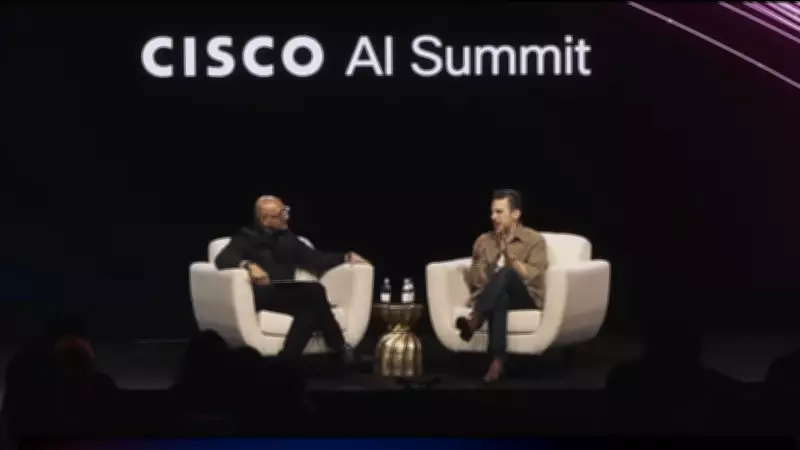
During an onstage discussion at Cisco's AI Summit with President Jeetu Patel, Krieger made the groundbreaking statement: "Claude is being written by Claude. Claude products and Claude code are being entirely written by Claude." This represents a significant acceleration from last year's prediction by Anthropic CEO Dario Amodei, who estimated that 90 percent of all code would eventually be AI-generated.
"Dario predicted 90%... and today it's effectively 100%," Krieger emphasized, highlighting the rapid transition from human-led coding to AI-dominated development processes.

Human Oversight in an AI-Driven Development Environment
Krieger detailed how Anthropic has restructured its development workflow, with human engineers now focusing on high-level oversight and verification rather than line-by-line code creation. The company has implemented robust systems to manage this transition effectively.
"We are regularly producing 2 to 3,000 line pull requests with each other, especially on the labs team where we are moving extremely quickly," Krieger explained. "What we've done is created all the right scaffolds around it to let us trust it."
Remarkably, Anthropic has also deployed Claude for code review purposes, with the AI system trained to identify security vulnerabilities and suggest refactoring improvements. Krieger noted that Claude provides comprehensive feedback on pull requests, including security assessments and optimization recommendations.
Market Tremors: Indian IT Stocks Experience "SaaSpocalypse"
Krieger's disclosure follows recent market upheaval triggered by Anthropic's launch of 11 new plug-ins for its Claude Cowork agent. These workplace automation tools, designed to handle tasks across legal, sales, marketing, and data analysis functions, prompted what investment bank Jefferies termed a "SaaSpocalypse" - referring to potential obsolescence threats facing Software-as-a-Service companies.
The fundamental shift that alarmed investors involves Claude agents' ability to directly perform tasks that previously required interfaces from established platforms like Salesforce or ServiceNow. This development sparked a massive sell-off of Indian IT stocks, with shares of industry giants including:
- Infosys
- Tata Consultancy Services (TCS)
- HCL Technologies
all experiencing significant declines as investors grappled with the long-term implications of AI automation on traditional IT service providers.
Existential Warnings for Software Engineering Profession
The automation concerns extend beyond market fluctuations to fundamental questions about the future of software engineering as a profession. During last month's World Economic Forum in Davos, Switzerland, Anthropic CEO Dario Amodei issued a stark warning that software engineering could become effectively obsolete within the next 12 months.
"I have engineering leads who have basically said to me, 'I don't write any code anymore. I just let Opus do the work and I edit it,'" Amodei revealed during the panel discussion.
Amodei has previously cautioned that AI could eliminate most white-collar jobs within five years, a warning that has gained renewed attention following recent developments. Zoho founder Sridhar Vembu reinforced these concerns in a social media post, urging the industry to take Amodei's predictions seriously given Anthropic's position at the forefront of AI coding technology.

The New Development Paradigm: Trust Through Structure
Despite the dramatic transformation, Krieger emphasized that Anthropic has implemented careful structural safeguards around its AI-generated code processes. The company has developed verification systems and quality control measures that allow engineers to trust machine-generated code while maintaining human oversight at strategic decision points.
This transition represents more than just technological advancement - it signals a fundamental reimagining of how software development organizations operate, with implications for workforce composition, skill requirements, and industry economics that continue to unfold across the global technology landscape.