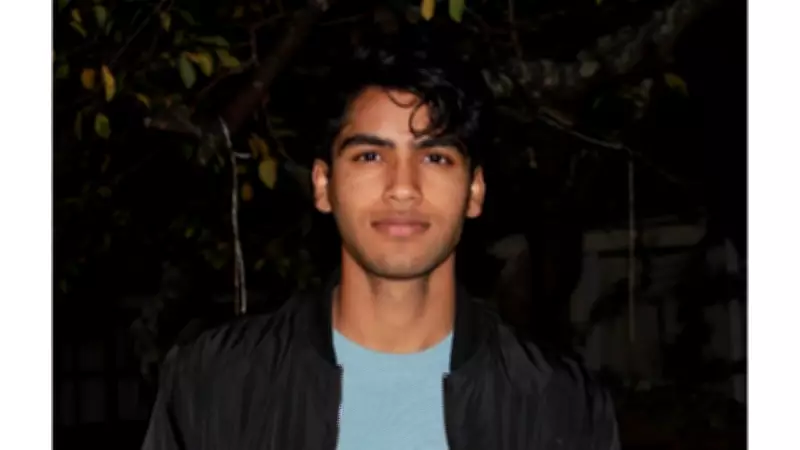
Aman Sanger: The Indian-Origin Visionary Behind Cursor's AI Revolution
Aman Sanger is rapidly emerging as a pivotal Indian-origin figure in the explosive global artificial intelligence landscape. As a co-founder of Cursor, he is integral to one of the world's fastest-growing AI-powered coding platforms, which has recently captured headlines due to a monumental potential deal with SpaceX.
Who Is Aman Sanger? A Profile of Innovation and Heritage
Aman Sanger is an Indian-origin entrepreneur and one of the four co-founders of Cursor, alongside Michael Truell, Sualeh Asif, and Arvid Lunnemark. The team first connected while studying at the prestigious Massachusetts Institute of Technology, where they began pioneering ways to harness artificial intelligence to revolutionize software development.
Growing up in the United States within a family deeply rooted in Indian culture, Sanger's background profoundly influenced his technological pursuits. His father, Arvind Sanger, is an alumnus of IIT Bombay and a hedge fund professional, while his mother, Shilpa Sanger, is an orthodontist and entrepreneur. This environment nurtured his early passion for coding, leading him to study computer science at MIT and co-found Anysphere in 2022.

Despite maintaining a relatively low public profile, Sanger has played a crucial operational and strategic role in scaling Cursor from an early-stage startup into a globally recognized AI developer platform. His journey exemplifies a blend of global ambition and strong Indian heritage, positioning him as a key player in the tech industry.
Cursor: The AI-Powered Coding Platform Transforming Development
Cursor is an advanced AI-powered coding platform designed to enhance developer efficiency by assisting in writing, editing, and understanding code. Unlike conventional tools that merely offer autocomplete features, Cursor acts as an intelligent collaborator capable of analyzing entire codebases and generating sophisticated solutions.
The platform has garnered significant traction among developers and enterprises, establishing itself in the rapidly expanding category of AI coding tools. By drastically reducing development time and boosting productivity, Cursor has become a prominent force in the AI ecosystem, driving innovation in software creation.
The $60 Billion SpaceX Deal: A Game-Changer in AI
In a landmark development in 2026, SpaceX secured an agreement that includes an option to acquire Cursor for approximately $60 billion later that year. Alternatively, the companies could pursue a $10 billion partnership focused on AI collaboration. This arrangement is not a finalized acquisition but allows both entities to collaborate while keeping future decisions open.
If completed, this deal would rank among the largest in the AI sector, underscoring SpaceX's strategic push into artificial intelligence. Advanced AI coding tools like Cursor could accelerate software development across SpaceX's operations, including rockets, satellites, and simulation systems. Integration with Elon Musk's broader AI ambitions might also position Cursor within a larger ecosystem competing with major AI players.
Cursor's Meteoric Rise and Sanger's Milestone
Since its inception, Cursor has experienced rapid growth, attracting widespread adoption from developers and enterprises alike. Its ascent from a student project at MIT to a startup with a potential valuation in the tens of billions reflects the swift pace at which AI-driven innovation is reshaping the global tech landscape.
The potential $60 billion deal signals a profound transformation in software development, where AI is evolving from a supportive tool to a core component of the coding process. For Aman Sanger, this represents a significant milestone, marking his journey from early tech exposure in an Indian-origin family to co-founding a leading AI startup at the forefront of one of the most closely watched tech developments.
Whether the acquisition proceeds or not, Cursor's rise and Sanger's instrumental role highlight the growing influence of artificial intelligence on the future of work and technology, cementing his status as a key figure in this dynamic field.