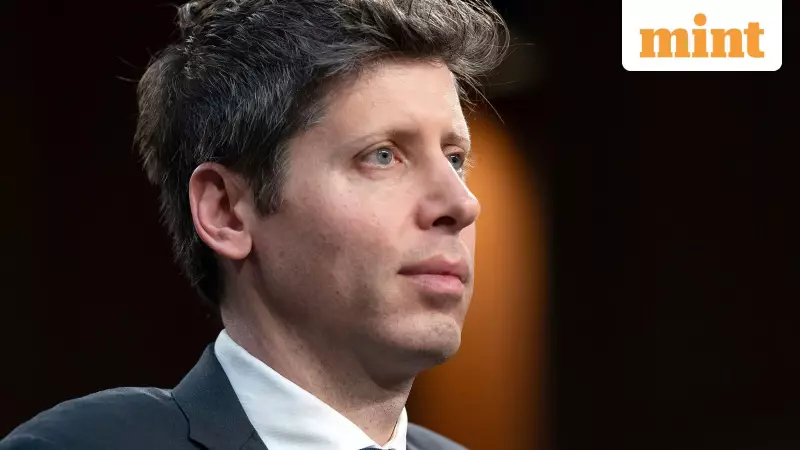
In a significant revelation, OpenAI's Chief Executive Sam Altman has shifted the focus of the next artificial intelligence revolution from reasoning to a more foundational capability: memory. During a recent podcast conversation with tech journalist Alex Kantrowitz, Altman outlined a future where AI systems can remember and learn from a user's lifetime of data, fundamentally redefining the digital assistant.
From Reasoning to Remembering: The Core Shift
Altman argued that while current AI tools excel at reasoning tasks, their Achilles' heel is long-term recall. He pointed out that humans make excellent personal assistants due to their grasp of context and nuance, but they are inconsistent at remembering details. AI, however, faces no such biological limitation.
The real transformative potential, according to Altman, lies in building systems with persistent memory. These systems would retain everything a user shares over time – conversations, emails, documents, and preferences. This vast, continuous memory bank would allow AI to identify patterns and unarticulated needs, offering a level of personalisation that is impossible today.

He confirmed that OpenAI is actively working on this vision and suggested that the first advanced, memory-driven personal assistants could begin to appear as early as 2026.
Redefining the Personal Assistant
This move towards persistent memory represents a turning point for consumer AI. Instead of reacting to isolated prompts, future AI systems would deliver results shaped by years of accumulated personal context. This evolution would transition AI from a reactive tool to a proactive assistant, capable of anticipating needs with unprecedented precision.
The discussion was part of a broader look at OpenAI's long-term strategy, which also covered infrastructure growth, AI-powered devices, and the company's ongoing pursuit of Artificial General Intelligence (AGI).
Navigating Competition and "Code Red" Alerts
Addressing reports of internal "code red" alerts at OpenAI, Altman reframed them not as panic but as a deliberate organisational strategy. He stated these alerts are triggered by intensifying competition, such as the recent rise of players like DeepSeek, and help the company stay vigilant and responsive.
He expects such internal alarms to be a recurring feature, potentially happening once or twice a year, as OpenAI fights to maintain its lead in a rapidly evolving market. While emphasising the importance of winning in its core domain, Altman also acknowledged that other companies can find success alongside OpenAI.
A Festive Glimpse of the Future
In a lighter demonstration of personalised AI, Altman recently sparked online buzz with a hidden Christmas feature for ChatGPT. He posted a cryptic message on X, prompting users to send a single gift emoji to the chatbot.
Users who did so discovered that ChatGPT would prompt them to upload a selfie. The request was then passed to Sora, OpenAI's video generation model, which created a short, personalised Christmas video. The festive message used details ChatGPT learned from past interactions, offering a small-scale preview of the deeply personalised experiences that advanced AI memory could make commonplace.
Key Takeaways:

- The next major leap in AI will focus on enhancing memory capabilities, not reasoning power.
- Persistent memory will enable hyper-personalised AI assistants that understand user context over a lifetime.
- OpenAI is targeting 2026 for the emergence of such advanced systems.
- The company views competitive "code red" alerts as a healthy strategy to maintain agility.
- Festive features in ChatGPT hint at the future of memory-driven personalisation.