The global competition for artificial intelligence (AI) supremacy is entering a critical new phase. The focus is shifting decisively from silicon and software to a more fundamental resource: electricity. As AI models grow more complex and data centres proliferate worldwide, a reliable and affordable power supply is fast becoming the decisive factor for dominance, potentially reshaping the geopolitical landscape of technology.
The New Choke Point: From Semiconductors to Kilowatts
For years, the AI race was defined by competition in chip design, like those from Nvidia, and the development of large language models (LLMs). Nations leveraged their strengths in these areas, with the US restricting chip exports to China and China using its control over rare-earth materials as a counter-pressure point. However, the bottleneck is now moving from chips to electricity. A data centre is useless without a continuous, massive flow of power. The International Energy Agency warns that roughly 20% of planned global data-centre capacity could be at risk by 2030 due to grid bottlenecks. As energy supplies tighten, costs will surge, impacting everything from corporate operations to household bills.
Contenders in the Power Play: China's Commanding Lead
In this new energy-centric arena, China has built a formidable advantage through long-term, strategic investment. The country has executed a massive build-out of energy generation and distribution infrastructure, with a strong focus on renewables. According to a Financial Times report, China installed a staggering 429 gigawatts (GW) of new power generation capacity in 2024 alone, which is more than six times the net capacity added in the United States. Its investments span solar, hydropower, and the critical hardware needed to transmit cheaper inland power to coastal demand hubs.

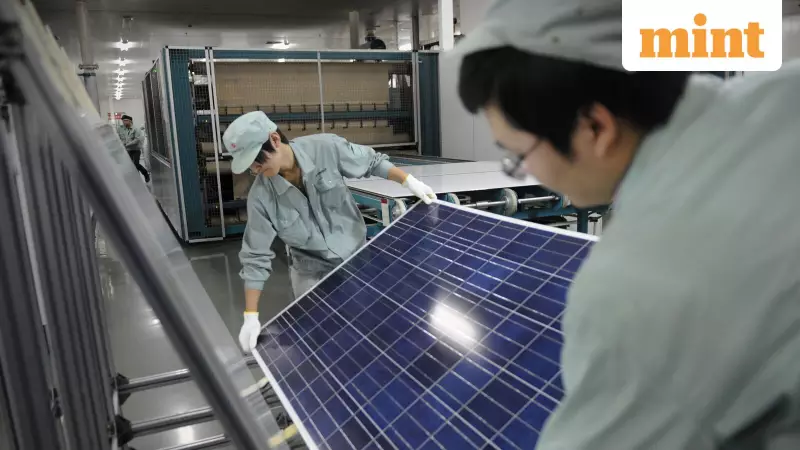
Furthermore, China's industrial policy is meticulously coordinated with local execution. To bolster its domestic chip industry, local governments offer substantial electricity subsidies—up to 50% off power bills—for data centres that use Chinese-made semiconductors. Combined with its manufacturing scale that has slashed solar panel prices dramatically, China now possesses the capability to add between 500 GW and 1 terawatt of new capacity annually, putting it in a commanding position to fuel its AI ambitions.
US Complacency and Europe's Narrow Window
In contrast, the United States shows signs of strategic complacency. Its electricity grid, largely planned and managed at local levels, is struggling to meet the around-the-clock demand from booming data-centre clusters. Projects like those planned by OpenAI and partners, requiring up to 10GW (comparable to New York City's peak summer load), highlight the scale of the challenge. A critical mismatch exists: while data centres can be built in two years, new transmission infrastructure often takes nearly a decade. This misalignment is already causing strain; wholesale electricity prices in some US regions near data-centre hubs have skyrocketed by up to 267% over five years. Without a structural overhaul of energy policy and grid infrastructure, the US risks ceding its AI leadership.
This bottleneck, however, could open a narrow window of opportunity for Europe. The continent possesses significant strategic assets in clean energy hardware, grid engineering expertise, and one of the world's most interconnected electricity systems. EU policy explicitly recognises grids as a strategic asset for autonomy and security. Yet, Europe is hamstrung by slow execution. While planning occurs at the EU level, permitting and construction remain local affairs, with the average grid project taking over ten years. The European Parliamentary Research Service estimates current grid investments are only 10-15% of what is required, with over 500GW of offshore projects stuck in queues. To become a credible AI challenger, Europe must urgently channel its energies into accelerating its energy infrastructure.

The next chapter of the AI revolution will be written not just in code, but in kilowatt-hours. China's integrated strategy of fostering domestic chips while supercharging its power grid addresses the full spectrum of this new reality. The US, despite its lead in chips and models, must urgently look beyond its current advantages to secure its energy future. For Europe, the moment to act is now—to transform its energy infrastructure from a potential strength into the foundation of a competitive AI ecosystem.