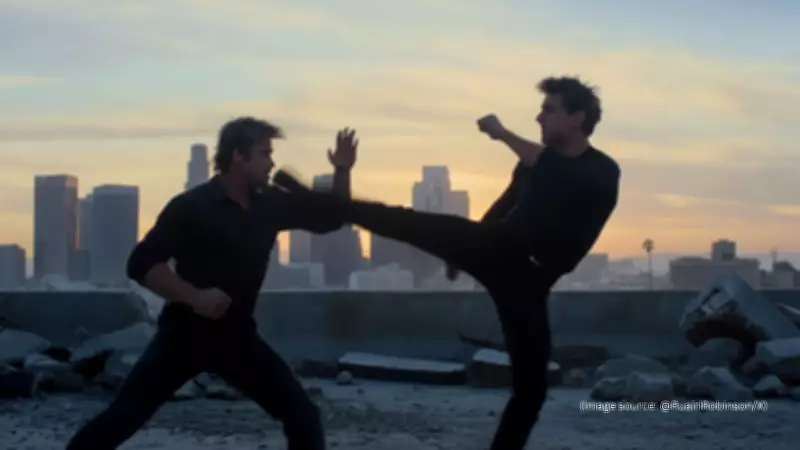
AI-Generated Tom Cruise vs Brad Pitt Fight Video Goes Viral, Ignites Industry Debate
An artificial intelligence-generated video depicting a dramatic rooftop fight between Hollywood superstars Tom Cruise and Brad Pitt has taken the internet by storm, sparking intense discussions about the future of filmmaking. Shared by filmmaker Ruairi Robinson, the clip showcases AI's growing capabilities in creating realistic visual content, leading to concerns over job displacement and the democratization of creative processes.
Filmmaker's Experimentation and Writer's Dire Prediction
Ruairi Robinson revealed that he produced multiple variations of the scene, experimenting with different characters, dialogue options, and camera angles while maintaining the same desolate rooftop setting and similar fight choreography. This flexibility highlights how AI tools can rapidly iterate on creative concepts, potentially reducing costs and time in production.
In response to the viral video, Deadpool & Wolverine writer Rhett Reese expressed alarm on social media platform X, stating, "I hate to say it. It's likely over for us." He elaborated in follow-up posts, predicting that generative video technology is advancing so quickly that a single individual could soon create a full-length film rivaling Hollywood releases in quality.

Reese argued that while untalented creators might produce subpar content, those with exceptional skills—comparable to directors like Christopher Nolan—could leverage these tools to achieve remarkable results. He also criticized Hollywood's traditional role as a gatekeeper, suggesting that AI could empower young or financially disadvantaged creators to bypass industry barriers and access creative opportunities previously out of reach.
Public Reactions and Broader Implications
The viral video has elicited a wave of reactions from users online, reflecting mixed sentiments about AI's impact on the entertainment sector:
- Some users see potential for talent integration into AI-driven processes, offering hope to writers and authors who have struggled to adapt their books into visual media.
- Others believe that jobs will shift rather than disappear entirely, with studios losing their gatekeeping power as technology democratizes film production.
This incident underscores broader trends in AI adoption across industries, where tools are increasingly performing complex tasks such as scriptwriting, visual effects, and even digital acting. The debate intensifies as professionals grapple with the balance between technological innovation and job security, raising questions about how the film industry will evolve in the coming years.