AI Startup Oncovault Bridges Cancer Care Gap in India After Founder's Personal Tragedy
"You have three months. Live with love, care, and family." Those were the stark words Gaurav Kumar heard at a leading hospital in Mumbai in 2023 when he presented his mother's medical reports. Despite this grim prognosis, she survived for two years, a journey that ignited Kumar's mission to transform cancer care in India.
Kumar, now 28, recalled the moment with raw emotion: "That doctor didn't say anything else. My mother had Stage IV gallbladder cancer. I was numb." Speaking to TOI, he shared how returning to Delhi and consulting another doctor who helped streamline the treatment proved crucial. This personal tragedy became the catalyst for a professional venture aimed at addressing critical gaps in the healthcare system.
Bridging the Access Gap in Indian Oncology
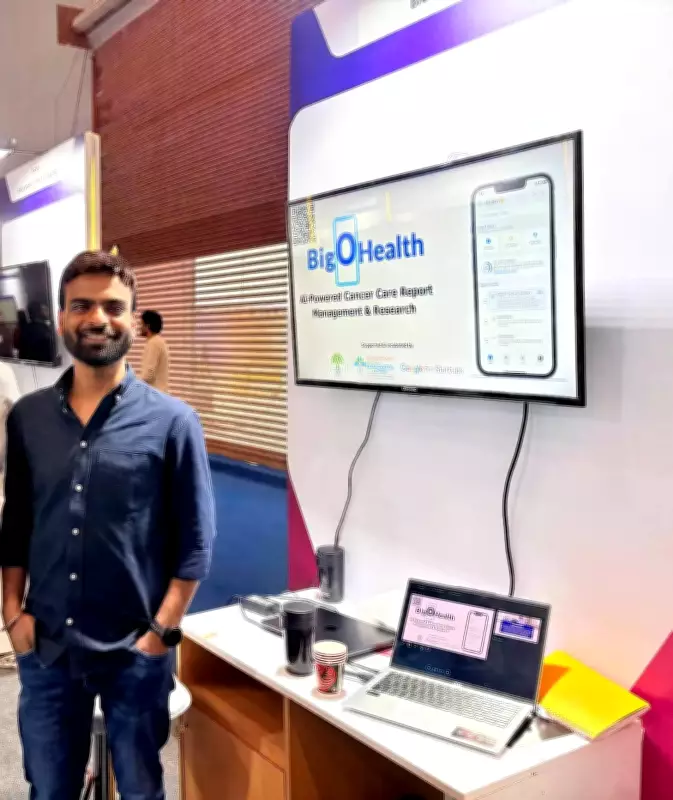
Kumar highlights a severe disparity: India accounts for 18% of global cancer cases, yet only 2% of patients participate in clinical trials. "In tier 2 and tier 3 towns, people don't have access to specialised healthcare. I have come across at least three cases where the treatment was flawed," he explained. To combat this, Kumar and his engineering batchmate, Shubham Shreyas, co-founded Oncovault under their startup, BigOHealth. This AI-powered app enables patients in underserved regions to upload medical reports and connect with specialists via phone, bringing expert advice to remote areas.

The Power of the Second Opinion
Kumar's own experience underscored inconsistencies in medical advice. At a Delhi hospital, one doctor dismissed surgery, while another recommended it. "Families panic when they are told about cancer. Their anxiety makes them blind to making a conscious choice," he noted. Reflecting on his mother's case, he added, "When I was given three months, I panicked too, but a second opinion helped me." Oncovault leverages this insight to provide reliable guidance during stressful times.
How Oncovault Works: AI-Driven Insights
Cancer treatment often generates over 1,000 pages of documentation. Oncovault uses AI to process this data into actionable insights. Kumar detailed the process: "AI ensures only legitimate documents and medical images are uploaded, analyses patient data to find compatible oncologists, and generates a summary of the case history, saving doctors vital time." Doctors can review source data to verify AI summaries, maintaining accuracy and trust.
Treating Advanced Cases with Collaborative Care
For Stage III or IV cancers affecting multiple organs, a single perspective is insufficient. "You need a medical oncologist, surgical oncologist, radiation oncologist, palliative care specialist, etc. This is where we come in," Kumar said. Oncovault's medical board assembles these specialists to collaborate and suggest precise treatment plans, enhancing outcomes for complex cases.
Trust and Long-Term Vision for Public Health
Kumar claims the AI model has been rigorously tested using consented data from thousands of patients via partner hospitals. Beyond individual care, he aims to provide the government with high-level medical data to improve public health strategy. "With 70% to 80% of cancer cases diagnosed at advanced stages, our goal is to analyse this data for actionable insights, identifying trends based on region, gender, and age," he explained.
The impact is evident in personal stories. Last year, Kumar and his partner helped a teenage patient in Delhi whose family was advised to arrange an air ambulance. By connecting her to the right specialists, her health improved. "The girl is doing fine now. Our birthdays fall around the same time, so we celebrated together," Kumar said with a smile.
About the Author: Aishwarya Shukla is a Delhi-based journalist at TOI's Global Desk, with interests in politics, insurgencies, and tax developments.