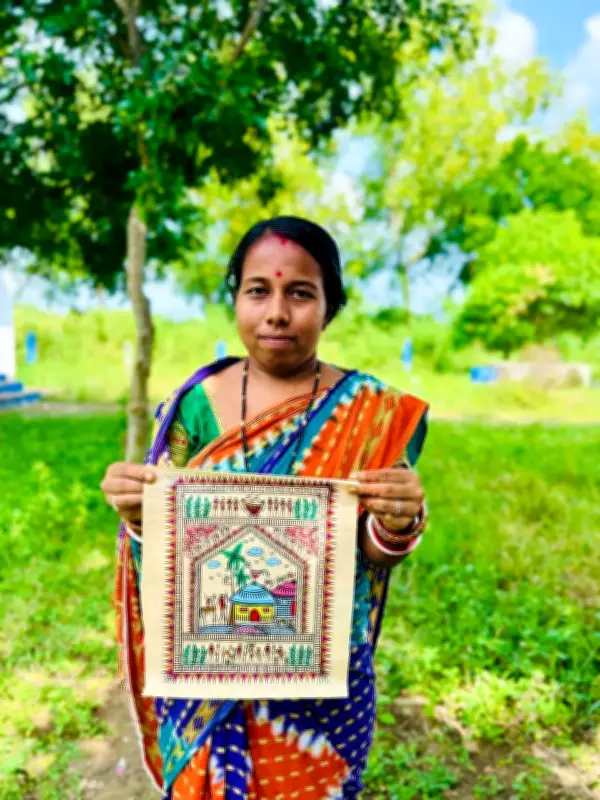
AI Technology Breathes New Life into Dying Soura Tribal Art Form
In a remarkable fusion of traditional craftsmanship and modern technology, 27-year-old Sukanti Das from Badapur village in Ganjam district has transformed the endangered Soura tribal art into a sustainable livelihood source. Despite not belonging to the Soura community herself, Sukanti has become a guardian of their cultural heritage through innovative artificial intelligence applications.
Recognition at National AI Summit
The mother of a young girl recently gained national recognition at the AI Impact Summit held in New Delhi last month, where she demonstrated how artificial intelligence can preserve and enhance traditional art forms. Sukanti painted Soura art on canvases using AI technology, earning praise from art enthusiasts who celebrated her work as giving "a lease of life to the dying art" on Women's Day.
"She is not just an artist, but now a successful entrepreneur," remarked fellow artist Archana Gouda, highlighting Sukanti's dual achievement in both artistic preservation and business development.

From Traditional Walls to Modern Canvases
The Soura art originates from the mud walls of Lanjia Soura tribal homes in southern Odisha districts like Gajapati and Rayagada. For generations, this intricate artwork has decorated tribal dwellings, but due to lack of market connections and modern techniques, the traditional art form has been facing extinction.
"After getting trained by a company, I have painted different artworks, particularly Soura art, on canvas for the past five years," Sukanti explained. "Now, I have been painting this by using AI from mobile phones."
Economic Empowerment Through Art
Sukanti's entrepreneurial journey has created substantial economic benefits. She currently earns between Rs 15,000 to Rs 20,000 per month by selling her art, with peak festive seasons bringing her monthly income up to Rs 25,000 when home decorators and companies seek her creations.
At the AI summit, she created 15 Soura paintings using artificial intelligence, with 11 displayed on large screens that drew appreciation from attending guests. This technological approach has opened new markets and possibilities for the traditional art form.
Training and Expanding Reach
Beyond her personal success, Sukanti now trains 30 other women in her area, creating a ripple effect of empowerment. Coming from a family of daily wage laborers and educated up to Plus III level, her transformative journey represents a significant breakthrough in challenging socioeconomic circumstances.
Initially, friends and relatives expressed doubts about painting as a viable livelihood option. However, Sukanti's self-confidence combined with support from a training company helped establish Soura art as a sustainable income source.
National and International Markets
"I have been getting orders online across the country for supply of Soura paintings," Sukanti revealed. Her reach has extended beyond Indian borders, with exhibitions in Nepal and Bhutan already showcasing her work. She is actively working to expand to additional international markets including the United States, United Kingdom, and France.
"I am working hard to improve their quality and make them appear more vibrant by using AI tools," she added, demonstrating her commitment to continuous improvement through technology.
Preserving Cultural Heritage
This initiative represents more than just economic empowerment—it serves as a vital preservation effort for Odisha's cultural heritage. By combining traditional Soura art patterns with AI-enhanced techniques, Sukanti has created a model that other endangered art forms might emulate.
The success story demonstrates how technology can serve as a bridge between ancient traditions and modern markets, ensuring that valuable cultural expressions survive and thrive in contemporary society while providing economic opportunities for artisans.