AI Represents a Fundamental Platform Shift, Not Just Another Tech Cycle
The ascent of artificial intelligence transcends a mere technological trend; it constitutes a profound platform shift that is fundamentally altering how individuals construct, labor, and conceptualize. For students and emerging professionals, this pivotal moment presents a rare window to reshape career trajectories early, provided they demonstrate adaptability.
Democratization of Creativity and Accelerated Entrepreneurship
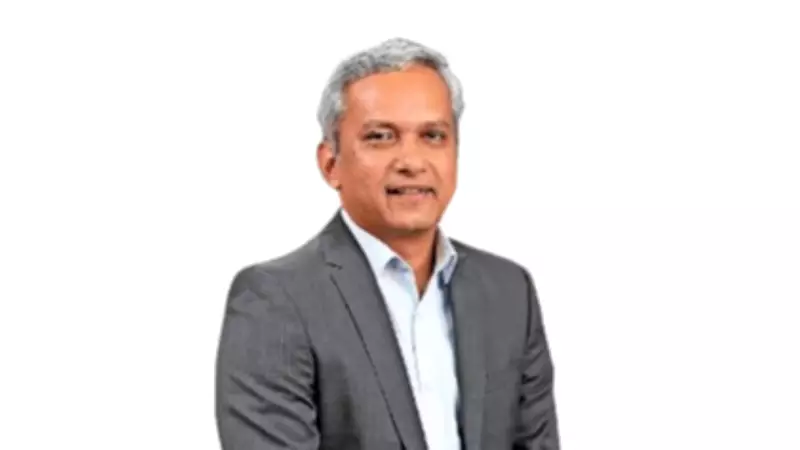
As articulated by Rafee Tarafdar, Chief Technology Officer of Infosys, during a recent webinar, "Every instance we witness a significant platform shift like AI, it transforms the technological stack, our interface methods, and our work modalities." He draws parallels between the current AI revolution and the advent of the internet and cloud computing, both of which spawned entirely novel industries. "We are at a comparable juncture with AI. This is an exceptionally opportune time," Tarafdar emphasized, noting that opportunities extend far beyond software coders alone.
For the younger generation, the inaugural major transformation is the democratization of creativity. "Presently, I can generate a visual, produce a video, or craft a prototype rapidly using simple language. Creativity is now accessible to all without reliance on domain experts," Tarafdar observed. Tasks that historically necessitated teams of specialists can now be prototyped individually utilizing AI tools. This paradigm shift implies students should concentrate less on awaiting perfect skill acquisition and more on experimenting with innovative concepts.

The second substantial opportunity resides in entrepreneurship. "The velocity at which you can develop applications has diminished significantly. If you possess an idea, construct it, launch it, test it, refine it, and iterate," he counseled. For Indian talent specifically, he perceives a chance to transcend service-oriented roles and construct global software products with unprecedented speed.
Expanding Technical Horizons and Emerging New Roles
For individuals from technical backgrounds, AI substantially expands the realm of possibility. "We can now address problems that were previously too complex to tackle," Tarafdar elucidated. However, he clarified that not everyone requires deep expertise in low-level systems. Students must determine their professional path: either become specialists working on chips, CUDA, and foundational models, or concentrate on building practical solutions. "You need not be an expert in all domains, but you must comprehend the fundamentals sufficiently to employ the technology correctly," he stated.
Beyond traditional development, entirely new professional roles are materializing. These encompass model engineers who fine-tune AI systems for specific industries, data engineers who prepare and generate training datasets, and specialists in AI evaluation who test for bias, accuracy, and security vulnerabilities. Additionally, demand is escalating for performance engineers who optimize AI systems, and professionals dedicated to responsible AI to ensure ethical compliance. "Opportunities are proliferating across all these AI domains," Tarafdar affirmed.
Essential Skills Beyond Technical Knowledge
Nevertheless, technical proficiency alone will not future-proof a career. When queried about the skills or traits Infosys prioritizes in new hires, Tarafdar indicated they seek candidates who grasp fundamental principles and can deconstruct problems lucidly. Equally critical is the capacity to independently identify problems. "Merely executing assigned tasks is insufficient. You should be capable of detecting operational deficiencies and taking initiative to rectify them," he supplemented.
Continuous learning is non-negotiable. "You cannot define yourself by a singular skill like being a Java programmer. Technology is evolving too rapidly," he cautioned, urging young professionals to maintain adaptability. This necessitates a mindset transformation. "You must be prepared to unlearn and learn perpetually if you aspire to remain relevant," he added.

Intriguingly, Tarafdar posits that AI amplifies the value of human cognition. With the proliferation of AI agents and automation, execution can be scaled by machines, but "designing workflows and applying fundamental reasoning should remain human domains," he asserted. Simply put, students should focus on comprehending problems profoundly while leveraging AI to expedite execution.
Another competency gaining prominence is storytelling. "You must be able to simplify intricate concepts and elucidate them clearly so even a child can understand," he remarked. In an AI-driven world, the ability to communicate ideas effectively may hold equal importance to constructing them.
Building a Future-Proof Career in the AI Era
Ultimately, forging a resilient career in AI is less about pursuing specific tools and more about cultivating a robust thinking methodology. Commence with modest projects, apply AI to quotidian challenges, and build consistently. "Do not perpetually seek monumental breakthroughs. Concentrate on executing small tasks proficiently and cultivating habits of excellence," Tarafdar advised. This strategic approach, combined with adaptability and continuous learning, will empower the youth to thrive amidst the AI platform shift.