Government Official Calls for Balanced AI Approach in Creative Industries
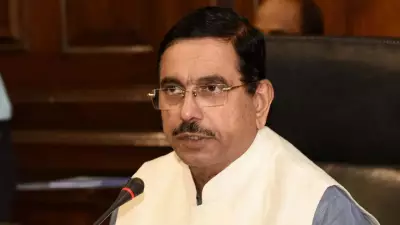
Prabhat, Additional Secretary at the Ministry of Information and Broadcasting, delivered a clear message about artificial intelligence. He spoke at an important pre-summit event on January 13. The gathering took place at FICCI's Federation House in New Delhi.
The Motion Picture Association and the Federation of Indian Chambers of Commerce and Industry organized this seminar. It served as a precursor to the upcoming India AI Impact Summit scheduled for 2026.
Three Key Objectives for AI Policy
Prabhat outlined three crucial objectives from a public policy standpoint. He emphasized that artificial intelligence must serve multiple purposes simultaneously. First, AI should expand human creativity rather than limit it. Second, it must improve the competitiveness of India's creative sectors. Third, and perhaps most importantly, AI implementation must preserve trust and protect the rights of creators.

"Innovation needs to remain sustainable rather than fragile," the Additional Secretary stated. He stressed that these three goals cannot be pursued in isolation. They must be addressed together to create a balanced framework.
Industry Leaders Discuss Copyright and Licensing
The seminar titled Who Owns the Future of Entertainment?: India, AI, and the Next Global Shift attracted strong participation. Representatives came from film, television, music, digital platforms, and advisory services. Numerous industry partners supported the event including AVIA, FFI, IBDF, IFPI, and several other organizations.
The opening session tackled pressing policy questions. Experts discussed copyright, ownership, training data, attribution, and remuneration in the age of AI. James Cheatley, Vice President at the Motion Picture Association for Asia Pacific, chaired this discussion.
Blaise Fernandes, President of IMI, highlighted the importance of copyright-led growth. He referenced Prime Minister Narendra Modi's vision expressed at WAVES 2025. "Our Prime Minister set the benchmark for India's creative sector to power the Orange Economy to global heights," Fernandes recalled.
He continued with a clear recommendation. "Any AI policy must ensure that the copyright sector can unlock value through voluntary licensing models. This is very important to reach global heights."
Real-World Applications and Strategic Choices
The second session shifted focus to practical implementation. Panelists examined how AI is already transforming scripting, music, animation, visual effects, and distribution. Vivan Sharan from Koan Advisory chaired this discussion featuring senior industry practitioners.
Pankaj Kumar Mishra from Sony Pictures Networks India offered a strategic perspective. "AI in media and entertainment is not a single debate," he observed. "It represents a strategic set of choices across capability, economics, creativity, competitive advantage and governance."
Mishra pointed to India's unique position. "The technology is ready, the talent is here, and the market is massive," he noted. The crucial question, according to him, is how India will leverage these advantages.
"What will separate leaders is whether AI becomes just a faster way to do the same work, or a way to create what we have never been able to create before," Mishra explained. He proposed a balanced approach: "AI for speed, humans for soul. Get that balance right, and India will be globally competitive, not merely globally present."
Looking Ahead to 2026 Summit
James Cheatley emphasized the significance of current policy decisions. "AI is transforming every stage of the creative lifecycle," he stated. "The policy decisions made now will shape how creators, companies, and markets evolve. India has a real opportunity to work in dialogue with industry to establish supportive frameworks."
Mira Chatt from IFPI added an important perspective on fairness. "Governments should support creative industries by enforcing existing copyright laws," she said. "Right holders in India should be able to negotiate licenses for the use of their music. This benefits the whole creative ecosystem and its future."

The discussions at this seminar will continue at the AI Impact Summit 2026. This larger event is scheduled to take place in New Delhi from February 16-20. It will further explore how artificial intelligence can drive inclusive growth, innovation, and global influence for India's creative economy.