AI Revolutionizes Dinosaur Footprint Identification with Objective Analysis
In a groundbreaking development for paleontology, researchers have unveiled a novel artificial intelligence-based method that promises to objectively identify which dinosaurs left behind ancient fossil footprints. This innovative approach addresses a long-standing challenge in the field, where matching tracks to their makers has historically relied on subjective human interpretation.
Addressing a Generational Challenge in Paleontology
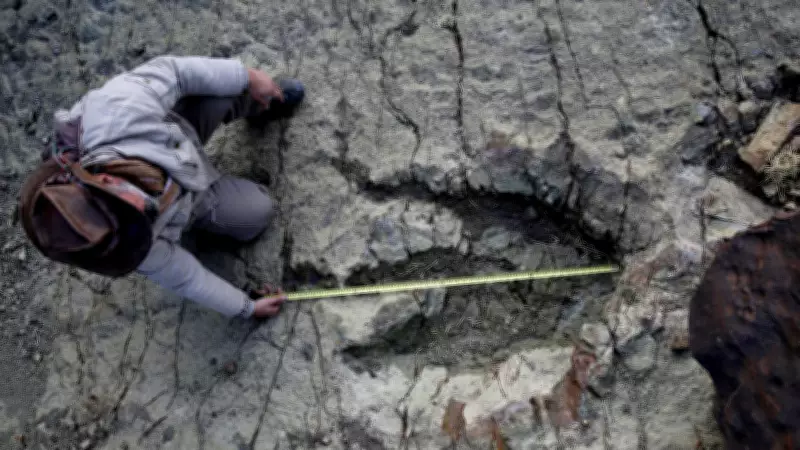
Footprints rank among the most common types of dinosaur fossils, ranging from isolated impressions to chaotic clusters resembling prehistoric dance floors. However, determining which specific dinosaur species created these tracks has been notoriously difficult and contentious.
"Matching track to trackmaker is a huge challenge, and paleontologists have been arguing about this for generations," emphasized University of Edinburgh paleontologist Steve Brusatte, senior author of the research published in Proceedings of the National Academy of Sciences.

Gregor Hartmann, physicist at the Helmholtz-Zentrum Berlin research center in Germany and lead author of the study, explained the significance: "This is important because it provides an objective way to classify and compare tracks, reducing reliance on subjective human interpretation."
How the AI Method Works: Analyzing 1,974 Footprint Silhouettes
The research team honed their method through algorithmic analysis of 1,974 footprint silhouettes spanning 150 million years of dinosaur history. The artificial intelligence system discerned eight distinct features that explain variance in track shapes:
- Overall load and shape, reflecting the foot's ground contact area
- Position of loading within the footprint
- Spread and arrangement of the toes
- How toes attach to the main foot structure
- Heel position and loading characteristics
- Relative emphasis of toes versus heel in weight distribution
- Shape discrepancy between left and right sides of tracks
After the algorithm identified these differentiation traits, experts correlated them with various dinosaur types believed to have made the tracks, creating a framework to guide identification of future discoveries.
The Complexity of Footprint Interpretation
Hartmann highlighted the inherent uncertainties in footprint identification: "The shape of a track depends on many factors beyond the animal itself, including what the dinosaur was doing at the time, such as walking, running, jumping or even swimming, the moisture and type of the substrate, how the footprint was buried by sediment, and how it was altered by erosion over millions of years."
He added that these variables mean "the same dinosaur can leave very different-looking tracks," complicating traditional identification methods.
Dinosaur footprints also exhibit extreme size variations. Brusatte noted: "The size variation can be quite extreme – from little meat-eating dinosaur footprints about the size of chicken tracks in the barnyard to long-necked sauropod dinosaur footprints that are the size of a bathtub."
Footprints as Windows into Ancient Ecosystems
While dinosaurs left behind various fossilized remains including bones, teeth, claws, skin impressions, and even stomach contents, footprints often prove more abundant and informative. These impressions can reveal the type of environment dinosaurs inhabited and, when multiple tracks are present, the animal communities that shared ancient ecosystems.
Brusatte drew an analogy to explain the identification process: "If we find footprints, we need to play detective and identify which dinosaur made them. And to do that, we do the same thing as the prince in Cinderella when he matched Cinderella's foot to the slipper: we try to find a dinosaur foot that fits in the footprint."
The paleontologist noted that finding a dinosaur skeleton at the end of its own trackway represents an exceptionally rare occurrence, making footprint analysis crucial for understanding dinosaur behavior and distribution.

Intriguing Discovery: Bird-Like Footprints Predating Known Birds
One particularly fascinating conclusion from the AI analysis involved seven small, three-toed footprints approximately 210 million years old from South Africa. The algorithm validated prior scientific assessments that these tracks closely resemble bird footprints, despite being 60 million years older than the earliest-known avian fossils.
"This, of course, doesn't prove they were made by birds," Brusatte cautioned regarding the footprints, suggesting they might have been created by previously unknown dinosaurs ancestral to birds or by unrelated dinosaurs with bird-like feet.
He emphasized the importance of this finding: "So we have to take this seriously and find an explanation for it." This discovery highlights how AI-assisted footprint analysis might reveal previously unrecognized connections in evolutionary history.
The new AI methodology represents a significant advancement in paleontological research, providing scientists with an objective, data-driven approach to interpreting one of the most common but challenging types of dinosaur fossils. As the technique undergoes further refinement and application, it promises to unlock new insights into dinosaur behavior, ecology, and evolutionary relationships through careful analysis of the tracks they left behind millions of years ago.