AI Breakthrough May Finally Locate Lost Soviet Luna 9 Moon Lander After 58 Years
In a remarkable fusion of historical space exploration and cutting-edge technology, researchers from the United Kingdom and Japan believe they may have solved one of the moon's enduring mysteries: the exact location of the Soviet Union's Luna 9 lander. This pioneering spacecraft made history in 1966 as the first to achieve a soft landing on the lunar surface and transmit photographs back to Earth, proving that a controlled landing on another world was possible.
The Historic Mission and Its Disappearing Act
The Luna 9 mission represented a monumental leap for humanity. The spacecraft consisted of a spherical capsule, approximately 58 centimeters in diameter and weighing about 100 kilograms. Upon descent, it employed innovative inflatable shock absorbers to bounce across the rugged lunar terrain before stabilizing with petal-like panels that unfolded upon touchdown.
Despite transmitting invaluable images for only three days, its success directly inspired and paved the way for future crewed missions, including NASA's Apollo program. However, after its brief operational life, the exact resting place of this historic artifact was lost to time. While coordinates were published in the Soviet newspaper Pravda, they were notoriously imprecise. Subsequent decades and even high-resolution imagery from NASA's Lunar Reconnaissance Orbiter failed to conclusively locate the capsule, with speculation that it could lie tens of kilometers from its reported position.

The Modern Hunt: AI Scans the Lunar Surface
Led by Lewis Pinault at University College London, in collaboration with colleagues in Japan, a research team has adopted a thoroughly modern approach to this historical puzzle. As reported by the SETI Institute, they developed a specialized, lightweight artificial intelligence system named YOLO-ETA, which stands for "You-Only-Look-Once—Extraterrestrial Artifact."
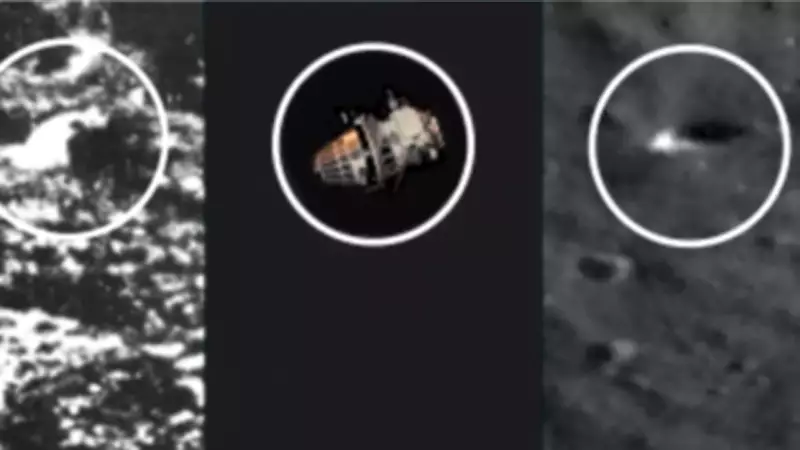
This algorithm was meticulously trained on data from known lunar landing sites, such as those from the Apollo missions, teaching it to recognize the subtle disturbances in regolith—the moon's soil—caused by human-made landers. The system demonstrated impressive accuracy during tests, successfully identifying known Soviet sites like the Luna 16 lander. Its capability lies in detecting minute surface features, almost imperceptible to the untrained human eye, offering new hope for locating objects lost for decades.
Promising Clues and the Path to Confirmation
The research team applied the YOLO-ETA AI to scan a 5 by 5 kilometer region surrounding the historically published coordinates for Luna 9. The analysis revealed several promising candidate sites where subtle alterations in the lunar soil suggest artificial disturbances, likely caused by the capsule's bouncing landing sequence nearly six decades ago.
Each of these spots is now a potential location for the long-lost lander. The next, and potentially definitive, step in this search will come from an international effort. India's Chandrayaan-2 orbiter is scheduled to pass over the area of interest in March 2026. Its advanced instruments are expected to map the terrain in unprecedented detail. If the AI's predictions align with these new observations, the final resting place of Luna 9 could be pinpointed at last, closing a chapter in space history and providing emotional closure for enthusiasts and historians of the space race era.
This endeavor highlights how contemporary artificial intelligence is becoming an indispensable tool in space archaeology, allowing scientists to re-examine old mysteries with new eyes and potentially recover pivotal chapters of our exploratory past on the moon.