HyperWrite CEO Warns AI Could End 50% of White-Collar Screen Jobs Soon
Imagine February 2020: life was normal, markets were booming, and then suddenly, the COVID-19 pandemic flipped everything overnight. According to Matt Shumer, CEO of HyperWrite, we are currently in a similar "seems overblown" moment, but for something far more significant—the rise of artificial intelligence. In a recent raw and honest essay on X, formerly known as Twitter, titled 'Something Big Is Happening,' Shumer issues a stark warning: white-collar "screen jobs" are the first to be hit and could become obsolete due to AI, not in a decade, but right now.
The Immediate Threat of AI to Screen-Based Professions
After years of building AI at HyperWrite, Shumer has witnessed firsthand how advanced models like GPT-5.3 Codex are not merely assisting workers but replacing hours of labor. These systems can debug code or draft reports with a proficiency that often surpasses teams of professionals. Shumer is blunt in his assessment, stating, "If your job happens on a screen... AI is coming for significant parts of it." This sentiment is echoed by other industry leaders, such as Anthropic's Dario Amodei, who predicts that 50% of entry-level white-collar roles could vanish within just one to five years.
Shumer's personal experience underscores this transformation. He describes how, in his own work, he can simply articulate an app idea in plain English, walk away, and return to a finished, self-tested product without needing any edits. This efficiency highlights the profound shift AI is bringing to the workplace, where routine tasks are automated at an unprecedented scale.

Six Professions Most Exposed to AI Disruption
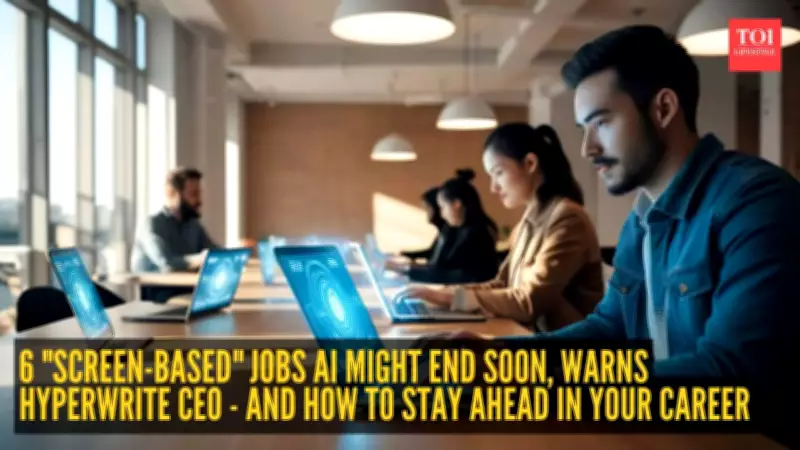
Based on Shumer's essay, here are six professions that are particularly vulnerable to being wiped out by AI, along with strategic pivots for those affected:
- Legal Work: AI already reads contracts, summarizes case law, and drafts briefs, rivaling junior lawyers. Firms are leveraging it as "instant associates." Pivot to: Focus on strategy, building client trust, and enhancing courtroom presence, as AI lacks the human judgment required for high-stakes ethical decisions.
- Accounting and Bookkeeping: Automated systems can handle data entry, reconciliation, and tax preparation with minimal errors. Pivot to: Specialize in financial advisory, audit oversight, and regulatory compliance, where human insight is crucial.
- Content Creation and Copywriting: AI tools generate articles, marketing copy, and social media posts rapidly. Pivot to: Emphasize creative storytelling, brand voice development, and editorial strategy that require emotional intelligence.
- Customer Support: Chatbots and AI assistants manage inquiries and troubleshoot issues efficiently. Pivot to: Shift to roles in customer relationship management, complex problem-solving, and empathy-driven service.
- Data Analysis: AI algorithms process and interpret vast datasets faster than humans. Pivot to: Move into data science, predictive modeling, and business intelligence that demand critical thinking and contextual understanding.
- Administrative Assistance: Virtual assistants schedule meetings, manage emails, and organize tasks autonomously. Pivot to: Focus on executive support, project coordination, and interpersonal communication skills.
Navigating the AI-Driven Future of Work
The rapid advancement of AI necessitates a proactive approach from professionals and organizations alike. Shumer's warning serves as a call to action: individuals must adapt by cultivating skills that AI cannot replicate, such as creativity, emotional intelligence, and strategic decision-making. Meanwhile, companies should invest in reskilling initiatives and ethical AI integration to mitigate job losses and harness technology for productivity gains.
As the world stands on the brink of this transformative era, the lessons from the pandemic remind us that disruption can occur swiftly and unexpectedly. Embracing change and preparing for an AI-augmented workforce will be key to thriving in the new economic landscape.