AI Revolutionizes Bengaluru Policing, Leading to Notable Crime Reduction
In a significant development for urban safety, Bengaluru has witnessed a remarkable decline in major criminal activities following the strategic implementation of Artificial Intelligence in its policing framework. According to official city police records, crimes including robbery, chain snatching, house break theft, molestation, and motor vehicle theft have shown a substantial decrease over the past year.
Quantifying the Impact: A Detailed Look at Crime Statistics
A comparative analysis spanning the years 2023 to 2025 reveals impressive reductions across multiple crime categories. Specifically, robbery cases plummeted by 47%, chain snatching incidents dropped by 53%, and house break thefts at night decreased by 20%. Additionally, motor vehicle thefts fell by 19%, molestation cases declined by 20%, and rape incidents saw a 30% reduction. These figures underscore the tangible benefits of integrating advanced technology into law enforcement operations.
The AI Mechanism: Streamlining Emergency Response
City Police Commissioner Seemanth Kumar Singh attributed this success primarily to the adoption of AI systems. He explained that previously, handling calls to the police control room (112) involved a manual process where officials would receive calls, listen to narrations, identify jurisdictional police stations, and contact the nearest Hoysala patrol vehicle. This often led to delays in response times.

Now, with AI integration, the system operates automatically. When an individual calls the control room, their location is instantly traced using AI technology. The system then identifies the closest Hoysala vehicle and assigns the job by sending a direct message to the officers' tablets. This automated approach saves at least two minutes per call, enabling faster arrival at crime scenes and more effective intervention.
Enhanced Night Patrolling: A Proactive Approach to Crime Prevention
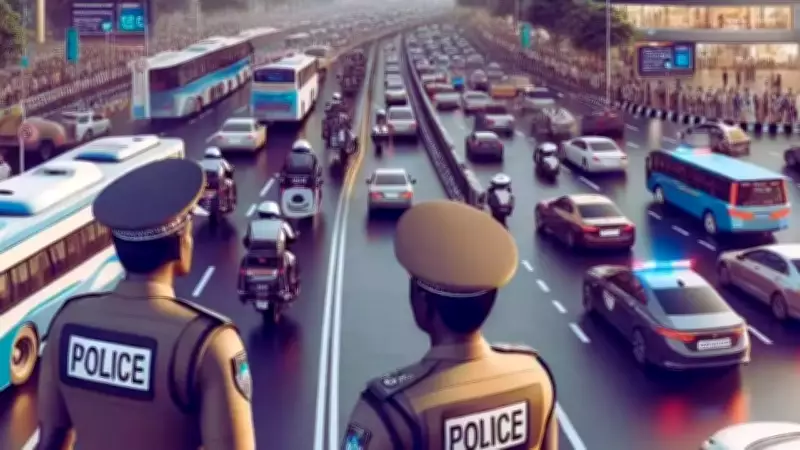
Commissioner Singh emphasized that many of the reduced crimes typically occur at night. To address this, the police have revamped their night patrolling strategies. Previously, Hoysala vehicles operated reactively, similar to ambulances, only responding to calls. Now, they actively patrol areas alongside jurisdictional police, even without specific alerts. This increase in visible police presence has deterred criminal activities and led to the apprehension of miscreants on the streets.
Another senior police officer highlighted the benefits of continuous night patrolling. With over 240 Hoysala vehicles deployed, assisting jurisdictional police has amplified road visibility. The police control room receives approximately 1,500 to 2,000 calls daily, with night calls (between 11 PM and 6 AM) accounting for about 150 to 200, or 10% of the total. By mobilizing Hoysalas for patrols, authorities have successfully curbed nighttime criminal operations to a significant extent.
Leadership and Coordination: Strengthening Oversight
To further bolster night operations, the police department has increased supervisory oversight. Previously, only two Deputy Commissioners of Police (DCPs) conducted night rounds. Now, a third DCP has been added to the team, stationed in the command centre to assist the two on patrol. This enhanced coordination has improved accuracy in addressing issues and identifying trouble-prone areas, contributing to overall crime reduction efforts.
Expert Insights: AI's Role in Reducing Reaction Time
Joint Commissioner of Police Kuldeep Kumar Jain elaborated on the technological advantages, noting that AI has significantly cut down reaction times in deploying patrol vehicles. By automatically identifying caller locations, the system eliminates manual tracing and communication steps. This saves at least two and a half minutes during emergencies, a critical period that can make a substantial difference in outcomes. The integration of AI not only streamlines operations but also enhances public safety by ensuring quicker police responses.

In summary, Bengaluru's embrace of AI in policing has proven to be a game-changer, driving down crime rates through improved efficiency, proactive patrolling, and better resource management. As technology continues to evolve, such innovations promise to further strengthen urban security and community well-being.