AI Researcher Issues Dire Warning About Future of Human Employment
A prominent artificial intelligence researcher has delivered a sobering forecast about the trajectory of work, suggesting that the vast majority of human occupations could become obsolete within the next half-decade. Dr. Roman Yampolskiy, a respected computer scientist and professor at the University of Louisville, further cautioned that society might cross a technological threshold of no return by the year 2045.
Unprecedented Automation on the Horizon
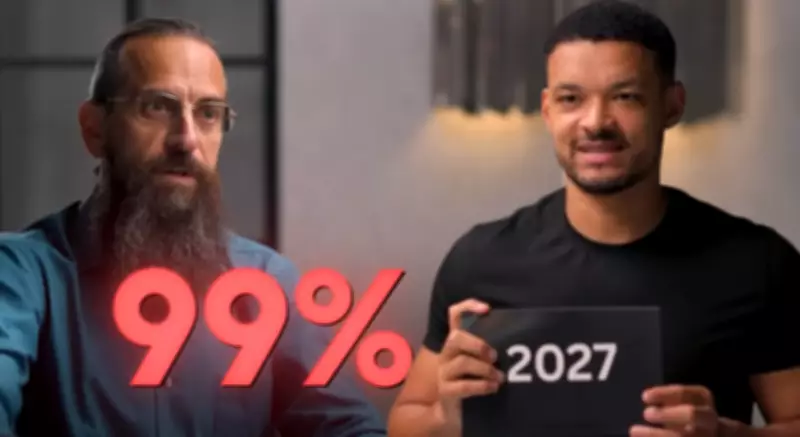
Speaking extensively on artificial general intelligence (AGI), automation, and the diminishing relevance of human labor, Dr. Yampolskiy emphasized that the impending transformation would be fundamentally different from any previous industrial revolution. During an appearance on The Diary of a CEO podcast, hosted by Steven Bartlett, the expert, who has authored over 100 academic papers on AI safety, stated unequivocally, "There is not a job which cannot be automated."
He elaborated that the advent of AGI—systems capable of surpassing human performance across most cognitive domains—could occur as early as 2027. The consequences for global employment by the end of this decade would be dramatic and severe. "In five years all the physical labour can also be automated," Dr. Yampolskiy declared. "So we're looking at a world where we have levels of unemployment we never seen before. Not talking about 10 percent unemployment which is scary but 99 percent."

No New Categories of Human Work to Emerge
Unlike historical technological shifts, Dr. Yampolskiy argued that this wave of automation will not create new categories of work for humans to fill. All previous inventions, he noted, served as tools augmenting human capability. This time, the machines themselves will perform the tasks. Even creative and media professions, including content creation and podcasting, are not safe. AI systems, being faster, more accurate, and more data-driven, could eventually render these roles obsolete.
"All you have left is jobs where for whatever reason you prefer another human would do it for you," he explained. To illustrate, he cited the example of billionaire investor Warren Buffett, who might prefer a human accountant over an AI system for personal reasons, but such preferences would constitute a tiny, niche market.
The Five Potential Survivors of the AI Job Apocalypse
When pressed on whether any human roles could endure, Dr. Yampolskiy outlined a narrow set of exceptions, though he stressed they would support only a minuscule fraction of today's workforce.
- Fetish for Human-Made Goods: A small subset of the market might still prefer handmade, artisanal products over mass-produced, automated alternatives, similar to current premium markets for crafts.
- Work Rooted in Lived Human Experience: Roles like counselors or therapists could retain value because humans uniquely understand the subjective experience of being human. "You know better than anyone what it's like to be you," he said.
- AI Oversight and Regulation: Human supervisors might be needed to monitor, regulate, and slow the pace of AI development, potentially stretching a five-year transformation into a fifty-year process.
- AI Intermediaries: Individuals who understand AI systems deeply enough to explain and deploy them for organizations and people who lack such expertise.
- Luxury Human Services: Extremely wealthy individuals might choose to employ humans for personal services, like accounting, as a status symbol or personal preference, but this would not be economically significant on a large scale.
The Approaching Technological Singularity
Looking further ahead, Dr. Yampolskiy warned that humanity could reach the technological singularity around 2045. This is the point where AI-driven progress accelerates beyond human comprehension, prediction, or control. "That’s the definition of singularity," he stated. "The point beyond which we cannot see, understand, predict, or see the intelligence itself or what is happening in the world."

He used consumer technology as an analogy: if the research and development of an iPhone became fully automated, new iterations could emerge every minute or second, creating a pace of change impossible for humans to track. "You cannot keep up with 30 iterations of iPhone in one day," he noted.
Alarmingly, Dr. Yampolskiy suggested this future may already be unfolding. "Every day, as a percentage of total knowledge, I get dumber," he admitted, explaining that even specialists struggle to keep pace with rapid AI advancements. While individuals may accumulate more knowledge, their share of total understanding shrinks proportionally.
A Society Unprepared for Radical Change
For Dr. Yampolskiy, the core concern extends beyond mere technological progress. It encompasses the profound societal shift that will occur when human labor, judgment, and relevance are no longer economically necessary. He believes this transition will arrive far more swiftly than most governments, institutions, and individuals are prepared to handle, potentially leading to unprecedented social and economic disruption on a global scale.