It sounds like one of those facts you would immediately Google just to confirm it is real. But yes, some animals really do eat poop – their own, or sometimes someone else’s. Before it gets written off as gross behavior, there is a catch: in nature, very little happens without a reason. And in several cases, this habit is less about disgust and more about survival, nutrition, and biology quietly doing its thing. Here are 7 animals that do it – and why it is not as random as it sounds.
Rabbits
Rabbits do not exactly believe in waste. They produce two types of droppings, and one of them goes straight back in. Why? Because the first round of digestion does not extract everything. The second round completes the job – especially for nutrients their bodies still need. It is less about eating poop and more about reprocessing nutrition.
Elephants
Baby elephants sometimes eat their mother’s dung early in life. It may sound shocking, but this is actually how they start building the gut bacteria needed to digest plants later. Think of it as an introductory course to adulthood – just nature’s version is a little unconventional.

Koalas
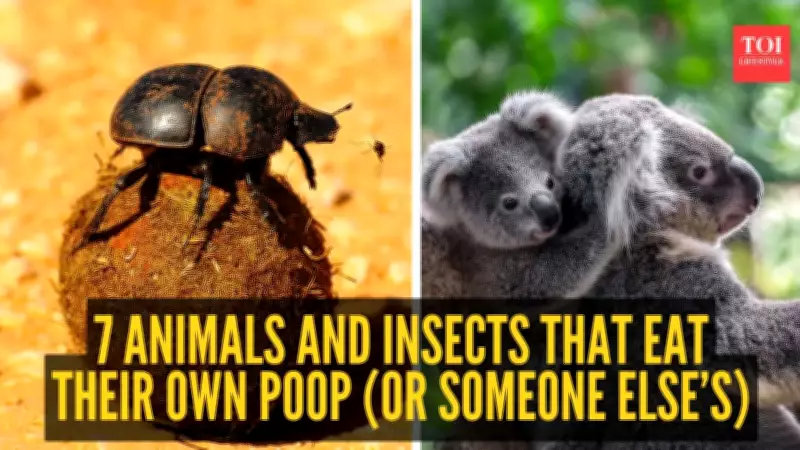
Koala babies do not just jump into eucalyptus leaves. Those leaves are toxic and extremely hard to digest. So instead, they rely on a special substance called pap from their mother’s droppings, which slowly prepares their system for that tough diet. In simple terms, it is survival training, one bite at a time.
Hamsters
Hamsters are not regular habitual poop-eaters, but they do it occasionally. Mostly, when food is limited, the body tries to recover whatever nutrients are still left in the waste. It is not a preference. It is in backup mode.
Rats and Mice
Rats and mice are built for survival in almost any condition. And yes, that includes sometimes eating feces to recover nutrients or maintain gut bacteria balance. Nothing dramatic here – just nature’s efficiency at work.
Dung Beetles
Unlike others on this list, dung beetles do not hesitate or sometimes do it – they depend on it. They feed on dung, roll it into balls, and even use it to lay eggs. For them, what we call waste is basically food, shelter, and future generation all in one.
Guinea Pigs
Guinea pigs produce soft droppings that they re-eat to absorb nutrients like vitamin B. Without this second digestion, their body actually misses out on essential nutrition. So yes – it is not optional for them. It is part of staying healthy.