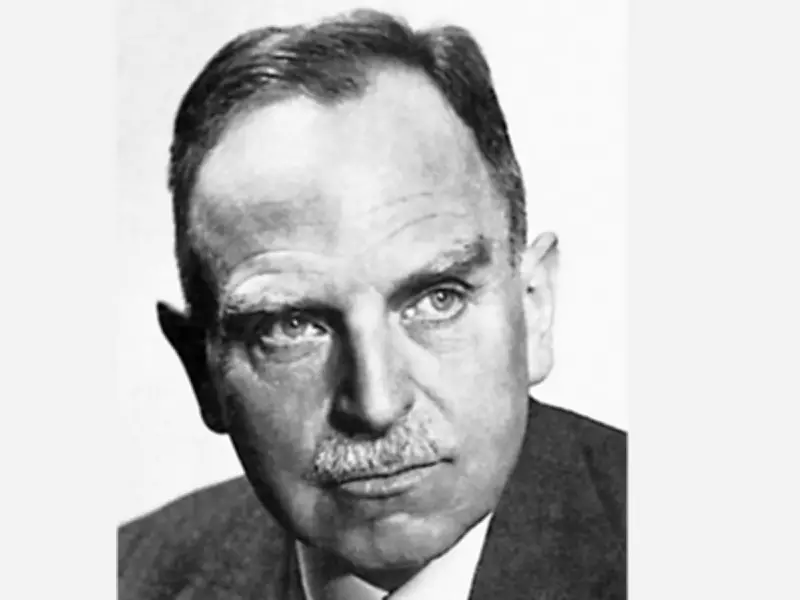
In late 1938, during meticulous experiments in Berlin, chemists Otto Hahn and Fritz Strassman observed something that defied the scientific laws of the time. After bombarding uranium with neutrons, they analyzed the reaction products and discovered barium, an element much lighter than uranium. This unexpected finding marked the first step toward understanding nuclear fission, a process where an atomic nucleus splits into smaller fragments, releasing tremendous energy. Initially perceived as a chemical mistake, this discovery became one of the most vital scientific breakthroughs of the century, heralding the atomic era.
An Unusual Product Leading to an Era-Defining Discovery
Otto Hahn and Fritz Strassman had been studying the behavior of uranium under neutron bombardment. At that time, scientists expected the product to always be an element heavier than uranium. According to the Department of Energy's Office of Scientific and Technical Information, the residue could not be explained by conventional radioactive decay or by the formation of any other heavy element. The surprising presence of barium indicated an extraordinary phenomenon within the uranium atom's structure. Similarly, the American Chemical Society highlights the December 1938 event as significant because the residue indicated the splitting of uranium nuclei into fragments.
Discovery of Nuclear Fission
This strange occurrence led physicists to conclude that a uranium nucleus could break into two equal fragments. Along with energy release, neutrons were also produced, which could trigger further fission reactions, forming the basis of chain reactions. As stated by the Department of Energy, this paved the way for understanding how vast quantities of energy could be liberated from atomic nuclei. The discovery quickly crossed the threshold between chemistry and physics. The Berlin experiment, initially focused on identifying residues, became a new approach to interpreting matter and energy.

The Significance of Barium in the Discovery
Barium was the critical element because it challenged existing scientific knowledge. Scientists thought uranium would produce slightly heavier radioactive atoms under neutron bombardment. However, the findings showed an atom with significantly lower atomic mass. According to the American Chemical Society, this contradiction led to a review of the entire experiment. Once scientists acknowledged the chemical proof, the only conclusion was that the uranium atom had split apart. This discovery forever changed nuclear science, showing atoms not as immutable but as dynamic entities capable of significant transformations.
Insight at an Extremely Significant Moment in History
The timing of the discovery enhanced its historical significance. Hahn and Strassmann performed their experiments in Berlin shortly before World War II. As political instability grew in Europe, scientific discoveries with military potential became immediately relevant. Historians note that this discovery did not come as an explosive revelation but through thorough chemistry work. However, its implications quickly spread into other spheres. The DOE historical archives note that once the concept of chain reactions became clear, governments and scientists rapidly realized the immense possibilities of nuclear energy.
Relevance of the 1938 Experiment to History
This 1938 experiment demonstrates how a tiny lab detail can change world events. The discovery did not start with a theory about splitting atoms. Present-day historians view it as an example of observation leading to a revolution in science. The chemists trusted their findings despite contradicting established knowledge. Nuclear fission now impacts energy generation, medicine, security, and scientific studies, all traceable to the barium residues observed in Berlin in 1938. The history of nuclear fission began when two scientists sought to understand why traces of another element appeared where they should not exist.