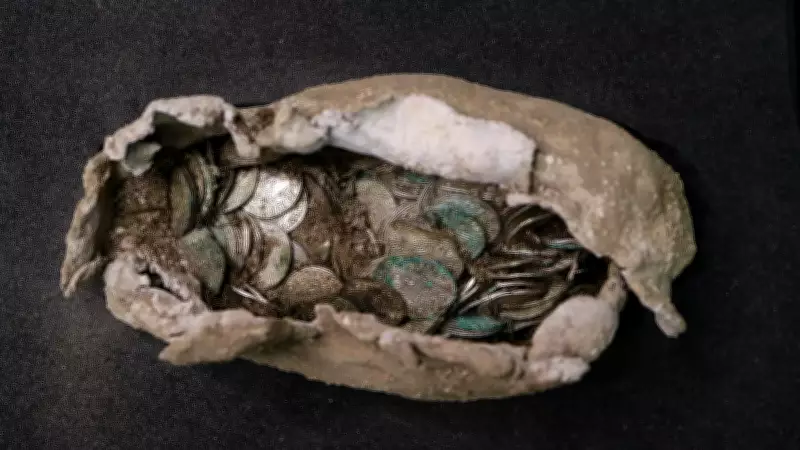
Before the giant cranes and machinery required for the construction of the Sizewell C nuclear facility ever reached Suffolk's shore, an age-old enigma remained buried in the ground for almost one thousand years. During an archaeological dig of the area prior to constructing the massive nuclear facility in 2023, archaeologists were certainly not expecting to find a treasure, as this was just a normal excavation to ensure they did not harm any historical material. However, they came across something unusual in the ground – a tightly packed parcel encased in lead.
The Discovery of the 'Pasty'
What lay in the package, known to the team as “the pasty” due to its appearance, was none other than 321 coins in excellent condition, which were silver in nature. These coins were not collected at random; rather, they were gathered for a specific purpose. The owners had intended to take them away and never meant to bury them in such a location.
A Silver Hoard Buried During a Royal Regime Change
According to the historical significance of this silver find, it is important to understand the era in which this treasure came into existence. Information released by Oxford Cotswold Archaeology, titled The Sizewell C coin hoard: History in the minting, indicates these coins were minted between 1036 and 1044. During this particular decade, England experienced political turmoil, seeing the reigns of three different kings – Harold Harefoot, Harthacnut, and Edward the Confessor.

The discovery of this treasure in the ditch surrounding a field boundary implies that the owner could not have belonged to the super elite but was more likely a person of local significance, possibly an affluent farmer. During that period, such treasures were valued at approximately sixteen cattle, which was indeed a large sum of money for anyone living nearby. What makes the disappearance of this treasure even more interesting is the possibility that the individual lost his money, escaped, or died without reclaiming it. This would imply that the silver treasure was part of an incomplete project dating back to the 11th century.
Why Infrastructure Projects Are the New Treasure Hunters
The best part of the Suffolk hoard is that it illustrates how archaeology is evolving. We picture treasure hunts as the conscious act of searching for treasures, but sometimes the greatest finds are made through the work of planners and excavators. According to the Suffolk County Council report, this hoard became known solely because of the archaeological requirements associated with the Sizewell C nuclear station project.
This discovery reminds us that major development-led work is now one of the most powerful engines for uncovering the past. While infrastructure projects reshape our landscape for the future, they also act as a massive cross-section through history. In the case of the Suffolk hoard, a project focused on 21st-century energy unintentionally gave a voice back to a person from the 1040s. It shows that even the most transformed landscapes still contain intact human decisions, waiting in the silence of the soil.
At present, the “pasty” has been preserved for the benefit of both scientists and the general public so that the coins can be analyzed for years to come. This demonstrates that not all history is stored in a museum or a history book. At times, it lies buried inside a leaden packet, underneath the field where people are working hard towards building their future.
Interestingly, while pursuing our objective of harnessing nuclear power, we seem to keep running into the fears that were deeply ingrained within the minds of people a thousand years ago.