10 Bizarre Scientific Theories That Were Once Believed by Brilliant Minds
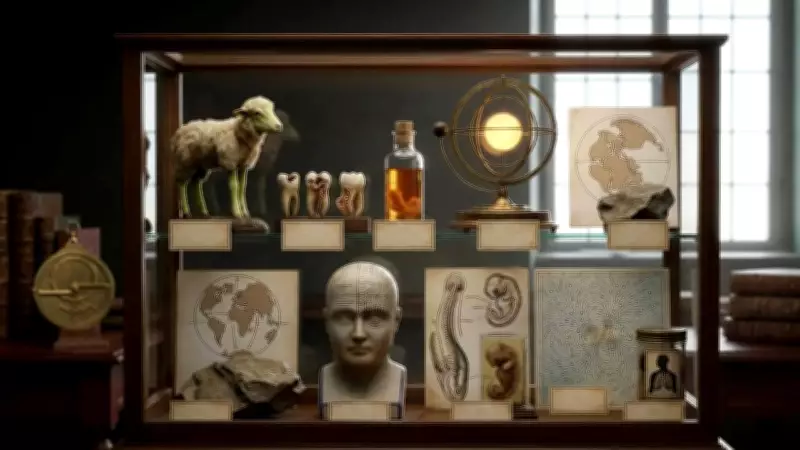
Throughout the annals of history, even the most brilliant scientific minds have occasionally embraced theories that appear utterly bizarre by today's standards. In eras preceding modern technology and rigorous empirical methods, geniuses often relied on intuition, observation, and speculative reasoning to explain the unknown. From postulating hidden planets to attributing cavities to mythical worms, these strange ideas were once defended in prestigious scientific journals and debated among scholars.
These ten examples of scientific missteps illustrate that the path to discovery is frequently paved with spectacular mistakes. By examining debunked theories—such as vegetable lambs and emotional asthma—we gain insight into the self-correcting nature of science. It is not merely about being right; it is a continuous journey of refinement and pursuit of truth, where even failures contribute to progress.
The 'Emotional Asthma' Theory
In the mid-20th century, psychoanalyst Franz Alexander proposed a theory that asthma resulted from individuals repressing their subconscious desire for their mothers. This led many psychoanalysts to treat breathing problems primarily with therapy rather than medication. Today, asthma is understood as a chronic inflammatory disease of the airways, typically triggered in childhood by allergic reactions or genetic factors, not by hidden emotional conflicts.

The Testicle Tonic Experiment
In 1889, the renowned neurologist Charles Édouard Brown-Séquard conducted a controversial experiment by injecting himself with a mixture of powdered dog and guinea pig testicles. He reported to the Biological Society of Paris that this concoction enhanced his energy and mental acuity. Modern science attributes his perceived benefits to the placebo effect. Despite its flawed premise, his published research in the Lancet played a pivotal role in the emergence of endocrinology as a contemporary field.
The Planet Vulcan Hypothesis
French astronomer Urbain Le Verrier hypothesized in the 19th century that a hidden planet, Vulcan, existed between Mercury and the Sun to explain anomalies in Mercury's orbit. This theory spurred astronomers worldwide to search for Vulcan for over 90 years, with some claiming sightings. The idea persisted until Albert Einstein's theory of General Relativity provided a more accurate explanation for the orbital changes, rendering Vulcan obsolete.
The Expanding Earth Theory
During the 20th century, a minority of scientists who rejected plate tectonics proposed that Earth was expanding like a balloon, suggesting this explained how continents fit together. While initially supported by some peers, modern measurements from organizations like NOAA and satellite data have shown that Earth's radius remains stable due to balances between subduction and seafloor spreading processes.
The Radium Craze
Following Marie Curie's discovery, radium was hailed as a miracle cure by scientists and medical professionals. They prescribed radium-infused water, known as Radithor, for ailments ranging from fatigue to blindness. However, as noted by the National Museum of American History, this trend ended tragically when users began dying from radiation exposure. It was ultimately understood that radiation cannot recharge or energize the human body safely.
The Tooth Worms Myth
For millennia, people believed that tiny worms inhabited teeth and caused decay by chewing through enamel. This theory persisted until the 1700s, when Pierre Fauchard documented his findings in journals, proposing that tooth decay resulted from sugar and acids rather than mythical worms. His work marked a significant shift in dental science.
Recapitulation Theory
Ernst Haeckel famously asserted that "ontogeny recapitulates phylogeny," meaning human embryos physically repeat the evolutionary stages of their ancestors, such as having fish gills. While influential in early biology, current genetic studies and developmental research prove that embryos use similar processes but do not literally relive ancestral life cycles.

The Vegetable Lamb of Tartary
Medieval botanists believed in a plant that produced lambs connected to the earth by stalks, attempting to explain the origin of cotton from Asia. They thought cotton came from these lambs, but as documented by the Biodiversity Heritage Library, travelers later discovered that cotton was actually derived from fluffy seed pods, debunking the myth.
Animal Magnetism (Mesmerism)
Franz Mesmer, the inventor of Mesmerism, proposed an invisible "magnetic fluid" flowing through all living things, with imbalances causing illness. He claimed to restore balance using magnets and "laying on of hands." A Royal Commission, including Benjamin Franklin, disproved his claims, showing the fluid did not exist. Nonetheless, Mesmer's work significantly influenced the development of modern hypnosis.
The Doctrine of Signatures
Medieval botanical theory held that plants resembling body parts could cure ailments in those parts. For example, walnuts were consumed to promote brain health due to their shape. While considered nonsense by modern pharmacology, this view dominated medicine for centuries, blending early observation with mystical religious beliefs.
These ten theories highlight the evolving nature of scientific understanding. They remind us that science is a dynamic process, where today's truths may be tomorrow's curiosities, and every error brings us closer to enlightenment.