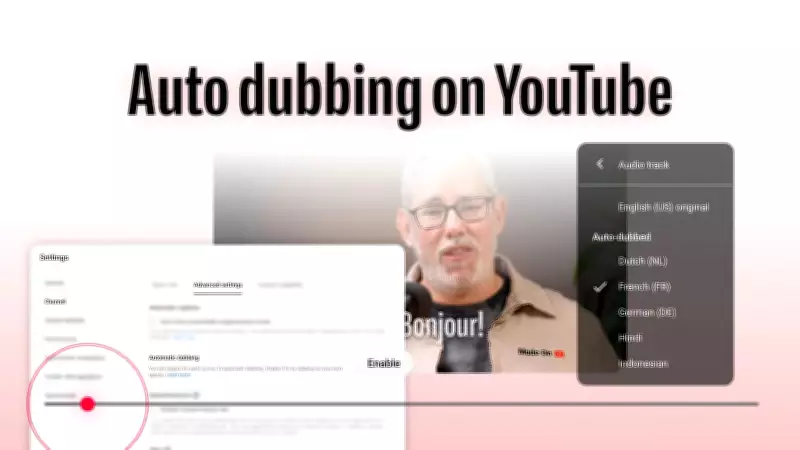
YouTube Scales Auto-Dubbing to 27 Languages with Enhanced Realism Tools
As auto-dubbing technology continues to evolve, YouTube has significantly expanded its capabilities, now supporting an impressive 27 languages. This advancement allows viewers worldwide to access content from creators across the globe without relying on traditional subtitles or external translators. The platform's latest updates aim to bridge linguistic barriers, making it simpler than ever to enjoy videos in one's preferred language with just a click of the play button.
Expressive Speech Technology Elevates Audio Quality
One of the primary concerns with dubbed content has often been its robotic and unnatural audio quality. To address this, YouTube has introduced expressive speech technology, which has been meticulously developed for several prominent languages, including English, Hindi, Spanish, French, and German. This innovative feature ensures that translated audio captures the original speaker's emotion, tone, and pace, rather than sounding monotonous or artificial.
The impact of this technology is particularly noticeable in content genres such as commentary, storytelling, and vlogs, where emotional delivery is crucial. By enhancing audio realism, YouTube is making dubbed videos more engaging and authentic, encouraging viewers to immerse themselves in content that might otherwise be inaccessible due to language constraints.

New Viewer Controls and Lip-Sync Features
YouTube is also empowering viewers with greater control over their viewing experience. A new preferred language option allows users to choose whether to watch a video in its original version or a dubbed version. This feature is especially beneficial for bilingual audiences or those who prefer to experience content in its native form, providing a clearer and more personalized voice in language selection.
To further enhance realism, YouTube is testing a lip-sync feature that adjusts lip movements to better match the translated audio. While not intended to be perfect, this tool helps reduce the visual disconnect often associated with dubbed videos, creating a smoother and more cohesive viewing experience. These improvements collectively contribute to a more seamless integration of dubbing into the platform's ecosystem.
Benefits for Content Creators and Global Reach
For content creators, YouTube's auto-dubbing expansion offers significant advantages. It enables their videos to reach a broader audience without the need for time-consuming and costly manual dubbing processes. Behind the scenes, automatic filters intelligently recognize videos that are better left undubbed, such as music-focused uploads or silent content, ensuring that dubbing enhances videos only where it makes sense without altering the original intent.
Importantly, auto-dubbing does not negatively impact a video's visibility on the platform. There is no adverse effect on video recommendations, and in some cases, it may even help videos reach viewers searching in other languages. Creators retain complete control, with the ability to disable auto-dubbing or upload their own translations, maintaining autonomy over their content.
Driving Global Content Accessibility
The expansion of auto-dubbing to 27 languages reflects YouTube's commitment to fostering global content accessibility. By leveraging advanced technologies like expressive speech and lip-sync, the platform is making it easier for viewers to explore stories, ideas, and conversations from beyond their own borders. This initiative not only enriches the viewing experience but also supports creators in building more inclusive and diverse audiences worldwide.
As auto-dubbing technology continues to improve, YouTube is poised to play a pivotal role in breaking down language barriers and promoting cross-cultural exchange through digital content. The platform's efforts underscore a growing trend towards more authentic and accessible global media, benefiting both viewers and creators alike.