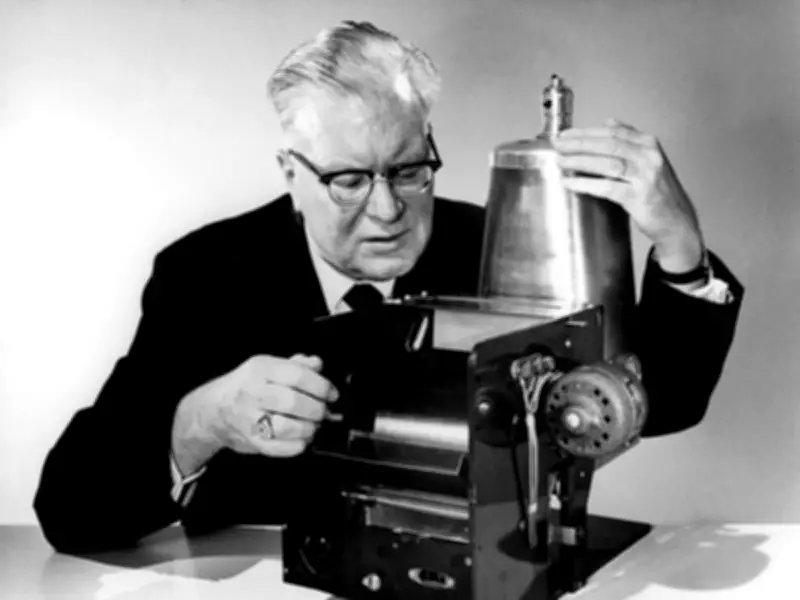
In 1938, Chester Carlson was working in a rented room on the second floor of a bar and grill in Astoria, Queens. The process was simple and improvised, but it laid the groundwork for future printing technology. Until then, duplication of documents involved lengthy processes using either photography or carbon paper. In October 1938, Carlson charged a sulfur-coated plate with electricity. In places where light reached the plate, the electric charge was eliminated; but where dark letters blocked the rays of light, the charge remained. Powder stuck firmly to all charged places, forming a recognizable picture. When Carlson pressed a piece of wax paper against the plate, the powder transferred to the paper, producing the first ever dry copy.
The Science Behind Light and Charge
It was not just good fortune that helped achieve the goal. It required hard work and a solid understanding of physics. According to an article from the University of Rochester website, Carlson did not consider his dry imaging process an accident, but a systematic phenomenon. Carlson's key insight was combining static electricity with light acting on a photoconductive material. Before this, copying methods often relied on liquid chemicals that had to dry. The electrostatic image Carlson created showed that his process, later called xerography, could work in practice. Moving his experiments to the rented Astoria room gave him a more controlled environment for repetition. The rough, dark-room smoky experiment became the foundation of Xerox and the photocopy revolution.
From Fragile Experiment to Global Scale
Although the science was sound, turning the invention into a commercial product took many years. Decades of improvement, outside testing, and engineering work were needed before the first commercial device went on sale. Indeed, Carlson did not invent a handy instrument for office workers. He invented an imaging technique that later adapted to medical and laboratory uses.

Why This Decades-Old Technique Is Still Relevant
What is striking about Carlson's invention is the extent to which his initial idea survived in the present-day world. According to a recently indexed scientific review registered in PubMed, the six-step electrophotographic process developed by Carlson is still the same as it was several decades ago. The very same process of charging, exposure, and transfer of powder invented by Carlson in his small room lies behind fast laser printers in offices and homes. Xerography has endured because it solves a common problem using a stable physical process. Digital printing technology has made the process much quicker and more convenient, yet the basic principle of using light, electricity, and powdered toner remains the same.
Xerography began in a small workspace and grew into a major printing technology. Chester Carlson lacked funding, but he was armed with great ideas and persistence. The next time you print a document, remember that the technology traces back to Carlson's early experiments with sulfur and wax paper.