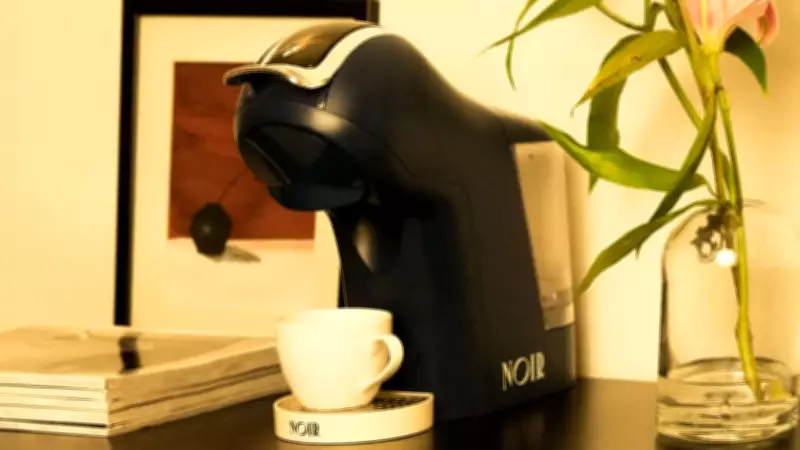
The first cup came out of the Azure at about eleven on a Saturday morning. The pod was a Nespresso one pocketed from a hotel room months ago, a small foil-topped capsule that comes with the kettle and sugar sachets, taken on the last day of a trip to avoid waste, then forgotten until found in a kitchen drawer behind the cling film.
Twenty minutes earlier, the Azure had been unboxed. The tank was filled under the kitchen tap, the machine plugged in, the Nespresso adapter slotted into the brew head, and the pod dropped in. The lights came on, stopped blinking as the machine reached temperature, and the brew button was pressed. Thirty seconds of pump noise produced a thin black stream into the cup, with a bit of crema on top, more than the pod's age deserved. The coffee was drunk standing at the counter, looking out at the balcony. It was good, not exceptional, just good in the specific way a hotel pod brewed properly is good after months of not being brewed at all.
That was the first thing the Azure did right: it didn't ask for commitment before delivering a cup. The second thing took a few days to show up and had nothing to do with pods.

The shelf of ground coffee
There is a shelf in the kitchen with five bags of ground coffee. A medium-roast from a Bengaluru roastery picked up last winter. A small bag of cold-brew grind from a place in Aldona, brought back from Goa in February. A natural-process bag from a Coorg estate ordered online, opened every two weeks just to smell. A 250-gram bag of single-origin from a Delhi roastery that opened during last year's monsoon. A small foil pack from a friend's micro-roaster in Bangalore who asked for feedback and probably gave up waiting. All of them open, slowly going stale, sitting on the shelf because there was no way to drink them properly at home. The moka pot had been making cups no longer looked forward to.
The Azure has a third adapter in the box: a small one with a screw-on cap, a tamping disc, and a measuring spoon. It takes about twelve grams of espresso-grind ground coffee. Seen during unboxing but not registered, by the end of the first week it became the reason the machine earned its space on the counter.
What chicory does, in pod form
The Filter Coffee pods are the easy weekday cup. By the third Tuesday, the morning has a shape. Out of bed at seven, kettle on for the family, walking past the Azure to the bathroom and pressing the power button so the machine is hot by the time of return. Brush, shower, towel, kitchen. The light is steady, the tank shows a little under half full from yesterday. The lid is opened, topped up from the tap, and closed.
The Filter Coffee pods sit in a small stack on the rack next to the machine, foil-topped, dark blue. One is lifted, slotted into the Dolce Gusto-style adapter, slid into the brew head, and the lever closed. The slider is already at the right setting from yesterday. Pre-infusion light is on, left on for three weeks. Press brew. The machine hums, clicks, pauses. A thin shot of water through the pod soaks the grounds for five seconds, then the pump comes alive and the cup fills with a colour darker than expected, almost like decoction. The chicory lifts into the air. Forty seconds later, the cup is ready.
The bitterness pulls upright in a way no instant coffee has in years. The body sits on the tongue heavier than pod coffee usually does. It is not a real filter brewed slow with fresh chicory-coffee blend in a stainless steel dabara, but it is in the same conversation. The cup is taken to the desk, the laptop opened, and the next half hour passes in that small space between waking up and being awake.
The Americano pod was the first morning cup, clean, dark, uncomplicated. The Hazelnut Cappuccino tried on the third morning shifted to afternoon duty by the fifth. The Hot Chocolate was a Sunday-evening cup once and hasn't come off the rack since. But the cup actually waited for, by the second week, was not a pod at all.
Twelve grams from the back of the cupboard
The third adapter sat in the drawer for ten days. The pods were enough, and the slowness of measuring and tamping ground coffee felt wrong on a Tuesday morning. On a slow Saturday in week two, the small spoon and tamping disc were pulled out and placed on the counter next to the machine.

The Bengaluru bag was picked first, the one on the shelf longest. The smell had thinned slightly, still good but past its peak. Twelve grams were scooped onto the kitchen scale and tipped into the espresso-grind side of the adapter. The surface was levelled, the tamping disc pressed down once, twice. The adapter was slotted into the brew head, the lever closed, and brew pressed.
The pump sounded the same as with a pod, but the shot came out slower and darker. The crema was thinner than a real espresso, but the cup was meaningfully better than any pod, and the kitchen smelled like fresh grounds for the first time in months. The coffee was drunk black at the table, in the corner where morning light comes in, with the rest of the apartment quiet.
That cup was the first in a while where the bean's character was noticed. The Bengaluru roast had a chocolate note running underneath, dark and slightly bitter. The moka pot had been masking it for months, smearing everything into the same flat strong cup. The Azure pulled it cleaner, still on the moka side of espresso, but cleaner.
The next Saturday, the Coorg natural was tried. The smell when the bag was opened almost made it put back on the shelf, fruit-forward, still alive. The cup produced was lighter in body, brighter on the top end, with a small almost-berry note never quite tasted at home before. By the third sip, a second bag was ordered from the same estate.
The Aldona cold-brew grind was technically the wrong grind for the adapter, too coarse, but it was tried on the Sunday of the second weekend on the cold setting. What came out was not really an espresso shot, but something closer to a concentrated cold-water extraction in thirty seconds, denser than a hot shot poured over ice, with sweetness pulled forward and bitterness mostly held back. It became the Sunday afternoon drink for the rest of the three weeks.
The Delhi single-origin and the friend's micro-roast are next. The shelf has gone from a quiet source of guilt to something looked at with anticipation. Five bags, five cups to figure out, a few more weekends.
The four o'clock fix
The first time the cold setting was used, it was a Wednesday at three-fifteen and the back of the neck was wet. The window was open, no breeze, the fan in the next room the loudest thing except for the dry crackle of an April afternoon in Delhi pressing against the glass.
The Azure has three temperature settings: hot at 80°C, warm at 78°C, and cold, which does not heat the water. It just runs cold tap-water through the pod at full pressure. The pump sounds the same, the brew cycle is the same length, but the cup is a different drink entirely.
An ice cube was dropped into the glass first, just one, to take the edge off the room-temperature water. An Americano pod was slotted in, Cold pressed, then brew. The water came out cold, the colour pulling out of the pod slower, less aggressive, the crema thinner. Two more ice cubes were added after, watching them bob. The first sip surprised: denser than expected, less watery, less compromised than the pull-a-hot-shot-and-pour-it-over-ice routine that always falls apart after about ninety seconds. This held its shape for the whole cup, taking about ten minutes, and by the end the room felt slightly more bearable.
The Baileys pod was the bigger surprise, taking two more days. It had been sitting in the rack since December, a purchase that made sense with fairy lights but less sense as the year warmed up. By April, it was forgotten. It had been tried hot the previous week, the Irish cream note sitting somewhere between a dessert and a coffee, warm and slightly sweet, with a velvety quality. On Friday afternoon, it was tried cold, ice in the glass first, the same Cold-then-brew sequence. The cup was darker than the Americano, the crema thin but present. The first sip was richer than the hot version, the Irish cream note moving forward, the sweetness more pronounced, the warmth gone but nothing missing. The December purchase had been waiting for April all along.
By the third sip, the cup was put down and returned to twenty minutes later, still cold, still carrying that indulgent weight, still doing the small specific thing needed at four in the afternoon. That is three afternoons a week now, sometimes four. The drip tray catches more water on the cold setting, learned the slightly soggy way one Wednesday morning when water sloshed over the edge. It is emptied every other day now.
Two halves, one machine
The Azure body is plastic, matte navy, well-finished, more premium than the price suggests from across the room. Up close, the water tank pulls off the back smoothly most of the time, sticks slightly every fourth or fifth refill. The auto-shutoff kicks in after an hour, which is the right call but means if wandering off between making the cup and going back for a top-up, the machine has gone to sleep, and the second cup needs another thirty seconds before pouring. None of this is thought about while making coffee, but noticed when describing the machine to someone else.
What is thought about while making coffee is the cup, and which cup: the Filter Coffee on a Tuesday morning, the Bengaluru shot on a Saturday, the cold Hibiscus on a Wednesday afternoon, the Coorg natural on the Saturday after that, the Aldona cold-pull on a Sunday, the bag of friend's micro-roast still waiting.
That last list is unexpected three weeks ago. The pods are fine, better than fine in the case of the Filter Coffee and cold Hibiscus, but the pods were always the easy part. The thing the Azure has actually done is unlock the bags on the shelf: the Bengaluru roast that the moka pot had been flattening, the Coorg natural smelled but not drunk, the Aldona grind that did not fit any brewing kit, the Delhi single-origin still ahead, the friend's micro-roast still ahead.
Coffee at home had been split into two halves that did not talk to each other: the everyday cup made fast and indifferently, usually instant or moka, and the good beans sitting on a shelf, mostly admired, occasionally brewed badly. The Azure has collapsed the two halves into one. The everyday cup is now a Filter Coffee pod better than it has any right to be. The good beans now have a way to be drunk, twelve grams at a time, on a Saturday or Sunday or any morning slow enough to hold the small ritual of measuring and tamping.
Three weeks ago, the shelf was a small source of guilt. Now it is the part of the kitchen most curious about, and the bags on it are getting visibly smaller for the first time since they were bought. The hotel Nespresso pod from the first morning is long gone, as is the half-finished sleeve worked through after it. What is left is the rotation that built itself in the gap: a Filter Coffee pod most weekdays, a cold Baileys most afternoons, a different bag from the shelf most weekends. None of which the box on the unboxing day suggested would be drunk. All of which are.