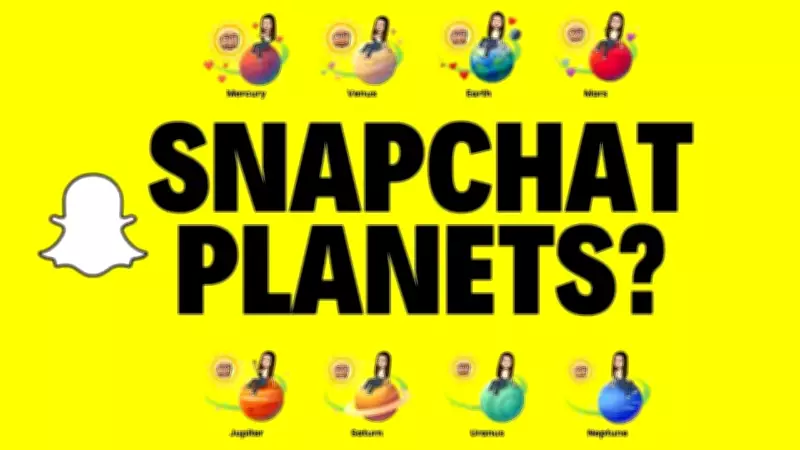
Snapchat Planets, also known as Snapchat's Friend Solar System, may appear playful, but many users feel confused when they see planets like Mercury or Neptune on a friend's profile. The feature seems simple, yet it quietly reflects how often you interact with someone on the app. Available exclusively to Snapchat+ subscribers, Snapchat Planets has gained attention because it turns friendships into a visible ranking system, something previously hidden behind chats and streaks. While it may seem fun at first, it also raises questions: Why are you closer to one friend and farther from another? And does it truly reflect your actual bond? Once you understand how Snapchat Planets works, the confusion clears, and the feature begins to feel more logical.
The planets do not define the strength of your relationships; they simply reflect how active you are with someone on the app. Understanding this difference is crucial. When you view Snapchat Planets as a measure of interaction rather than real friendship, the feature becomes much clearer and easier to comprehend.
Snapchat Planets Meaning: How the Friend Solar System Ranks Your Friends
The Snapchat Friend Solar System is a feature available only to Snapchat+ subscribers. It visually represents your friendship ranking using a solar system format. In this system, you are placed at the center as the Sun, while your friends are assigned different planets based on how frequently you interact with them through snaps and chats. The closer the planet is to you, the stronger your interaction appears to be. This does not indicate emotional closeness; it simply reflects activity within the app. The system updates automatically: if your interaction with someone increases, they may move closer; if it decreases, they might shift farther away.

Snapchat Planets: Order and What Each One Represents
The planets follow the same order as the real solar system, starting from Mercury and ending at Neptune. Each one represents a position in your top eight friends list.

- Mercury (1st Position): Your closest Snapchat friend with the highest level of interaction. This person is someone you engage with most through snaps, messaging, and responses, often daily. Your Bitmoji icon appears with red hearts, indicating frequent communication. If you are Mercury for another user, you are their highest Snapchat friend, exchanging snaps regularly, maintaining streaks, and replying quickly.
- Venus (2nd Position): Your second-best friend with strong ongoing communication. Interaction is frequent but not as high as with Mercury. The Bitmoji is surrounded by colorful hearts, symbolizing intensive communication. To be Venus, the friendship must be meaningful and ongoing.
- Earth (3rd Position): A stable and active friendship with consistent contact, though not as frequent as the top two. You likely exchange messages and snaps several times a week. The Bitmoji shows hearts and stars, reflecting a balanced level of interaction. This position indicates a reliable connection.
- Mars (4th Position): Average but steady communication. You don't need to communicate daily, but you are in constant touch. Floating hearts and stars appear, suggesting the relationship still holds meaning. Contact typically occurs several times per week.
- Jupiter (5th Position): Reduced interaction but still occasional contact. The Bitmoji appears on a planet without heart symbols, reflecting decreased engagement. This position includes friends you talk to once in a while, possibly weekly or less.
- Saturn (6th Position): Rare communication with minimal engagement. Conversations happen rarely, and snap streaks are usually inactive. The ringed planet design is visually distinct, but the lack of interaction is clear. This position often includes friends you are still connected with but do not actively engage with on Snapchat.
- Uranus (7th Position): Very little interaction. Even though you are friends, there is hardly any exchange. The image lacks hearts, showing distance. Others may have taken priority.
- Neptune (8th Position): The farthest and least interacted friend. Interaction is extremely minimal, with almost no snaps or chats. The blue color represents distance. Communication has dropped significantly but still exists.
How Snapchat Decides Your Ranking
Snapchat has not officially shared the exact algorithm, but certain patterns are clear. The frequency of snaps plays a major role. Reply speed also matters; users who respond quickly tend to rank higher. Regular chats contribute to maintaining a closer position. Snap streaks appear to influence rankings over time. The system prioritizes consistency over occasional bursts of activity. Importantly, the ranking is dynamic and changes based on recent behavior rather than long-term history.
Snapchat Badge Meaning Explained: Best Friends vs Friends
When you open a friend's profile, you might notice a badge. The Best Friends badge means both of you are in each other's top eight friends list, indicating mutual interaction. The Friends badge means the connection is one-sided: you are in their top eight, but they may not be in yours. This distinction affects how the solar system appears and what information you can see.
Is Snapchat Friend Solar System Accurate?
The system appears accurate for measuring in-app activity. It reflects how often you communicate on Snapchat. However, it does not measure real-life friendships. Someone you speak to every day outside the app may still appear as a distant planet if you do not interact with them on Snapchat. This is why some users feel the system is misleading: it shows behavior, not emotional connection.