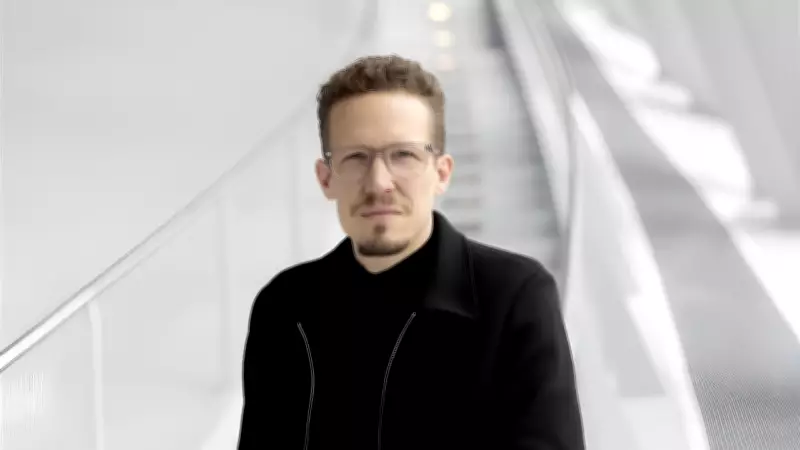
Mumbai: Mathias Geisen, Member of the Board of Management for Sales & Customer Experience at Mercedes-Benz, visited India this week for the launch of the new S-Class plug-in hybrid. He discussed the company's global sales, electric mobility transition, and strategy for India, one of its fastest-growing luxury markets.
Global Sales Decline Explained
Geisen clarified that last year's decline in global sales, totaling around 1.8 million vehicles, was mainly driven by China due to the rapid rise of electric vehicles. Excluding China, sales grew by about 5%. He noted significant volume drops in China and the US, while other markets remained stable. The company is in a transition period, phasing out older models and planning to launch over 40 new models by the end of next year, which also impacted sales.
He expressed confidence, citing a strong first quarter this year. In Europe, sales rose about 7%, with battery electric vehicle sales up 34% and order intake nearly doubling. Models like the CLA, named Car of the Year 2026, and the GLC, sold out until year-end, are driving momentum. The newly launched S-Class is also gaining traction.

Electric Vehicle Strategy
Regarding the conflict between selling internal combustion engine (ICE) cars and transitioning to EVs, Geisen emphasized a strong relationship with dealers, who agree that the future is electric but acknowledge different market timelines. The company plans to offer multiple powertrains, ensuring consistent design across all models for strategic flexibility.
India Market Plans
Most of the 40 new products will come to India, depending on relevance. Currently, Mercedes-Benz has nearly 20 products in India, with 11 locally produced. India is now among the top 15 global markets and ranks in the top five for the ultra-luxury Maybach brand. Geisen highlighted the opportunity in a market of 4.2–4.3 million vehicles, where only about 50,000 are luxury vehicles, with Mercedes selling around 20,000.
On the free trade agreement, Geisen noted that Mercedes-Benz has been investing in India for over 30 years and remains committed as the luxury market leader for 11 years. He sees the potential for growth through rising incomes and younger customers entering the luxury segment.
Luxury Market Dynamics
Geisen explained that penetration among millionaires varies by market specifics. Top-end vehicles account for 15% of global sales but 25% in India. The company strengthens offerings like the S-Class, GLS, and future VLS Grand Limousine. He dismissed the idea that luxury is declining, noting that the top-end share increased from 11% in 2019 to 15% in 2025.
On technology, Geisen observed that EV share in the top-end segment is around 20% in India, indicating strong interest. Technologies like autonomous driving and infotainment are increasingly important, especially in younger markets like China and India.
Software and Partnerships
Mercedes-Benz was the first traditional OEM to launch an in-house operating system, enabling integration of AI like ChatGPT and Gemini. The company collaborates with Nvidia for autonomous driving in Europe and the US, and with Momenta in China. Regarding the partnership with Geely, Geisen mentioned a joint venture for the Smart brand in Europe and collaborations on specific components.
India R&D Centre
The India R&D centre (MBRDI) contributes significantly to software and other components, but work is globally integrated based on expertise rather than geography.
Formula One and Ethanol
Geisen expressed enthusiasm for Formula One returning to India, noting Mercedes-Benz's successful motorsport history. On ethanol blending in India, he stated that all current cars are E20-compliant, and the company is well-prepared with various technologies.
Challenging Markets
Geisen identified the entire automotive industry as challenging due to technology transformation and geopolitical issues like wars and trade tensions, which affect all global markets.