Google Maps Transformed with Gemini AI Integration
Google is significantly enhancing its Maps application by integrating Gemini artificial intelligence, marking what the company describes as the most substantial upgrade in over a decade. This new feature, called Ask Maps, is designed to revolutionize how users interact with the platform, shifting it from a basic navigation tool to a comprehensive local planning assistant.
What Is Ask Maps and How Does It Function?
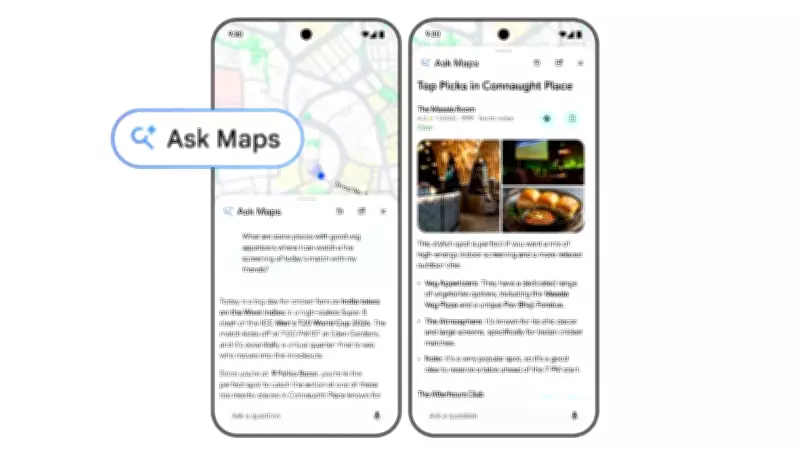
Built on advanced Gemini AI models, Ask Maps enables users to pose complex, open-ended questions using natural language, either through text or voice input. It leverages data from over 300 million places and reviews contributed by more than 500 million users worldwide to provide detailed, personalized responses. The functionality mirrors that of the Gemini chatbot used in Google Search or the standalone Gemini app, offering a seamless conversational experience.
The feature is currently being rolled out in English on both Android and iOS devices, with support for Hindi expected to follow soon, according to Google's announcement.

Key Differences from Standard Google Maps Search
Unlike traditional Google Maps searches, which often require multiple steps to find optimal routes and nearby amenities, Ask Maps consolidates these tasks into a single query. For instance, instead of separately searching for directions and then looking for coffee shops along the way, users can simply ask: "I want to go to Noida sector 18 from Mandi House. Between driving and taking the metro, what would be the best option at this time? Also, where can I pick up a coffee on the way?"
Ask Maps handles the heavy lifting by comparing driving and public transport options based on real-time traffic conditions and estimated arrival times, while simultaneously suggesting conveniently located coffee stops. This integrated approach saves time and enhances user convenience.
Enhanced Event Planning Capabilities
Another significant application of Ask Maps is in event planning, where it simplifies the often tedious process of finding suitable venues. For example, when hosting a friend from abroad, users can ask: "What are some places with good appetizers, offer alcoholic drinks, showcase the live streaming of today's El-Classico football match, and have easy parking availability?"
The feature pulls relevant details from real user reviews and web content, including popular dishes, matchday atmosphere, and parking or valet availability, providing a holistic view in one response.
Personalization Based on User History
Ask Maps personalizes its recommendations by analyzing users' Google Maps history, which includes past searches, saved locations, and visited places. For instance, if a user is traveling to a new city and asks for highly rated restaurant suggestions, the system will automatically tailor recommendations based on preferences like vegetarian cuisine, without requiring explicit instructions each time.
This AI-powered upgrade aims to make Google Maps more intuitive and responsive, positioning it as an essential tool for everyday navigation and local exploration.