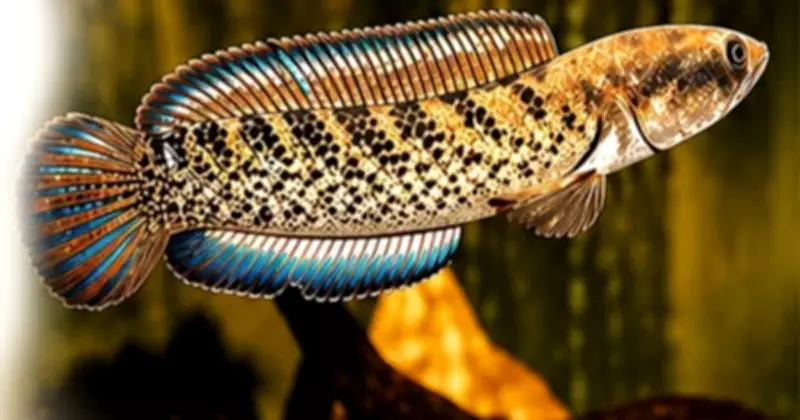
In a significant breakthrough for aquaculture and conservation, India has achieved the first successful captive breeding of Channa stewartii, an ornamental fish species popularly known as the Assamese snakehead. This milestone raises hopes for both conservation efforts and the growth of aqua-preneurship in the country.
A Prized Ornamental Species
Channa stewartii is highly sought after in the global ornamental fish market due to its striking appearance, particularly its iridescent blue fins. The species, native to the hill streams of Northeast India, can fetch prices ranging from Rs 600 to Rs 1,200 per pair, making it a valuable commodity for fish enthusiasts and traders alike.
Conservation and Commercial Potential
The successful captive breeding, achieved by researchers at the ICAR-Central Inland Fisheries Research Institute (CIFRI), marks a turning point for the species. Overexploitation and habitat loss have threatened wild populations, but captive breeding offers a sustainable alternative. This development not only aids in conserving the species but also opens up new avenues for entrepreneurs in the ornamental fish trade.

Details of the Breakthrough
The research team focused on replicating the natural breeding conditions of Channa stewartii, which typically spawns in shallow, oxygen-rich waters with specific temperature and pH levels. After several trials, they successfully induced spawning and reared the larvae to adulthood. The protocol developed can now be scaled up for commercial production.
- Price Range: Rs 600 to Rs 1,200 per pair
- Natural Habitat: Hill streams of Northeast India
- Key Feature: Iridescent blue fins
- Conservation Status: Threatened by overexploitation and habitat loss
Implications for Aqua-preneurship
This achievement is expected to boost the ornamental fish industry in India, which already contributes significantly to the economy. Aqua-preneurs can now legally breed and sell Channa stewartii without relying on wild catches, ensuring a steady supply while protecting natural populations. The research provides a model for captive breeding of other endangered ornamental species.
Future Prospects
The ICAR-CIFRI team plans to refine the breeding protocol and train local fish farmers in the Northeast region. This initiative could transform the livelihoods of rural communities by providing a sustainable source of income. Additionally, it aligns with the government's Blue Revolution scheme, which promotes aquaculture for economic growth and food security.
As India continues to pioneer advances in aquaculture, the captive breeding of Channa stewartii stands as a testament to the potential of scientific research in balancing conservation and commerce. The success story serves as an inspiration for further innovations in the ornamental fish sector.