Danish Boycott Apps Experience Massive Surge Amid Greenland Dispute with United States
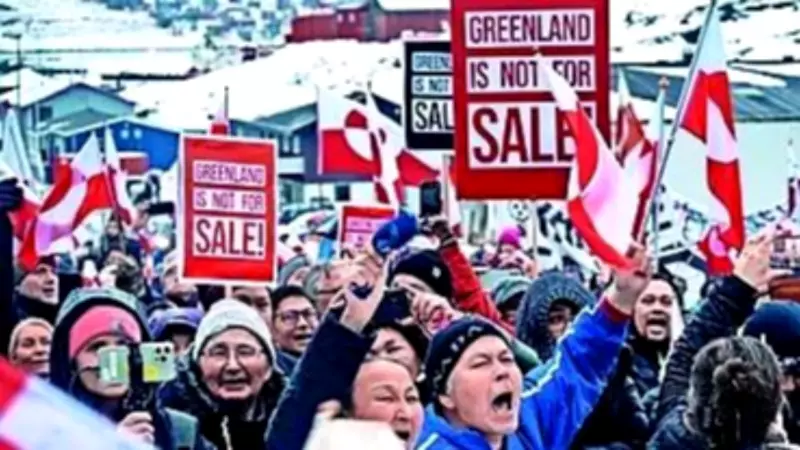
The creators of mobile applications specifically designed to assist shoppers in identifying and subsequently boycotting American-made products have reported an extraordinary surge in interest across Denmark and other European nations. This spike in popularity directly coincided with the recent escalation in diplomatic tensions between Denmark and the United States, following renewed public statements by former President Donald Trump regarding his administration's interest in acquiring Greenland.
AI-Powered App Sees Dramatic Download Increase
Ian Rosenfeldt, the digital marketing professional who developed the "Made O'Meter" application, revealed that his free service witnessed approximately 30,000 downloads in a mere three-day period during the peak of the trans-Atlantic crisis in late January. This impressive figure contributes to a total of over 100,000 downloads since the app's initial launch in March 2025.
"Many people were genuinely frustrated and constantly asking, 'How do we actually implement this boycott in practical, everyday terms,'" recalled the 53-year-old Rosenfeldt, who was inspired to create the app after joining a Facebook group of like-minded Danish citizens a year prior. "Using a standard bar code scanner often makes it incredibly difficult to determine if a product is genuinely American. Without that crucial information, consumers cannot make a truly conscious purchasing decision."

Advanced Technology Drives Consumer Choice
The latest iteration of the "Made O'Meter" application utilizes sophisticated artificial intelligence technology to simultaneously identify and analyze multiple products. It then provides users with recommendations for similar alternatives manufactured within Europe. Shoppers can customize their preferences with settings such as "No USA-owned brands" or "Only EU-based brands," with the app claiming an accuracy rate exceeding 95 percent.
"By leveraging AI, a user can simply capture an image of a product," Rosenfeldt explained during a demonstration at a Copenhagen grocery store, speaking to the Associated Press. "The system performs a deep dive to locate and verify correct product information across multiple levels. This empowers consumers with the data they need to make decisions aligned with their personal values."
Following an initial download surge at launch, regular usage of the app had declined. However, activity dramatically revived last month when Trump intensified his rhetoric about the strategic necessity for the United States to acquire Greenland, a mineral-rich Arctic island that operates as a semi-autonomous territory of Denmark.
Usage Statistics Reveal Sustained Interest
Daily scans peaked on January 23, with nearly 40,000 product scans recorded in a single day—a stark contrast to the roughly 500 daily scans observed the previous summer. Although activity has since decreased from that peak, Rosenfeldt noted that "Made O'Meter" still processes around 5,000 scans daily. The app is actively used by over 20,000 people in Denmark, with additional users in Germany, Spain, Italy, and even Venezuela.
"The situation has become deeply personal for many," Rosenfeldt stated, expressing a sentiment of "losing an ally and a friend." He acknowledges that such consumer boycotts are unlikely to significantly damage the massive US economy but hopes the movement sends a clear message to supermarket chains and encourages greater reliance on European producers.
Competing App Also Reports Remarkable Growth
Another Danish application, named "NonUSA," surpassed 100,000 total downloads at the beginning of February. Co-creator Jonas Pipper, aged 21, reported over 25,000 downloads on January 21 alone. At one point that day, the app recorded 526 product scans performed within a single minute. User analytics indicate approximately 46,000 users are located in Denmark, with around 10,000 in Germany.
"We noticed feedback from some users expressing that they felt a portion of the psychological pressure was lifted from them," Pipper commented, highlighting the app's role in facilitating actionable protest.

Shoppers Express Divergent Views in Copenhagen
Public opinion among Danish consumers appears divided. At a Copenhagen grocery store, retired navy officer Morten Nielsen, 68, stated, "We do participate in the boycott, but we certainly don't know all the American goods. So, our efforts focus mostly on the well-known, recognizable trademarks."
In contrast, 63-year-old retiree Charlotte Fuglsang offered a different perspective: "I love America, and I love travelling there. I simply do not believe we should register our protest in this manner." The development and viral adoption of these technological tools underscore how international diplomatic disputes can rapidly translate into tangible consumer behavior and digital innovation.