Danish Consumer Apps Experience Massive Surge During US-Greenland Diplomatic Crisis
The developers behind mobile applications designed to assist shoppers in identifying and boycotting American products report an extraordinary surge in interest across Denmark and other European nations. This spike followed the recent diplomatic flare-up concerning former US President Donald Trump's expressed interest in acquiring Greenland.
Made O'Meter App Sees Explosive Growth
Ian Rosenfeldt, the creator of the "Made O'Meter" application, revealed that his free app witnessed approximately 30,000 downloads within just three days at the peak of the trans-Atlantic diplomatic crisis in late January. This represents a significant portion of the more than 100,000 total downloads since the app's launch in March of the previous year.
Rosenfeldt, a 53-year-old digital marketing professional residing in Copenhagen, conceived the idea for the app after joining a Facebook group of like-minded Danes seeking to boycott US goods. He recalled the collective frustration, stating, "Many people were frustrated and thinking, 'How do we actually do this in practical terms.' If you use a bar code scanner, it's difficult to see if a product is actually American or not, if it's Danish or not. And if you don't know that, you can't really make a conscious choice."

Advanced AI Technology Powers Product Identification
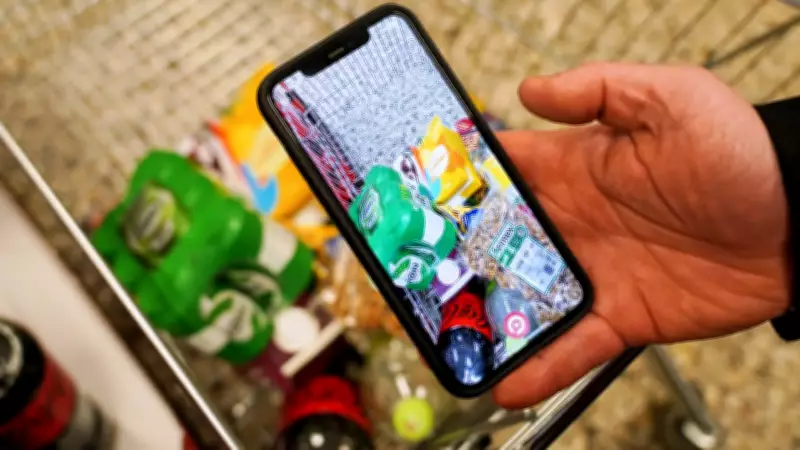
The latest iteration of "Made O'Meter" employs sophisticated artificial intelligence to simultaneously identify and analyze multiple products. The system then recommends comparable alternatives manufactured within Europe. Users can customize their preferences with options such as "No USA-owned brands" or "Only EU-based brands." The application boasts an accuracy rate exceeding 95%.
During a demonstration at a Copenhagen grocery store, Rosenfeldt explained to The Associated Press, "By using artificial intelligence, you can take an image of a product ... and it can make a deep dive to go out and find the correct information about the product in many levels. This way, you have information that you can use to take decisions on what you think is right."
Usage Peaks During Heightened Political Tensions
Following an initial download surge at launch, application usage gradually declined. However, activity dramatically resurged last month when Trump intensified his rhetoric regarding the United States' perceived need to acquire Greenland. Greenland is a strategically vital, mineral-rich Arctic island that operates as a semi-autonomous territory of Denmark.
Usage reached its zenith on January 23, with nearly 40,000 product scans recorded in a single day. This figure starkly contrasts with the approximately 500 daily scans observed during the previous summer. Although activity has since moderated, Rosenfeldt reported sustained usage of around 5,000 scans per day this week.
He noted that "Made O'Meter" is utilized by over 20,000 individuals in Denmark, with additional users in Germany, Spain, Italy, and even Venezuela. Reflecting on the emotional dimension, Rosenfeldt described the sentiment as "losing an ally and a friend," making the boycott effort "much more personal."
Political Context and Economic Measures
In January, Trump announced intentions to impose new tariffs on Denmark and seven other European nations that opposed his acquisition proposals for Greenland. He subsequently retracted these threats, citing a "framework" agreement for mineral access in Greenland facilitated with the assistance of NATO Secretary-General Mark Rutte. Specific details of this arrangement remain scarce.
Concurrently, the United States initiated technical discussions in late January to formulate an Arctic security agreement with Denmark and Greenland. Both Danish and Greenlandic authorities have unequivocally stated that sovereignty is not subject to negotiation.
Rosenfeldt acknowledges that such consumer boycotts are unlikely to inflict substantial damage on the vast US economy. Nevertheless, he hopes the movement will send a clear message to supermarket chains and encourage greater reliance on European producers. "Maybe we can send a signal and people will listen and we can make a change," he added.

Rival App NonUSA Also Experiences Significant Growth
Another Danish application, "NonUSA," surpassed 100,000 downloads by early February. Co-creator Jonas Pipper, aged 21, reported over 25,000 downloads on January 21 alone. At one peak moment that day, users performed 526 product scans within a single minute. The user base comprises approximately 46,000 individuals in Denmark and around 10,000 in Germany.
Pipper observed a psychological benefit for users, stating, "We noticed some users saying they felt like a little bit of the pressure was lifted off them. They feel like they kind of gained the power back in this situation."
Experts Question Practical Impact and Longevity
Economic experts express skepticism regarding the tangible effects of such applications. Christina Gravert, an associate professor of economics at the University of Copenhagen, points out that American products constitute a minimal presence on Danish grocery shelves, estimated at "around 1 to 3%," primarily including items like nuts, wines, and candy.
She highlights the pervasive use of American technology in Denmark, from Apple iPhones to Microsoft Office software. "If you really want to have an impact, that's where you should start," Gravert advised, noting ironically that the boycott apps themselves are downloaded from American-controlled platforms like Apple's App Store and Google's Play Store.
Specializing in behavioral economics, Gravert suggests that boycott campaigns of this nature are typically short-lived. She emphasizes that substantive change often necessitates organized, collective efforts rather than actions by individual consumers. "It can be interesting for big supermarket brands to say, OK, we're not going to carry these products anymore because consumers don't want to buy them," she explained. "If you think about large companies, this might have some type of impact on the import they do."
Mixed Reactions from Danish Shoppers
Public opinion among Copenhagen shoppers appears divided. Morten Nielsen, a 68-year-old retired naval officer, stated, "We do boycott, but we don't know all the American goods. So, it's mostly the well-known trademarks. It's a personal feeling ... we feel we do something, I know we are not doing very much."
In contrast, 63-year-old retiree Charlotte Fuglsang expressed opposition to the boycott movement, saying, "I love America, I love traveling in America. I don't think we should protest that way."
The proliferation of these applications underscores how digital tools are empowering consumers to align their purchasing decisions with geopolitical sentiments, even if the ultimate economic impact remains largely symbolic.