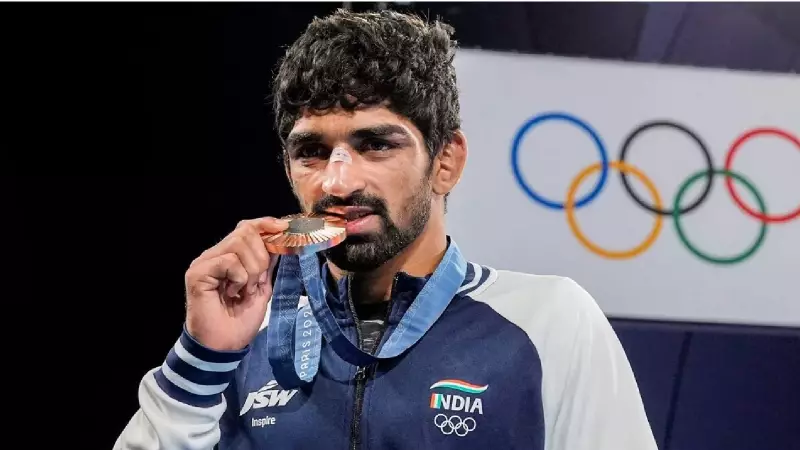
In a significant development for Indian wrestling, the Wrestling Federation of India has officially revoked the suspensions of Olympic bronze medalist Aman Sehrawat and junior wrestler Neha Sangwan. The decision comes after both athletes faced disciplinary action for missing weight requirements at recent international championships.
Behind the Suspension Decision
The wrestling body took decisive action against the athletes following their failure to meet weight specifications before crucial competitions. Aman Sehrawat, who competes in the 57kg men's freestyle category and brought home a bronze medal from the Paris 2024 Olympics, was handed a one-year suspension after being unable to make weight for his opening bout at the World Championships held in Zagreb, Croatia during September.
Meanwhile, emerging talent Neha Sangwan faced more severe consequences with a two-year suspension after missing her weight category at the U20 World Championships in Samokov, Bulgaria in August. The disciplinary measures highlighted the federation's strict adherence to competition regulations.

The Road to Redemption
Speaking about his weight miss incident, the 22-year-old Aman Sehrawat had previously explained that an unexpected stomach ailment caused the issue. "This is the first such mistake and I am embarrassed about it. But it wasn't intentional and happened due to a stomach ache that developed the night before the weigh-in," the Olympic medalist had stated.
WFI President Sanjay Singh confirmed the suspension lift during a telephone conversation, emphasizing the exceptional nature of the decision. "Yes, we have decided to lift the suspension as this was their first lapse. The wrestlers have committed that there won't be any more such lapses and they will be careful in the future," Singh revealed.
Committee Review and Future Implications
The turning point came when the WFI disciplinary committee convened on November 13 to thoroughly examine written submissions from both wrestlers. The committee took into consideration several key factors:
- Both athletes had clean disciplinary records prior to these incidents
- Aman Sehrawat's outstanding performance at the Olympic Games
- Neha Sangwan's potential as a junior competitor
- The wrestlers' commitment to avoiding future violations
"There was a meeting yesterday and everybody is of the opinion that the wrestlers have been performing well at the international level. So, we decided to go ahead with the committee's recommendation," President Singh elaborated on the decision-making process.
The federation chief also issued a clear warning regarding future conduct, stating that "any repeat offence will mean that we will take stricter disciplinary action." This conditional leniency sets a precedent for how first-time offenses might be handled in Indian wrestling.
Impact on Wrestling Careers
The suspension revocation carries significant implications for both athletes' immediate futures. Most notably, both wrestlers now become eligible to participate in the revived Pro Wrestling League (PWL), which marks its return after a six-year hiatus and is tentatively scheduled for January next year.
For Aman Sehrawat, the decision comes as a particular relief given his status as one of India's strongest medal contenders. His absence from the World Championships had proven costly for the Indian contingent, as the men's freestyle team returned empty-handed from the tournament without their star 57kg competitor.
Prior to the suspension lift, Aman had expressed his intention to appeal the decision, telling media outlets: "See, I was prepared for the gold. The current gold medallist lost to me last year and I was confident this time but the stomach ache was unfortunate and I couldn't do anything. I haven't spoken to Sanjay Singh after the ban, but I'll meet him and request him to reconsider this."
The Wrestling Federation of India's decision demonstrates a balanced approach to discipline, recognizing athlete accountability while also considering past achievements and future potential in the sport.